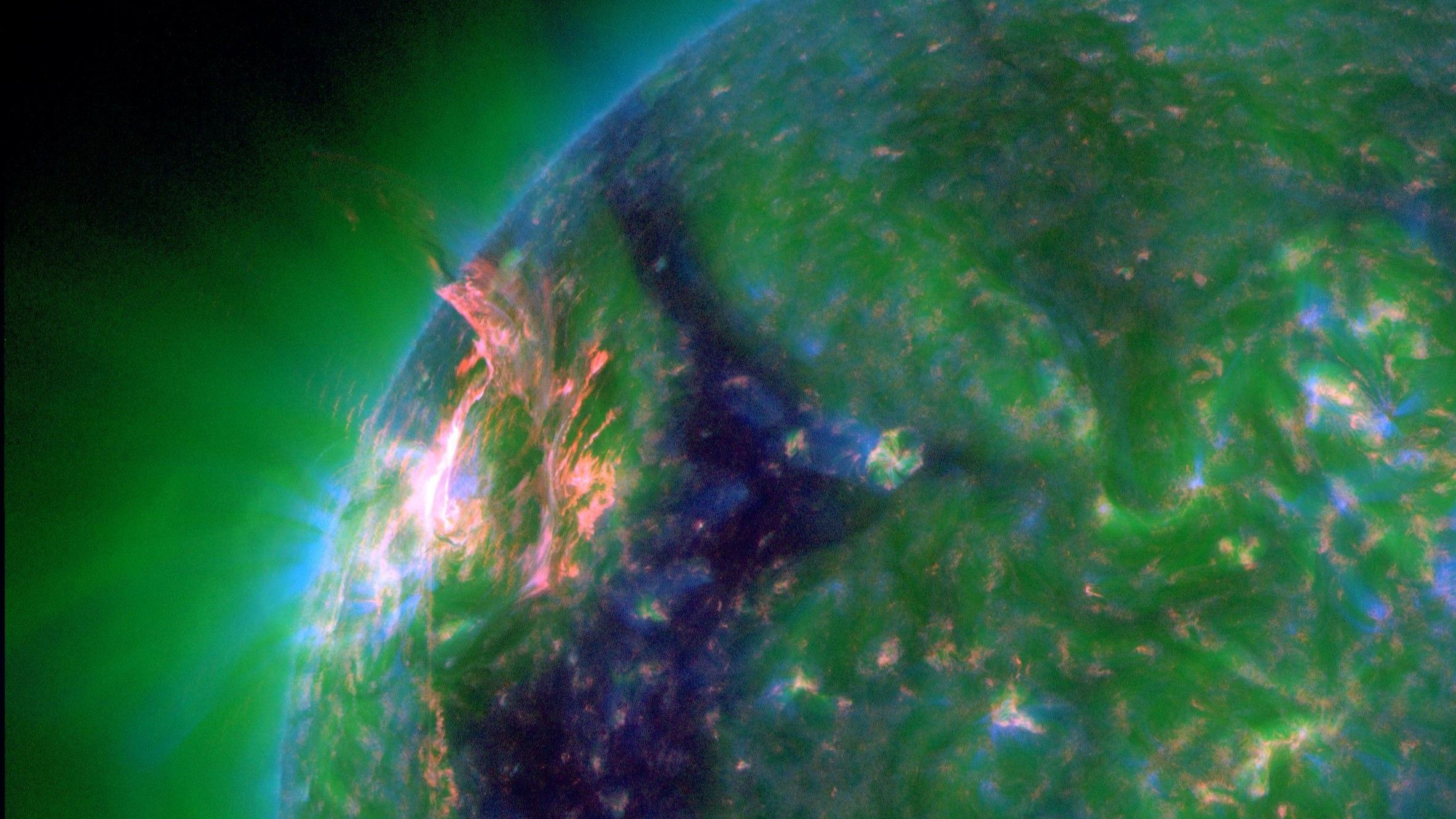
A moderate M5.7 solar flare and associated coronal mass ejection briefly disrupted high-frequency radio communications and could produce a minor G1 geomagnetic storm if Earth takes a glancing blow. NOAA says most of the CME should pass behind Earth's orbit, though a shock arrival by late May 12 into early May 13 cannot be ruled out. Potential impacts are limited to temporary radio, satellite, and minor grid disturbances, with possible auroras in northern U.S. locations.
This is a short-duration volatility event, not a macro shock, but it matters because solar disturbances create asymmetric operational risk for systems with low fault tolerance: satellite operators, HF-dependent aviation/shipping, precision timing infrastructure, and utilities near geomagnetic latitudes. The first-order move is usually in implied vol rather than outright equity beta; markets routinely underprice how quickly a minor geomagnetic storm can translate into temporary service degradation, especially when it lands during U.S. daytime trading and overlaps with weather-driven demand complexity.
The second-order implication is that the cleanest monetization is through beneficiaries of connectivity fragility, not through pure “space weather” names. Telecom resiliency, backup power, and GPS-dependent logistics all gain optionality from even a weak storm because customers pay up for redundancy after a visible disruption. Conversely, the real losers are not headline tech leaders, but operators with thin margin for downtime: airlines, HF radio-dependent marine operators, and certain satellite-backed data services where brief outages can cascade into SLA penalties.
Consensus is likely overestimating the one-day aurora narrative and underestimating the operational nuisance risk. The bigger catalyst window is the next 24-72 hours: if another CME follows from the active sunspot region, the market can reprice from curiosity to genuine infrastructure risk quickly. If the incoming shock is glancing or misses entirely, the trade should decay fast; this argues for optionality over directional equity bets and for using any strength in exposed names as a fade once the storm window passes.
AI-powered research, real-time alerts, and portfolio analytics for institutional investors.
Request DemoOverall Sentiment
neutral
Sentiment Score
0.05
