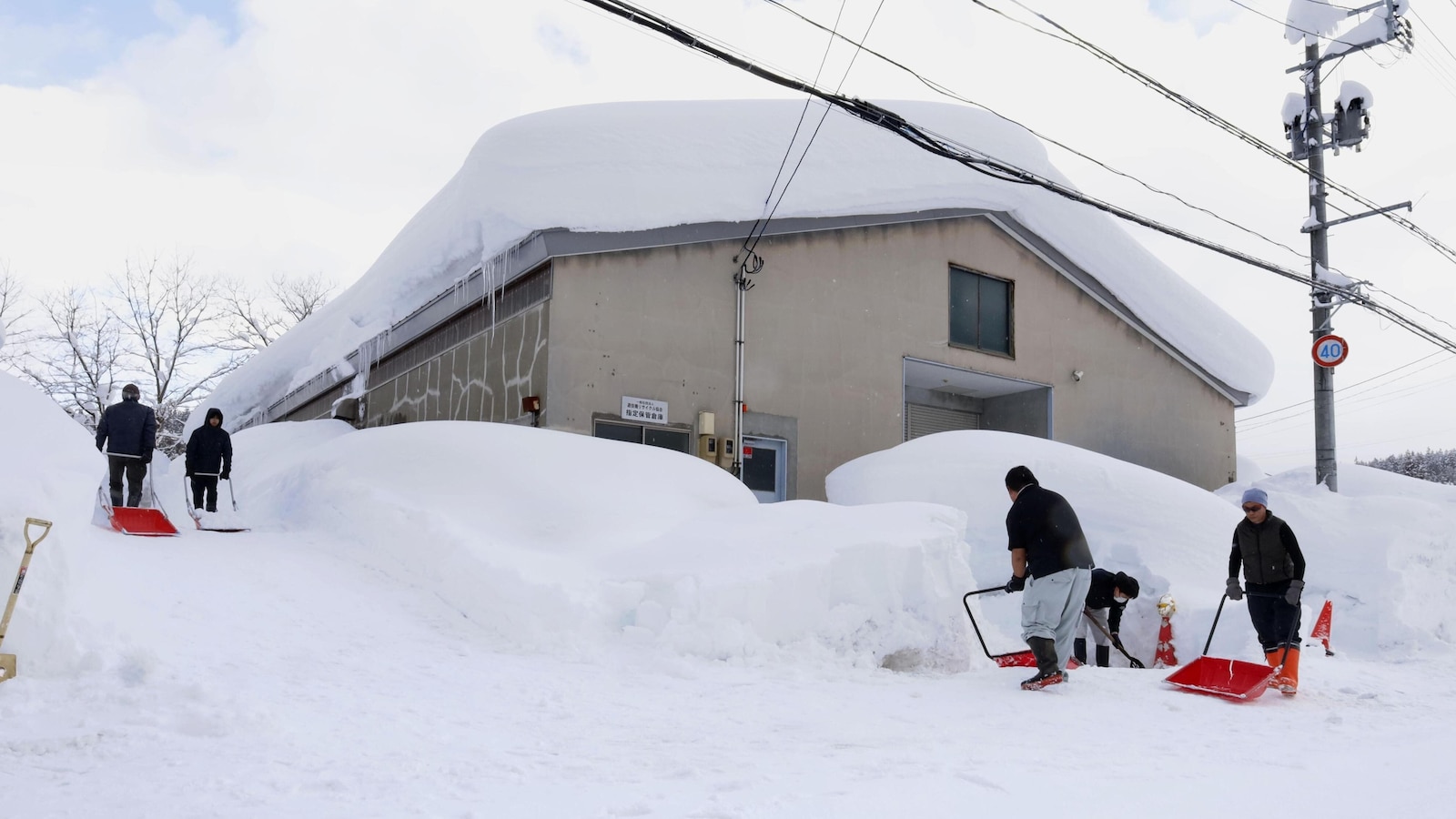
An Arctic cold air mass has produced unusually heavy snowfall across 15 prefectures in northern Japan, with accumulations up to 2 meters, blocking roads, halting most train services including bullet trains, and leaving more than 1,700 homes without power. Authorities reported 35 deaths and 393 injuries (126 serious), substantial disruption to emergency services and schools, and warned that warming and melting snow could trigger landslides; further heavy snow is forecast for the coming weekend, posing ongoing risks to regional logistics, utilities and local economic activity.
Market structure: Acute snow disruption creates short-term winners (regional contractors, heavy-equipment and snow-clearing OEMs) and losers (airlines, rail operators, local retail and insurers). Expect a 1–6 week hit to passenger revenues for 9201.T/9202.T and JR operators (low-teens % revenue disruption in worst-affected prefectures), while contractors (1801.T/1802.T/1812.T) see a 1–3 month spike in emergency orders and overtime-driven revenue recognition.
Risk assessment: Tail risks include prolonged supply-chain stops (auto/parts plants shuttered for >2 weeks), large insured-loss events from melt-induced landslides (>¥10–50bn) and municipal budget reallocations crowding out capex. Immediate horizon (days): travel/logistics volatility; short-term (weeks–months): construction revenues and insurer claim recognition; long-term (quarters): potential increased prefectural/government spending on resiliency.
Trade implications: Favor concentrated, time-boxed exposure to construction/equipment makers and tactical hedges on transport and insurers; use defined-risk options to exploit elevated local equity volatility. Cross-asset: expect a modest risk-off bid in JPY and safe-haven JGBs if losses escalate; LNG/heating fuel prices may tick up regionally but not materially global.
Contrarian view: Market may over-penalize national rail names given strong fiscal backstops and rapid service restoration—look to buy stressed transport names 2–6 weeks post-disruption. Conversely, insurers often underreserve initially; monitor Q1 claim windows for entry/hedge points rather than immediate outright longs.
AI-powered research, real-time alerts, and portfolio analytics for institutional investors.
Request DemoOverall Sentiment
moderately negative
Sentiment Score
-0.45
