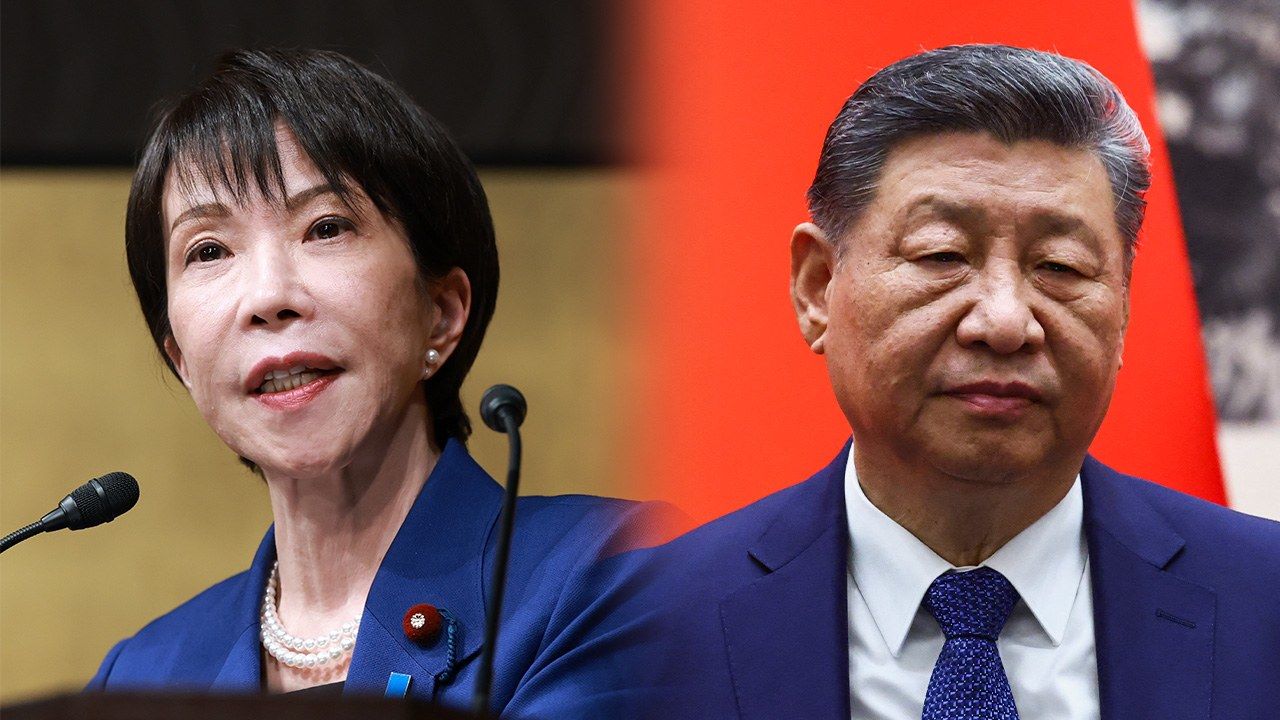
Japan’s evolving defense posture—anchored in the 2014 Cabinet Decision and the 2015 Legislation for Peace and Security that allow limited collective self‑defense in “survival‑threatening situations”—has outpaced the diplomatic framework dating to the 1972 Japan‑China Joint Communiqué, producing a public diplomatic clash after Prime Minister Takaichi Sanae referenced the survival‑threatening concept in relation to potential Chinese military actions toward Taiwan. The article highlights growing Taiwan Strait risk, the centrality of Japan‑US joint operations (including protection of US bases and control of sea lanes around the Ryūkyū islands), and rising uncertainty about US intervention credibility—developments that increase regional geopolitical risk, could pressure defense spending and alliance coordination, and raise the prospect of disruptions to trade routes and risk premia for investors.
Market structure: The immediate winners are defense primes and adjacent industries — US names (LMT, RTX, NOC) and Japanese primes (MHI 7011.T, Mitsubishi Electric 6503.T) plus supply-chain beneficiaries (advanced semiconductors, satellite comms, shipbuilders). Expect procurement-led demand growth: defend-related revenues could rise ~15–25% CAGR in Japan/ally programs through 2027 if budgets accelerate, giving these firms pricing power and order backlog visibility. Losers include Japan-facing travel/tourism, cross-strait dependent exporters, and short-cycle discretionary names exposed to Sino-Japan trade — these can see 10–40% EPS downside in blockade/shock scenarios.
Risk assessment: Tail risk remains a low-probability/high-impact Taiwan contingency: assign a non-zero market-implied probability ~10–30% by 2027 that would cause regional equity drawdowns of 25–50%, shipping stoppages and 20–40% semiconductor output shocks. Near-term (days–months) risks are reputational/diplomatic (statements, exercises); medium-term (6–24 months) are procurement, basing and logistics adjustments; long-term (2–5 years) is structural decoupling. Hidden dependencies: US political will, insurance/war-risk pricing, and critical nodes in Taiwan semiconductor supply chains are single points of failure.
Trade implications: Tactical bias is to overweight defense and logistics while hedging regional equity beta. Implement 3–12 month allocations to defense ETFs/large primes and buy short-dated tail protection (JPY calls or Nikkei puts) to guard against a rapid risk-off. Commodities: long 3–6 month crude and LNG exposure via futures/ETFs as blockade premiums (5–15% upside) are likely if drills escalate. Reduce cyclical Japan travel/tourism exposure and reallocate to industrials supporting rearmament.
Contrarian angles: The consensus underprices structural Japanese onshoring and defense industrialization — domestic primes could rerate 20–50% over 12–36 months as procurement converts into recurring aftermarket revenue. Conversely, an overdone risk-off could be mean-reverting in 3–6 months once diplomatic channels reassert; defense stocks may gap down 10–20% on short-term détente and present contrarian buy points. Watch for policy thresholds (explicit basing agreements or export licenses) that crystallize durable revenue streams.
AI-powered research, real-time alerts, and portfolio analytics for institutional investors.
Request DemoOverall Sentiment
moderately negative
Sentiment Score
-0.40
