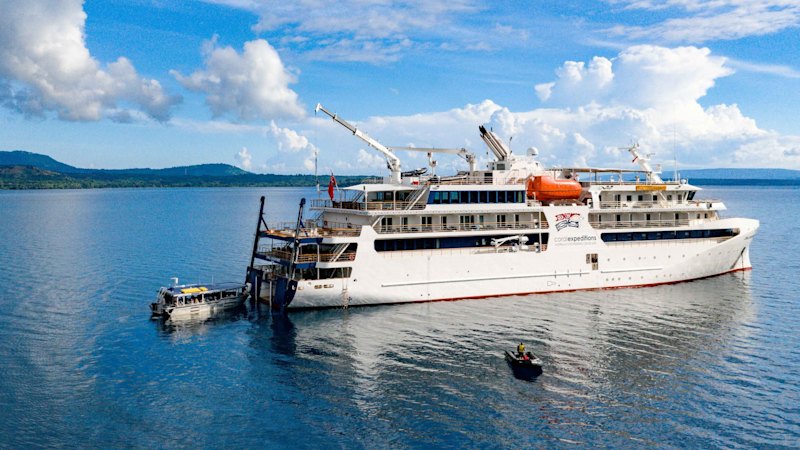
The NRMA-owned Coral Expeditions' Australian-registered cruise ship Coral Adventurer grounded on a reef off the Finschaffen Coast of Papua New Guinea early Saturday; all 80 passengers and 43 crew were reported uninjured and the voyage has been terminated with passengers to be flown home on a charter. Initial refloating attempts using the ship's engines failed, a towage provider has been engaged, and the vessel was heeled about six degrees to port with no reported water ingress; the voyage data recorder has been quarantined. Australian Transport Safety Bureau and Australian Maritime Safety Authority investigations are under way, and the incident follows an Oct. 25 onboard safety lapse that resulted in a passenger death and scrutiny of head-count and staffing practices, creating potential reputational, regulatory and operational liability and uncertain repair or salvage costs for the operator.
Market structure: This is an idiosyncratic shock to small expedition operators (NRMA-owned Coral Expeditions) with limited systemic spillover, but it creates short-term winners—salvage/towage contractors and regional charter carriers—and losers—small, high-ARPU expedition cruise operators and niche travel insurers. Expect near-term booking cancellations for similar itineraries (estimated 5–15% drop in Q1 bookings for expedition routes) while large mainstream cruise lines (CCL, RCL, NCLH) should see only a 1–3% sentiment hit given diversified fleets and stronger pricing power.
Risk assessment: Tail risks include a fatality-driven class action or regulator-imposed staffing mandates that raise operating costs by ~3–7% for small operators; ATSB/AMSA findings due in 30–90 days are primary catalysts. Immediate risks (days) are reputational and refund/liability cash outflows; short-term (weeks/months) are higher insurance premiums and canceled bookings; long-term (quarters) are tighter regulation and potential market consolidation among small expedition players.
Trade implications: Tactical opportunities are to long maritime salvage/towage and insurance brokers while hedging leisure exposure. Implement size-constrained trades (0.5–2% NAV) and prefer short-dated option structures (4–12 week) around the ATSB report; avoid large directional bets on major cruise operators unless move >8–10% on headlines.
Contrarian angle: The market may over-penalize large cruise majors—histor precedent (Costa Concordia) shows recoveries within 6–12 months; if CCL/RCL decline >10% we view as a buying opportunity. Conversely, salvage/towage winners can be single-event beneficiaries—cap position sizes and take profits on contract announcements or within 60–90 days.
AI-powered research, real-time alerts, and portfolio analytics for institutional investors.
Request DemoOverall Sentiment
moderately negative
Sentiment Score
-0.35
