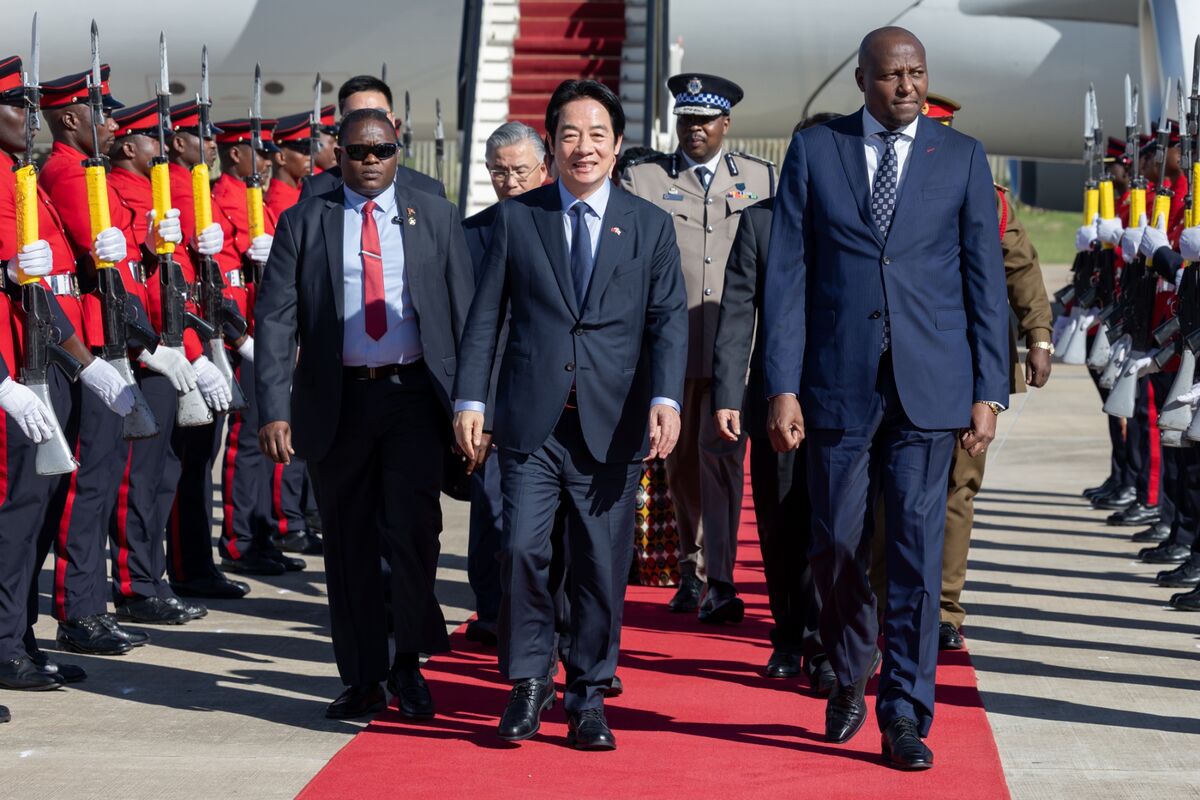
Taiwan President Lai Ching-te reached Eswatini via a stealth trip after three China-friendly countries reportedly closed their airspace to his aircraft, highlighting intensifying Taiwan-China geopolitical friction. His return trip may face further blocked flight paths and difficult transit options, adding travel and diplomatic uncertainty. The episode underscores Beijing’s ability to disrupt Taiwan’s international outreach and could rattle regional risk sentiment.
The market-relevant issue is not the diplomatic symbolism; it is the demonstration that China can still create friction in cross-border civil aviation without firing a shot. That matters for airlines, airport operators, and insurers because even a handful of politically motivated overflight denials can reprice route reliability, raising schedule-buffer costs, contingency fuel, and contractual penalties across East Asia and Africa-linked corridors. The second-order effect is a gradual tax on logistics efficiency: when state actors can selectively weaponize airspace, the cost of “just-in-time” routing rises faster than headline trade volumes suggest.
The bigger medium-term implication is that small and mid-sized states may increasingly route around traditional air corridors to avoid geopolitical exposure, pushing incremental traffic toward hubs perceived as neutral or operationally dependable. That favors aviation infrastructure owners and cargo hubs with redundant routing flexibility, while hurting carriers with thin margins and limited rerouting optionality. Defense and ISR-adjacent names can also benefit indirectly if this episode reinforces procurement for air-defense, comms hardening, and contingency mobility planning across Taiwan-aligned partners.
The catalyst window is days to weeks for any return-flight disruption and months for the broader premium on regional resilience. A successful, uneventful return would likely fade the immediate headline risk, but it would not remove the structural lesson: companies and governments now have evidence that airspace access can be politicized on short notice. The contrarian view is that this is not a broad macro shock; it is a localized operational risk with limited direct earnings impact unless it escalates into repeated route denials or insurance claims.
The cleanest trade is to own the beneficiaries of resilience while fading names exposed to route disruption. If the situation worsens, the repricing should be fastest in aviation and logistics rather than in broad EM indices, because the revenue impact is small but the margin impact can be outsized. If it de-escalates, those premiums should mean-revert quickly, so this is more of a tactical volatility setup than a long-duration macro short.
AI-powered research, real-time alerts, and portfolio analytics for institutional investors.
Request DemoOverall Sentiment
moderately negative
Sentiment Score
-0.35
