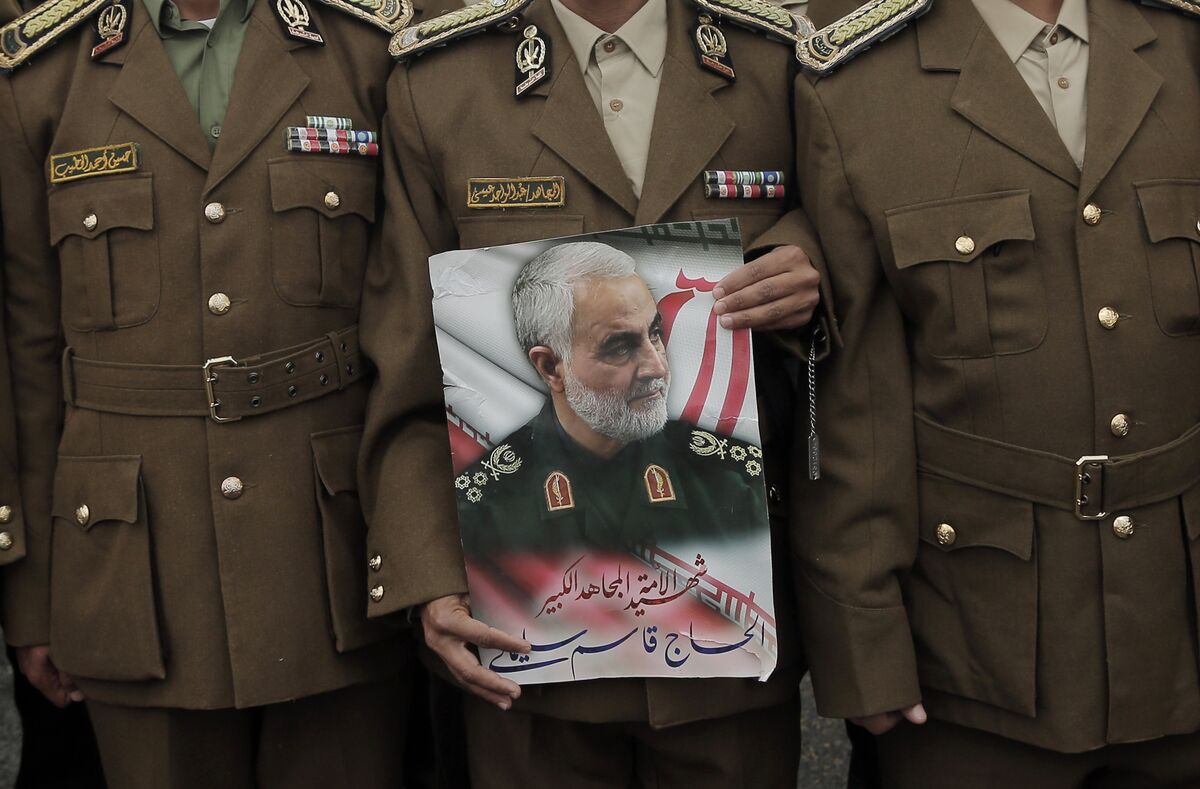
US federal agents arrested the niece and grand-niece of deceased IRGC Major General Qassem Soleimani, the State Department said; the arrests occurred last night. The action is a factual law-enforcement development that could raise US-Iran tensions, but immediate market implications are limited and uncertain.
Risk premia in the Gulf and for US-Iran relations rise immediately after events perceived as direct leverage over IRGC-linked networks; expect a near-term (days–weeks) spike in regional risk indicators — oil volatility + implied vols on Middle East geopolitical risk assets — on the order of 3–7% intraday and 8–15% in realized volatility if follow-up maritime or energy-infrastructure incidents occur. True, persistent price moves in oil or shipping rates require either sustained Iranian proxy attacks on tankers/terminals or asymmetric attacks on infrastructure; absent that, the shock should fade over 2–8 weeks as markets reprice tail probability.
Defense and security equities tied to missile defense, ISR, and tactical air defenses are the natural beneficiaries through both order book acceleration and political budget optics; expect program re-prioritization decisions to surface within 3–12 months and move select names 8–18% if Congress leans into supplemental funding. Watch supply-chain choke points (GaAs/RF ASICs, tactical sensor optics) — a 6–12 month procurement surge could be delayed or margin-compressed by component constraints, capping upside for prime contractors unless they secure Tier-1 suppliers.
On the intelligence/legal axis, detention leverage can materially change kinetic probability by providing targeting intelligence that reduces the need for broad strikes — a de-escalatory mechanism that markets underprice. Conversely, the largest tail remains miscalculation: a stepped-up proxy campaign (mines/drones against commercial shipping) would create a 10–20% oil shock and 20–40% spike in shipping insurance losses over months, compressing global trade volumes if sustained.
Key catalysts to monitor are (1) any credible shipping incident in the Strait of Hormuz within 0–90 days, (2) US force posture changes or announced supplements from Congress within 0–30 days, and (3) public intelligence disclosures that either increase or reduce ambiguity — each can flip market direction quickly. A credible backchannel de-escalation or rapid intelligence-driven decapitation of active threats would be the fastest path to normalization; absent that, expect a drawn-out repricing into defense and insurance sectors over quarters.
AI-powered research, real-time alerts, and portfolio analytics for institutional investors.
Request DemoOverall Sentiment
neutral
Sentiment Score
0.00
