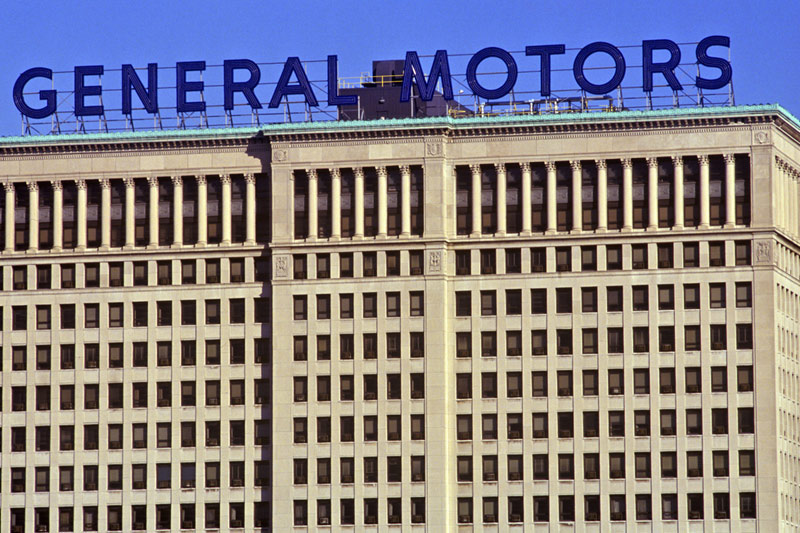
General Motors Financial closed a $1.4 billion public offering of 4.750% senior notes due April 6, 2029, with estimated net proceeds of approximately $1.39 billion to be used for general corporate purposes. Interest accrues at 4.750% annually, payable semi‑annually on April 6 and October 6 beginning October 6, 2026; the notes are unsecured senior obligations ranking equally with the company’s other senior unsecured debt. The company may redeem the notes prior to maturity at specified prices, and the indenture contains customary covenants limiting asset sales, mergers and certain liens. The offering was managed by a syndicate led by Barclays, BofA, Credit Agricole, Deutsche Bank, Santander US and Scotia Capital.
This capital raise should be read as a financing-of-convenience signal from an auto captive rather than a pure liquidity panic: management is locking in unsecured access to term capital to shorten rollover exposure and to preserve warehouse capacity for originations. That move has a mechanical second-order effect on the ABS market — when captives prefer unsecured paper, ABS issuance can temporarily tighten, roping in relative value for banks and non-captive financiers who rely on the securitization arbitrage. Dealers and used-car finance channels benefit in the near term from preserved warehouse lines and less forced liquidation risk, which supports residual values and OEM lease returns over the next 3-9 months.
Primary tail risks are straightforward: a sharp deterioration in consumer credit or a rapid upward repricing of the curve that reverses the captive’s financing advantage would expose margins and elevate funding costs within a single quarter. Watch securitization issuance volumes, ABS spreads, and delinquencies as 1- to 4-quarter leading indicators; a dislocation in the ABS market is the fastest way to reverse the narrative and widen credit spreads across OEM captives. Structural longer-term risks include elevated leverage if proceeds are redeployed to shareholder returns rather than originations, which would amplify downside over 12–24 months.
The market consensus tends to treat such transactions as neutral funding operations and misses optionality: securing unsecured term paper creates tactical optionality to reduce ABS issuance, execute opportunistic buybacks, or provision against a credit trough — each of which has asymmetric payoff to equity. That optionality favors issuers with scale and diversified financing channels; peers that remain ABS-dependent will see relative valuation pressure if spreads normalize. For portfolio positioning, focus on the interplay between ABS supply, captive unsecured spread compression, and near-term used-vehicle fundamentals as the key drivers of relative performance over the coming 3–12 months.
AI-powered research, real-time alerts, and portfolio analytics for institutional investors.
Request DemoOverall Sentiment
neutral
Sentiment Score
0.05
Ticker Sentiment
