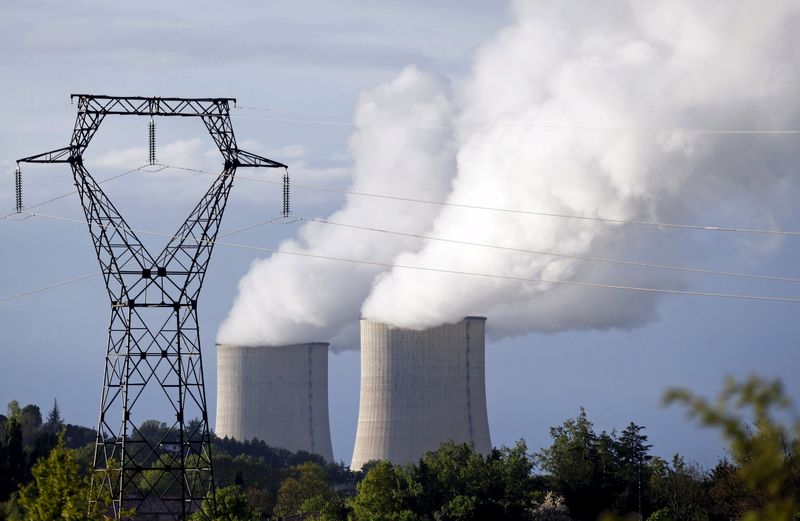
CEZ reported Q1 EBITDA of 35.3 billion crowns, down 18% year on year, as planned outages and lower realised power prices hit generation. However, the company raised 2026 EBITDA guidance to 107 billion-112 billion crowns from 103 billion-108 billion and lifted adjusted net income guidance to 30 billion-34 billion crowns, citing higher electricity prices tied to Strait of Hormuz tensions and stronger coal and distribution earnings. CEZ also proposed a 42-crown dividend for 2025 earnings, below the 47 crowns paid previously, and outlined a restructuring of its customer business to support future investment, including small modular reactors.
The real incremental signal is not the quarter itself but the widening gap between CEZ’s merchant-exposed generation and its regulated/distribution assets. In a geopolitical energy spike, the market is effectively paying for a utility cash flow stream while the company is being re-rated as a quasi-strategic infrastructure platform with optionality in nuclear buildout and balance-sheet recycling. That mix usually commands a higher multiple than a pure power producer because it reduces earnings cyclicality and creates a second source of capital via a minority stake sale. The key second-order effect is that higher power prices help CEZ in the near term, but they also sharpen the political and regulatory debate around affordability, dividends, and capex discipline. If Czech policymakers conclude that elevated electricity pricing is politically untenable, the upside from merchant pricing can be partially clawed back through taxes, windfall levies, or pressure on payout policy over the next 6-12 months. That creates a natural tension: the business is improving, but the more visible the improvement, the more likely the state becomes an active counterparty. The SMR angle is a longer-duration call option, not a near-term earnings driver. The market likely underestimates how much the proposed restructuring could be used to de-risk that capex pathway by bringing in minority capital without surrendering control, which would be accretive to equity value if executed at a sensible valuation. The contrarian risk is that nuclear optionality gets capitalized too early while actual cash generation remains sensitive to outages, emissions costs, and realized power prices normalizing once the Persian Gulf premium fades.
AI-powered research, real-time alerts, and portfolio analytics for institutional investors.
Overall Sentiment
mildly positive
Sentiment Score
0.45
