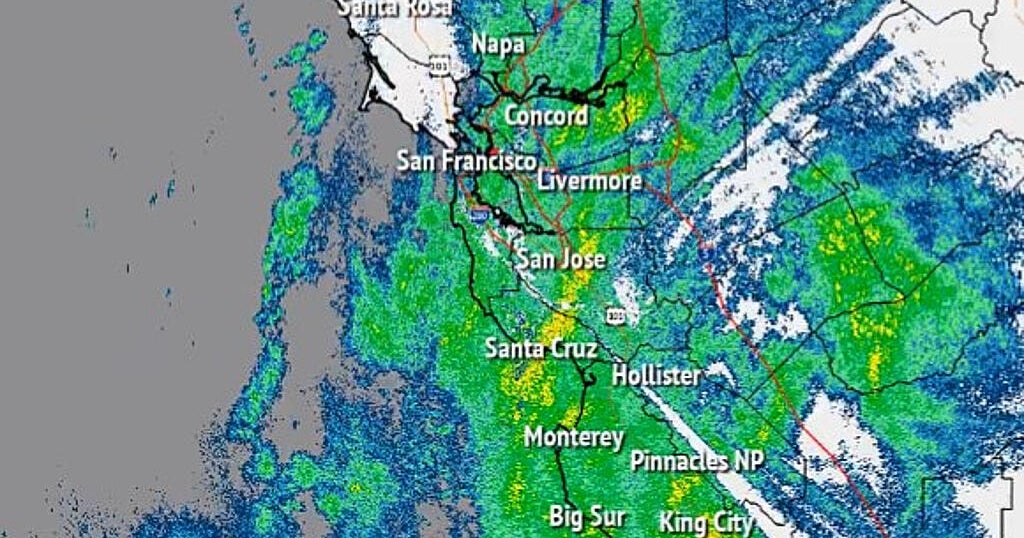
A second in a series of Northern California storms moved through the Bay Area and Central Coast bringing moderate to locally heavy rain, gusts of 15–30 mph in low elevations and 40–60 mph on higher peaks, lightning, and snow levels dropping to roughly 3,000 ft with a few inches reported on Mt. St. Helena, Cobb Mountain and Mt. Hamilton. Flood advisories (most Bay Area counties and Santa Cruz through 1 p.m.) and a coastal flood advisory through 3 p.m. were in effect, an extreme cold warning overnight for parts of the Central Coast (as low as 24°F) and winter weather advisories for interior hills; impacts included minor flooding, small slides, a school closure after lightning hit a power pole, and the Weather Service forecasting unsettled conditions with another round of rain and wind by the weekend.
Market structure: Near-term winners are home‑repair/disaster‑recovery and backup‑power suppliers (e.g., GNRC, HD, LOW, BECN) as localized flooding, hail and lightning drive emergency purchases and repairs over the next 2–12 weeks; spot CAISO power prices and day‑ahead gas demand should tick up 1–5% on peak cold nights, helping merchant generators (NRG, CPN) briefly. Losers include uninsured coastal leisure real estate and small regional municipal budgets exposed to flood/surge, and short‑term operationally‑levered businesses (local logistics, small marinas); large national P&C insurers will absorb claims but likely see <0.5% EPS hit absent escalation.
Risk assessment: Tail risk is a severe infrastructure event (major data‑center outage or prolonged Bay Area flooding) that could cause >$1bn insured losses and multi‑day tech downtime; probability low (<5%) but impact large on DLR/EQIX and hyperscalers. Timeline: immediate operational disruptions (hours–days), revenue lift for repair/generator suppliers (weeks), possible rerating of local muni credit and insurance pricing if repeated storms occur over quarters. Hidden dependencies: outages cascade into cloud SLAs and manufacturing micro‑shutdowns—track outage duration >4 hours and insured‑loss filings week‑over‑week.
Trade implications: Tactical long exposure to GNRC and selective long exposure to HD/LOW for repair demand (4–12 week horizon); consider short‑dated calls/call spreads to cap cost. Buy small directional or volatility trades on PCG (or regional utility names) around outage headlines (30–45 day straddles) sized to risk budget. Underweight small coastal REITs and consider buying short‑dated CA power/gas forwards if day‑ahead spreads widen >$3/MWh or gas +2–3% vs prior day.
AI-powered research, real-time alerts, and portfolio analytics for institutional investors.
Request DemoOverall Sentiment
neutral
Sentiment Score
-0.05
Contrarian angles: Consensus underprices sustained generator and retrofit demand — repeated winter storms can lift GNRC/HD incremental revenue by 3–6% over a quarter, not just single‑week spikes. Conversely, insurer reaction to headline claims is often short‑lived; selling volatility into insurer knee‑jerk weakness could be profitable. Historical parallels (CA storms 2017–2019) show home‑improvement retail and portable generator sales outperform by mid‑single digits for 6–12 weeks; watch for regulatory push on grid hardening which could reallocate capital away from portable gen in 12–36 months.
