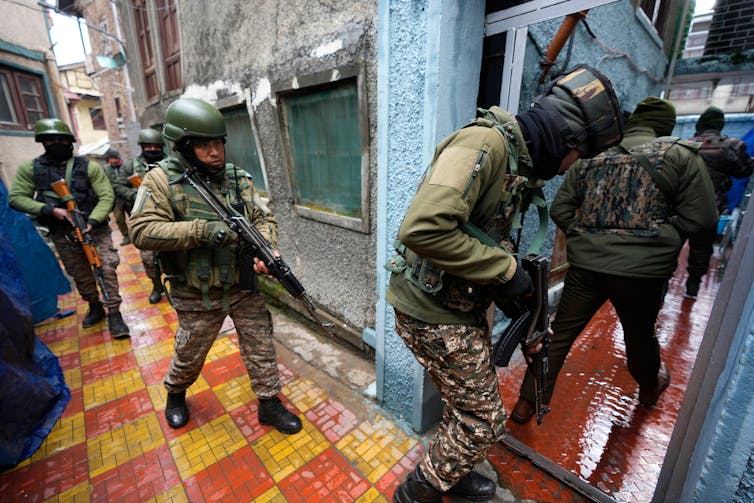
The piece argues ICE functions as a paramilitary force—both a highly militarized federal police and, in some behaviors, a partisan instrument of repression—highlighting that ICE added roughly 12,000 recruits (more than doubling its size in under a year) while shortening training. It notes legal and oversight asymmetries (e.g., CBP authority to search and seize within 100 miles of the border), strong pro‑Trump union support (over 95% endorsement in 2016), and broader research linking police militarization to increased violence and reduced reformability. For investors, the story signals heightened political and regulatory risk around federal immigration enforcement, potential legal/litigation exposure, and reputational/operational spillovers for stakeholders operating in jurisdictions affected by aggressive federal enforcement.
Market structure: Agencies like ICE/CBP act as demand conduits for tactical equipment, surveillance/ISR systems and detention services — clear potential winners are defense primes and mid‑tier contractors supplying cameras, thermal sensors, drones and secure facilities, while ESG‑sensitive integrators and consumer brands tied to immigration controversies face reputational/contract risk. Pricing power will concentrate with specialized suppliers (sensors, border radars) where lead times and certification barriers limit supply; expect 5–15% vendor price resilience across FY procurement cycles.
Risk assessment: Tail risks include a post‑election reform wave (consensus shock) that cuts detention budgets or imposes procurement blacklists, major DOJ consent decrees/NGO litigation forcing contract cancellations, or conversely a strong enforcement expansion underpinned by emergency appropriations; timeframe: immediate (days of headline volatility), short (30–180 days for RFPs/hearings), long (1–3 years for structural budget shifts). Hidden dependencies: union endorsements, DHS procurement windows and 100‑mile CBP legal carveouts that determine durable revenue flow.
Trade implications: Use small, hedged exposures to capture procurement upside while limiting political/legal drawdowns — favor liquid primes and surveillance specialists over single‑contract minnows; implement collar/call‑spread option structures to cap downside and lever upside around known DHS budget/RFP windows (3–12 months). Pair trades can express views on policy persistence (long hardware/security integrators, short private detention operators) to neutralize macro risk.
Contrarian angles: Markets underprice the asymmetry — post‑9/11 precedent suggests durable higher baseline spending for homeland security over years, so outright panic‑selling of defense names may be overdone; conversely, private prison equities may already reflect regulatory fear and are vulnerable to mean‑reversion if enforcement increases. Watch for unintended consequences: procurement bottlenecks and litigation can produce idiosyncratic winners (certified suppliers) and deep losers (noncompliant vendors).
AI-powered research, real-time alerts, and portfolio analytics for institutional investors.
Request DemoOverall Sentiment
moderately negative
Sentiment Score
-0.35
