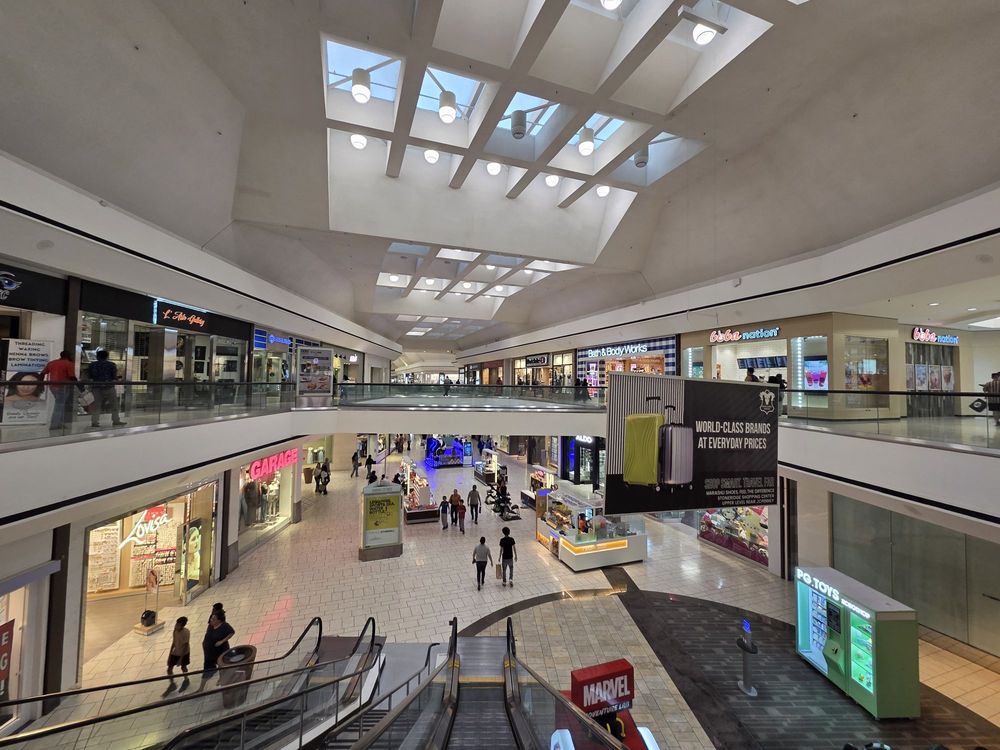
JCPenney will close its Stoneridge Shopping Center location in Pleasanton on Feb. 22 after the company said it could not continue the current lease and could not find an alternative site; the closure reduces Bay Area JCPenney locations to six and follows other recent regional shutdowns (San Bruno closed in May). The chain, which peaked at 2,053 U.S. stores in 1973 and now operates roughly 650 locations, has been shrinking its footprint since its 2020 bankruptcy and a prior wave of 154 announced closures. Mall owner 300 Venture Group said it is close to signing a new-to-market tenant for the space, signaling potential quick re-leasing risk mitigation for the property's income stream, but the closure underscores ongoing retail downsizing and localized employment impacts.
Market structure: The JCPenney exit is a microcosm of continued anchor churn in U.S. malls — anchors historically drive ~25–40% of foot traffic, so an anchor loss can depress inline rents and sales per sq.ft. in the short term (next 3–12 months); landlords with liquidity (equity or access to cheap debt) can either cut rents to backfill or pursue higher-value redevelopments (experience, grocer, life-science) that can lift NPV if local fundamentals support it.
Risk assessment: Tail risks include a contagion of anchor exits that pushes mall REIT CMBS delinquencies higher, impinging BBB/BBB- credit spreads and forcing distress sales of secondary malls within 6–18 months. Hidden dependencies: local housing/renter dynamics in Bay Area (high demand) materially change redeployment economics versus secondary markets — redevelopment is feasible here but capital- and entitlement-intensive. Catalysts to watch: (1) holiday sales reports (Nov–Jan), (2) Macy’s Q4 comp-store trends (early Feb), (3) lease announcement for this Stoneridge space within 60–120 days.
Trade implications: Favor short-duration, selective bearish exposure to mall/department-store risk and long exposure to logistics/necessity retail and well-capitalized redevelopers. In equities: overweight COST/WMT (defensive traffic winners) vs underweight M and small-cap mall REITs (MAC, PEI). In credit: reduce BBB retail CMBS and increase allocation to industrial CMBS or 2–5y Treasuries. Use options to cap downside (3–6 month protection on M) and event-driven longs on owners who announce adaptive reuse plans.
Contrarian angles: Consensus treats every anchor loss as structural decay; in Bay Area submarkets this can be an opportunity — owners that convert anchors to life-science, last-mile logistics, or housing can see >20–40% NAV uplift if executed. That makes select, well-capitalized owners (able to redevelop) attractive in 12–36 month horizons, while headline weakness likely overprices short-term pain in credits tied to non-core malls.
AI-powered research, real-time alerts, and portfolio analytics for institutional investors.
Request DemoOverall Sentiment
mildly negative
Sentiment Score
-0.25
Ticker Sentiment
