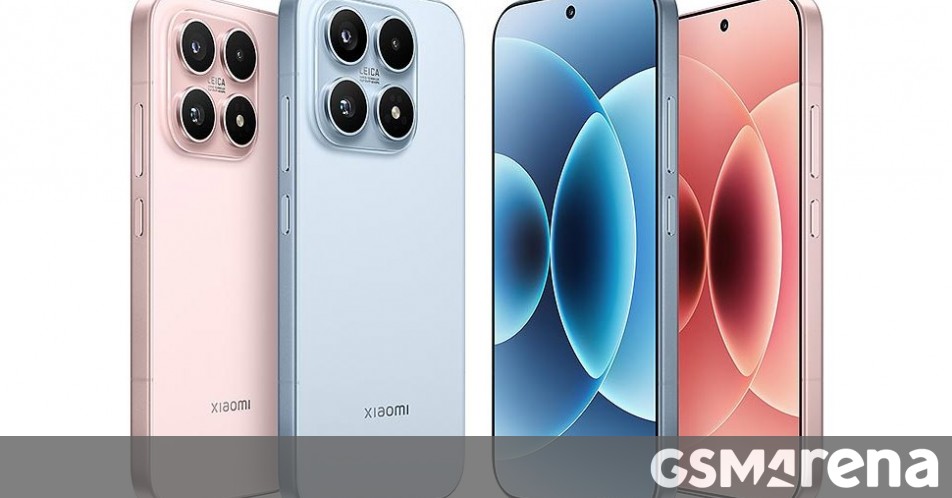
A German retailer listing indicates Xiaomi will price the global Xiaomi 17 at €1,099 for the 512GB model (implying a likely €999 entry for 256GB) and will ship a European variant with a 6,330 mAh battery versus the 7,000 mAh cell used in China. Aside from the reduced battery, the handset is expected to match the China-spec device: 6.3-inch 1220x2656 LTPO AMOLED 120Hz display, Snapdragon 8 Elite Gen 5, 12/16GB RAM, up to 1TB storage, and a quad 50MP camera array. The premium pricing and near-parity specs suggest upside to ASPs and revenue per unit in Europe, while the smaller battery and regional SKU differences may affect competitiveness and consumer reception.
Market structure: Xiaomi's €999–€1,099 EU flagship pricing bridges premium and value segments and directly benefits Xiaomi (1810.HK), its SoC supplier Qualcomm (QCOM) and EU price-sensitive consumers while pressuring incumbents’ pricing power (Samsung, OnePlus). A flagship at these ASPs implies potential reallocation of ~5–10% of European premium demand within 6–12 months if product reviews and carrier deals are positive; battery downsizing (6,330mAh vs 7,000mAh) signals supply/configuration trade-offs rather than component scarcity. Cross-assets: modest positive for semiconductor equities, negligible FX impact (EUR move <0.5%), minor downward pressure on lithium/cell demand per-device but no immediate commodity shock; peripheral retail credit spreads could widen if margin pressure is broad-based.
Risk assessment: Tail risks include EU regulatory/security scrutiny or carrier/retailer non-adoption that can cut projected EU volumes by >50% (low-probability, high-impact within 0–6 months), or a firmware/quality issue triggering recalls and >20% sell-off. Hidden dependencies: carrier partnerships, warranty/return economics, and local marketing subsidies drive real sell-through and margins — absent strong carrier subsidies, Xiaomi may sacrifice margin for share. Key catalysts: formal EU launch date, first 30-day carrier preorder numbers, and independent camera/benchmark reviews (timeframe 0–90 days).
Trade implications (strategic): Direct alpha resides in selective equity exposure to Xiaomi (1810.HK) and Qualcomm (QCOM) and relative shorts on premium Android peers if Xiaomi gains share; volatility will spike around launch/reviews, creating actionable option entry points. Tactical options: buy 3–6 month QCOM calls to capture SoC upside and sell near-term implied vol after positive reviews. Sector rotation: favor Asian EM consumer electronics hardware and semis, underweight European phone distributors/retailers for 3–12 months.
Contrarian angles: Consensus will over-index on headline ASPs and assume margin lift — absent carrier subsidy, Xiaomi may accept 200–400bp lower gross margins to win share, compressing supplier pass-through. Historical parallel: Huawei’s EU withdrawal created share reallocation but also regulatory caution; if EU scrutiny increases, Xiaomi's European growth could be capped, making current enthusiasm overdone. Unintended consequence: aggressive EU pricing could accelerate consolidation among accessory makers and prepaid carrier plans, altering long-term ARPU dynamics and handset subsidy models.
AI-powered research, real-time alerts, and portfolio analytics for institutional investors.
Request DemoOverall Sentiment
neutral
Sentiment Score
0.10
