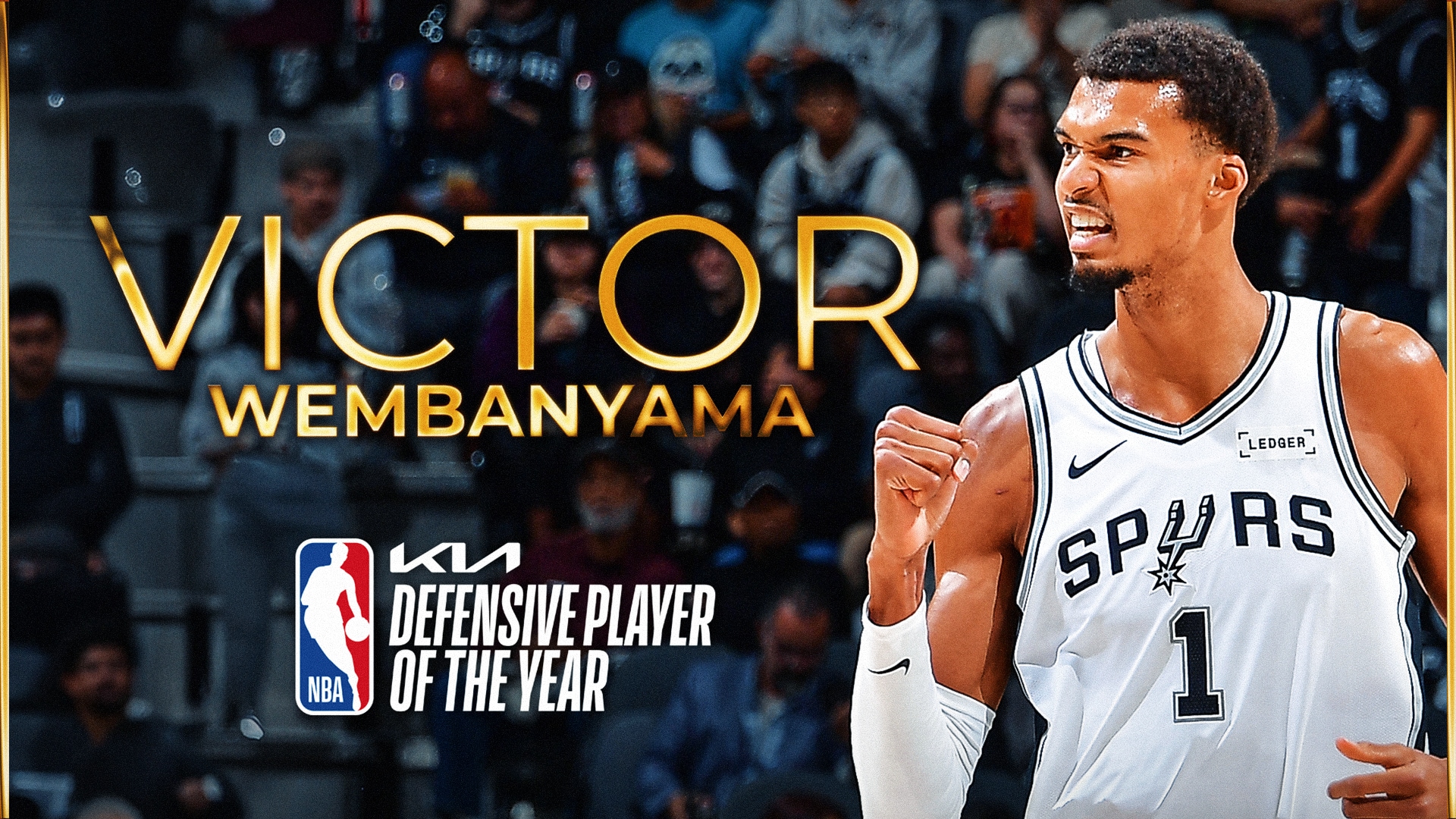
Victor Wembanyama was named the 2025-26 Kia NBA Defensive Player of the Year in a unanimous vote, becoming the youngest winner at 22 and the first unanimous DPOY since the award began in 1982-83. He also joined Michael Jordan and David Robinson as the only players to win both Rookie of the Year and DPOY. The article is primarily an awards update with limited direct market impact.
The market implication is not the trophy itself but the reinforcement of a multi-year defensive moat around San Antonio. A singular anchor defender at a premium age profile reduces transition risk for the franchise’s roster build, because it gives management a stable scheme identity around which to scale offense later; that typically compresses the probability of a true tank/rebuild cycle and lowers downside to local team economics, sponsorship, and media relevance. The more important second-order effect is league-wide: elite rim protection at this level changes shot profiles for opponents, which matters most in the playoffs when half-court possessions dominate and marginal spacing errors get punished. From a competitive-dynamics angle, Oklahoma City and Detroit can both claim they were finalists in a category that tends to telegraph future title equity, but the real signal is that the current defensive bar is moving toward “single-player system” impact. That raises the premium on long, switchable wings and stretch-big defenders across the league, especially for teams trying to survive against elite creators without selling out their offense. If that valuation persists, expect a relative bid in teams whose frontcourt construction mirrors this archetype, while pure interior bigs without range or mobility become more situationally discounted. The contrarian view is that unanimous awards often overstate certainty and can crowd consensus into the wrong extrapolation. The risk is not regression in defense so much as availability: a player with this much verticality and workload has a non-trivial durability tail risk over the next 12-24 months, and the market may be pricing his “always-on” dominance too cleanly after an awards sweep. If any interruption occurs, the franchise narrative can shift quickly from inevitability to fragility, which is especially relevant for medium-term pricing of team-related revenue streams and any adjacent local media optimism. For investors, the actionable edge is relative-value, not outright beta. The award strengthens the case to favor organizations with elite defensive identity and young frontcourt upside over teams dependent on aging interior anchors, but it also argues for caution on names already priced for perfection in the same defensive ecosystem. The best risk/reward is likely in pairing quality defensive franchises against thin-roster teams that rely on one star to cover structural holes, because this kind of award cycle tends to widen the gap between true top-5 defenses and everyone else over a full season.
AI-powered research, real-time alerts, and portfolio analytics for institutional investors.
Request DemoOverall Sentiment
neutral
Sentiment Score
0.15
