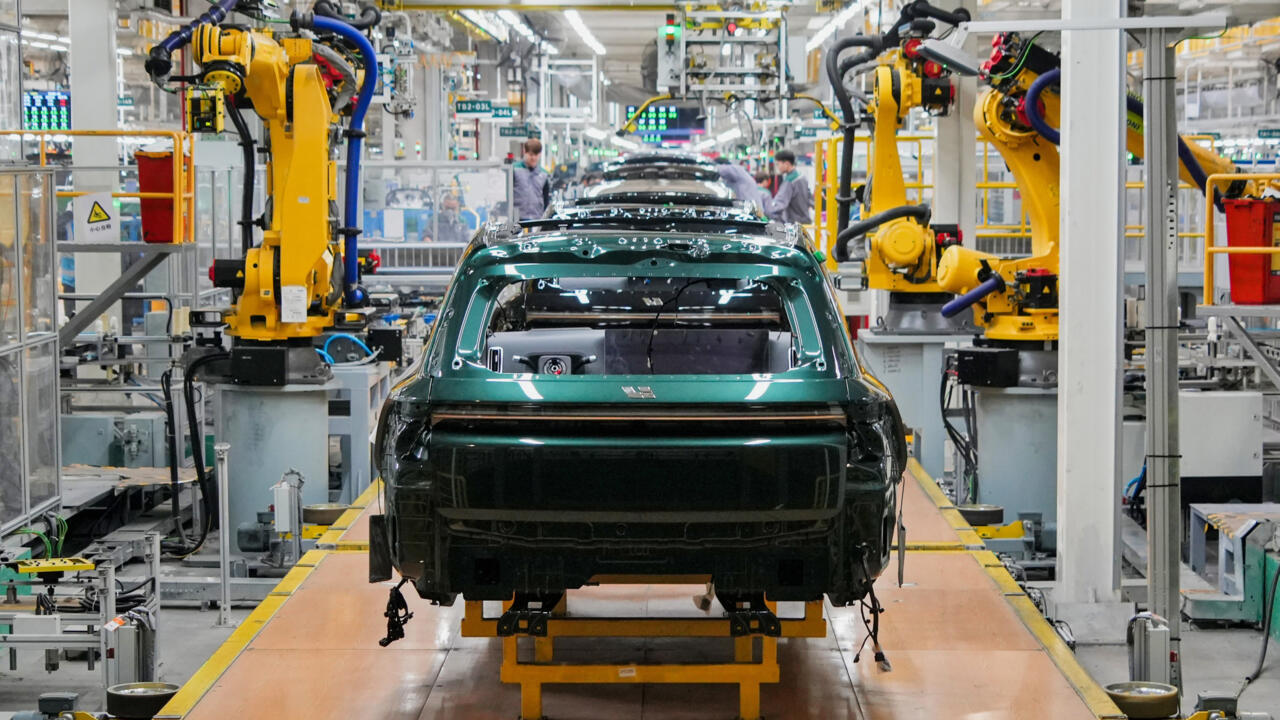
President Emmanuel Macron warned that Europe may impose tariffs on Chinese goods if Beijing does not act to reduce its large trade surplus with the EU, saying measures could be modelled on recent U.S. tariffs. With the EU's 2024 trade deficit with China exceeding €300 billion and intra-EU consensus (notably Germany) uncertain, Macron called for combined protection of vulnerable sectors such as autos and for increased Chinese direct investment — signalling heightened policy risk for European industrial and automotive stocks and potential shifts in trade policy.
Market structure: If the EU moves toward tariffs akin to recent US measures (40-50% range), European autos (Stellantis STLA, Volkswagen VOW3) and machine-tool/capital-goods makers gain pricing power and protected domestic volumes while Chinese exporters and EU retailers/importers face margin squeeze; the EU deficit with China >€300bn implies material scale. Competitive dynamics will favor incumbent European industrials with local supply chains over import-dependent assemblers; expect 5-15% re-pricing in sector multiples within 3-12 months as demand rebalances and capex shifts toward reshoring.
Risk assessment: Tail risk includes full reciprocal Chinese tariffs or non-tariff retaliation (tech export controls) that could knock 1-3% off Eurozone GDP growth in a severe scenario; a partial tariff package or German resistance is medium probability and would mute moves. Near-term (days-weeks) we should expect FX volatility (EUR weaker on risk-off) and credit spread widening for auto suppliers; medium-term (3-12 months) see supply-chain capex and FDI shifts; long-term (1-3 years) structural reshoring and higher input inflation for European manufacturing.
Trade implications: Tactical opportunities: long select European OEMs/industrial names and short China export ETFs (FXI/KWEB) via options to reflect tariff risk; prefer 3-9 month horizons with position sizing 2-4% per idea and stop-loss thresholds of -10%. Cross-asset: buy EUR downside protection if EU tariff probability rises above 30% within 60 days and increase corporate credit hedges in auto supply chains.
Contrarian angle: Market consensus prices either full tariff war or nothing; probability of an intermediate outcome (targeted tariffs on key product lists, FDI reciprocity rules) is underpriced and would benefit niche EU industrials while penalizing mass-market retail — this asymmetric payoff favours concentrated, catalyst-driven positioning rather than broad EM shorts.
AI-powered research, real-time alerts, and portfolio analytics for institutional investors.
Request DemoOverall Sentiment
moderately negative
Sentiment Score
-0.45
