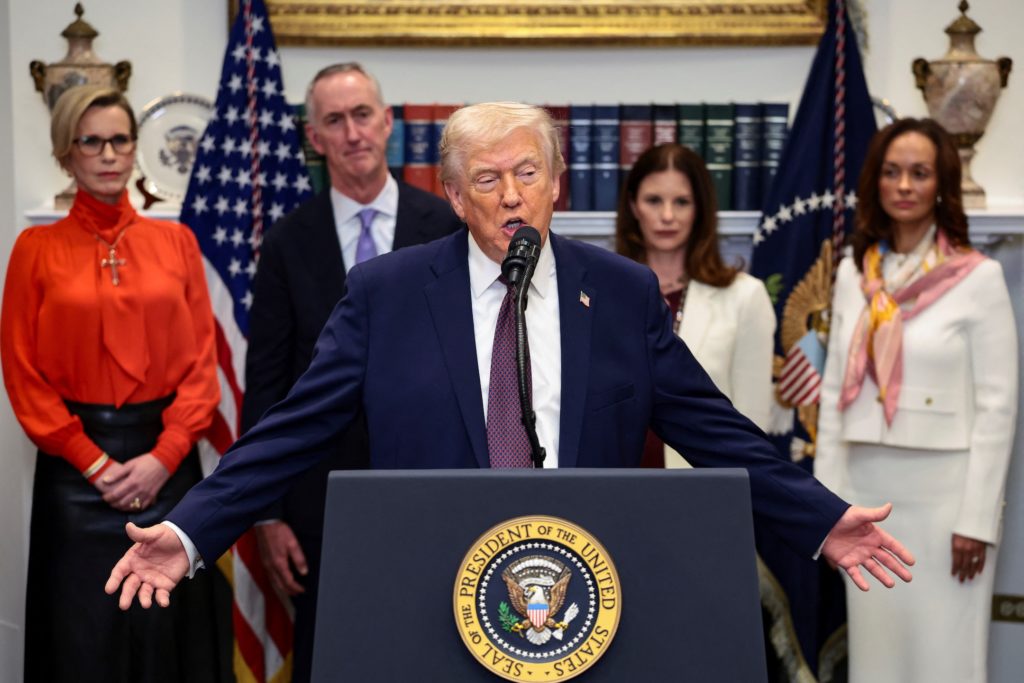
Nine pharmaceutical companies have agreed to cut prices on many drugs they sell to Medicaid and to consumers via the 'TrumpRx' direct-to-consumer site, a development that could create modest revenue pressure and regulatory scrutiny for affected drugmakers despite no deal-level financials being disclosed. Separately, Russian President Putin reiterated his commitment to achieving objectives in Ukraine if Kyiv rejects his demands, and Australia announced a post–Bondi Beach mass-shooting gun buyback plan—items that add geopolitical and policy risk context but are unlikely to materially change market valuations absent further details.
Market structure: price cuts to Medicaid and DTC sales via a political portal create immediate margin pressure for branded drug manufacturers and a redistribution of revenue away from intermediaries (PBMs/retail pharmacies) toward payers and consumers. Expect 2–5% net revenue compression for exposed specialty drugs within 12 months and margin pressure of ~100–250bps for high-margin product lines, shifting share toward lower-priced generics and device/diagnostic vendors.
Risk assessment: tail risks include rapid policy escalation (mandatory price caps or expansion to Medicare) with low probability but high impact (EPS downside >10% for targeted names) and supply-side pullbacks where firms restrict Medicaid supply causing political/legal backlash. Near-term (days–weeks) volatility will be headline-driven; medium-term (3–12 months) comes from earnings revisions and CMS guidance; long-term (1–3 years) structural repricing and accelerated M&A.
Trade implications: tactically favor short exposure to pharma-price-sensitive sleeves (pharma ETF PPH, select branded names) and rotate into medical devices (IHI) and diversified healthcare (JNJ) which have less Medicaid revenue share; expect credit spreads on BB/B-rated pharma to widen 25–75bps, so short protection on high-yield pharma credit makes sense. Use options (3–6 month put spreads on PPH) to limit capital while capturing headline downside and pair trades long JNJ vs short PPH for relative safety.
Contrarian angles: consensus will over-index to headline price cuts and ignore offsetting volume gains, adherence improvements, and manufacturer cost cuts — some companies can recoup ~50–75% of list-price losses via increased volume and cost actions within 2–4 quarters. Historical parallels (2015–2018 pricing headlines) show 10–20% equity drawdowns that partially reversed; avoid across-the-board selling and target idiosyncratic names with >20% Medicaid revenue exposure.
AI-powered research, real-time alerts, and portfolio analytics for institutional investors.
Request DemoOverall Sentiment
mildly negative
Sentiment Score
-0.25
