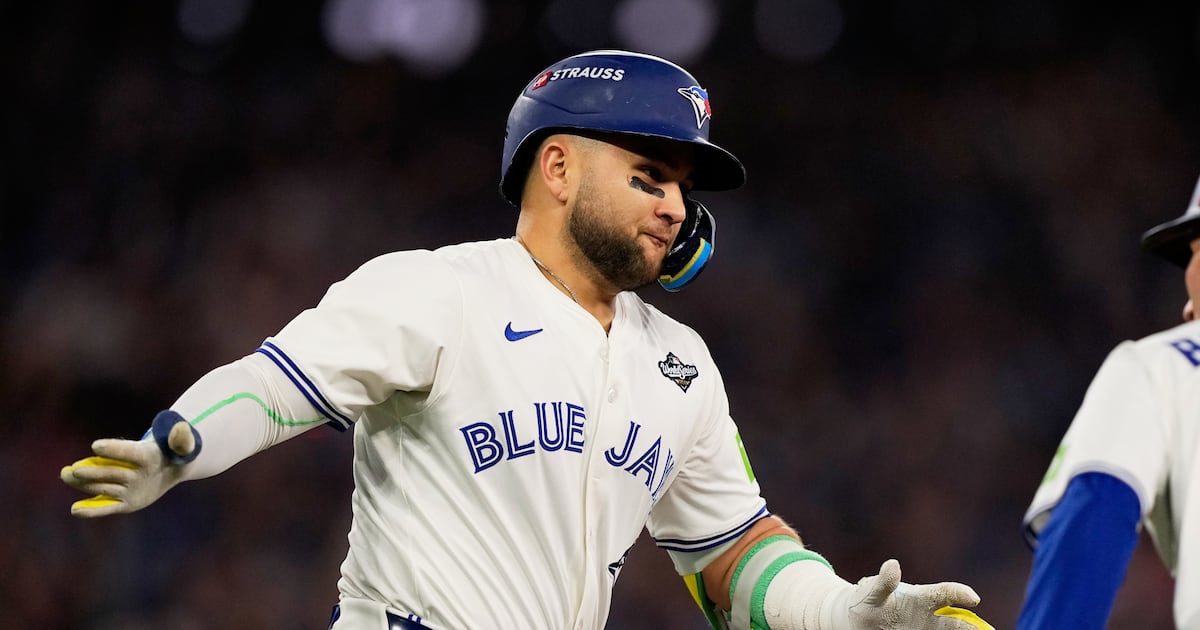
Free agent Bo Bichette signed a three-year, $126 million contract with the New York Mets that includes opt-outs after both the first and second seasons and no deferrals. Bichette, 27, rebounded in 2025 with a .311 average, 18 home runs and 94 RBIs and leaves the Blue Jays after seven seasons in which he hit .294 with 111 homers and 437 RBIs; the move follows Toronto’s failure to land Kyle Tucker (four years, $260M to the Dodgers). For investors, the transaction is a roster and payroll shift with limited market implications but notable for franchise competitiveness and short-term contract exposure due to the early opt-outs.
Market structure: The Mets signing of Bo Bichette materially benefits New York-facing revenue pools (ticketing, local ad, concessions, and sports-betting handle) while creating a modest near-term downside for Toronto-facing media/subscription revenue. Public beneficiaries: sports-betting operators (DraftKings DKNG, Penn PENN) and apparel licensor Nike (NKE); potential loser: Rogers Communications (RCI.TO)/Sportsnet exposure to Blue Jays viewership. Supply/demand note: elite shortstops remain scarce — three-year deals with opt-outs signal teams prefer flexibility, keeping near-term free-agent supply constrained and forcing premium pricing for 1–3 year windows.
Risk assessment: Tail risks include a season-ending injury to Bichette, an opt-out that triggers renewed bidding (Nov 2026/Nov 2027), or regulatory changes to sports-betting frameworks in NY/Canada. Time horizons: immediate (0–30 days) ticket/merchandise sentiment moves; short-term (3–9 months) betting handle and advertising revenue into the 2026 season; long-term (12–36 months) payroll/luxury-tax dynamics affecting franchise behavior. Hidden dependencies: Mets payroll may crowd out other signings (trade/depth impacts), and Rogers’ subscription economics depend on playoff-run carryover rather than one player.
Trade implications: Tactical long exposure to DKNG/PENN and NKE to capture incremental NY handle and apparel sales into the 2026 season; use defined-risk option call spreads (3–9 month) around season start to limit premium outlay. Small, disciplined short on RCI.TO expresses potential Toronto churn but cap size given telecom diversification. Key timing: initiate by Feb–Mar 2026 ahead of opening day promos, trim into July trade-deadline noise, and de-risk before opt-out windows in Nov 2026/2027.
Contrarian angles: Consensus underweights the compounding effect of flexible short contracts — opt-outs accelerate wage re-pricing and could boost adjacent industries (sports retail, secondary ticket exchanges) by 5–15% incremental seasonal revenue in strong markets. Conversely, the market may overstate Rogers’ exposure; subscription impact is likely <2–4% revenue swing, so any short should be small and paired. Historical parallel: mid-decade star moves (e.g., high-profile NL/AL signings) boosted betting/apparel revenue for 6–18 months but left media conglomerates largely resilient, suggesting asymmetric upside in betting/apparel vs limited downside in diversified media.
AI-powered research, real-time alerts, and portfolio analytics for institutional investors.
Request DemoOverall Sentiment
neutral
Sentiment Score
0.10
