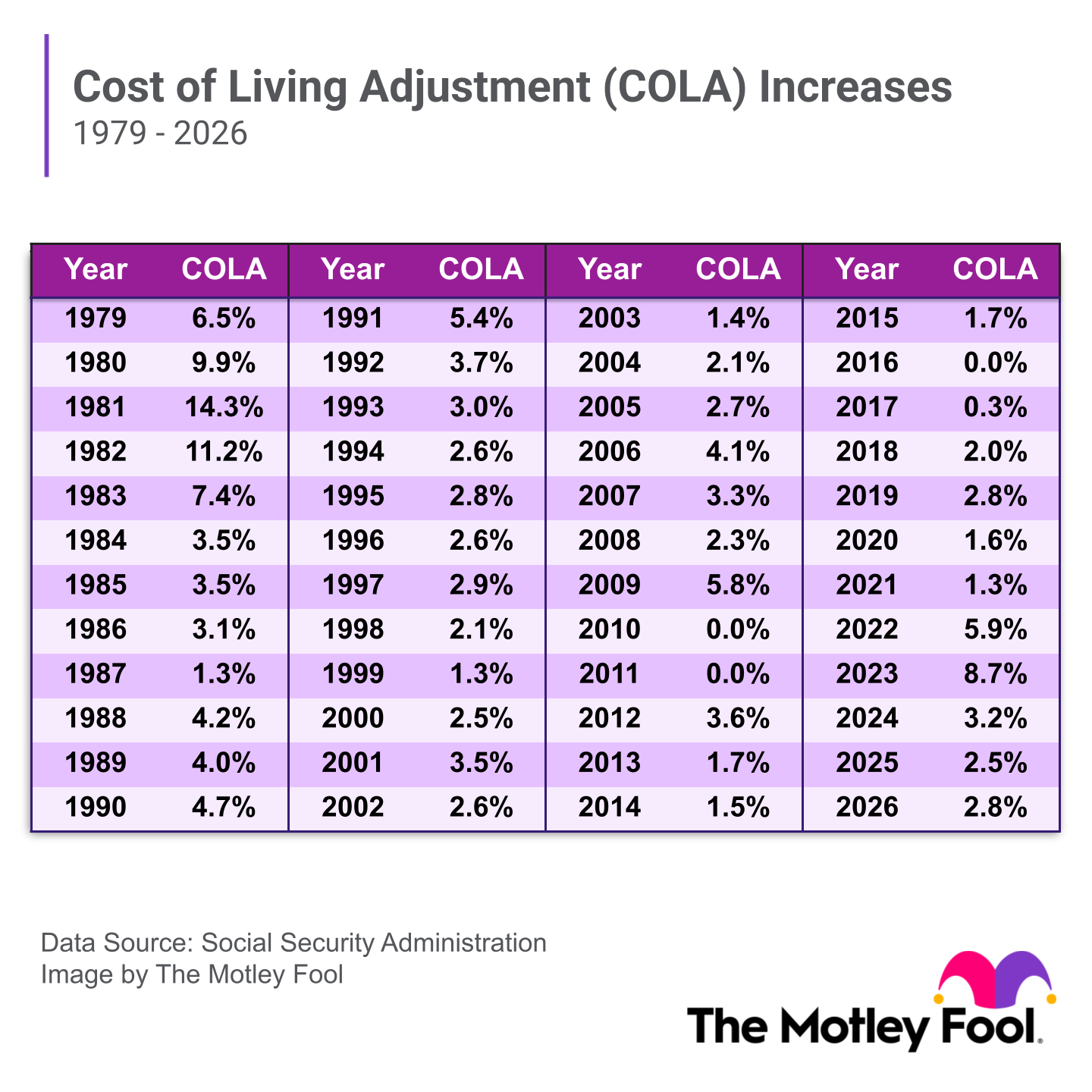
Social Security beneficiaries will receive a 2.8% COLA in January 2026 based on the 2025 Q3 vs 2024 Q3 CPI‑W comparison (e.g., a $2,000 benefit rises to $2,056). The Social Security payroll tax wage base will increase to $184,500 in 2026 from $176,100 in 2025, meaning earnings between those amounts will become subject to the 12.4% tax (6.2% employee share), illustrated by an extra $223.20 owed on $180,000 of earnings. The COLA and NAWI‑driven wage base change affect beneficiary purchasing power, payroll tax receipts and calculations for maximum benefits used in SSA benefit formulas.
Market structure: The 2026 2.8% COLA (~2.8% on roughly $1.0T of annual benefits ≈ $28B incremental retiree income) shifts modest but concentrated demand into healthcare, pharmaceuticals, utilities, consumer staples and senior housing. The $176.1k→$184.5k wage base lift (+$8,400) raises Social Security tax exposure by 6.2% of that increment (≈$520.8 per side per affected worker), compressing disposable income for high earners and increasing payroll costs for tech/finance employers, nudging compensation mix toward equity or deferred pay. Payroll processors (ADP/PAYX) and HR-software vendors are short‑term beneficiaries from compliance and withholding changes.
Risk assessment: Tail risks include political reforms (benefit cuts or payroll tax increases) after the SSA Trustees’ solvency signals, and sharp CPI‑W volatility that could change future COLAs. Immediate operational risk (days–weeks) is payroll/IT mispricing; short term (3–12 months) is earnings guidance revision by employers/insurers; long term (years) is demographic-driven outflows increasing program funding needs. Hidden dependency: Medicare/Medicaid funding and interest‑rate-driven cap‑rate moves for REITs amplify outcomes.
Trade implications: Favor defensive, healthcare and senior‑housing exposure into 2H–2025 through 12‑18 month holds: Medicare Advantage insurers and well‑positioned REITs should outperform luxury discretionary and travel exposed to high‑earner consumption cuts. Use small tactical positions in payroll processors to capture one‑time implementation/service uplift. Options: use 9–12 month call buys on insurers/REITs or covered calls to collect yield while locking in exposure.
Contrarian angles: Consensus treats COLA as marginal; market underprices the aggregate $20–30B annual cash flow boost to high‑MPC retirees, which can meaningfully lift Medicare Advantage yield streams and senior housing occupancy. Conversely, markets may under‑react to employer behavior: firms will reprice compensation (more equity, fewer cash raises) reducing wage inflation — that is deflationary for services and can support long‑duration bonds if realized.
AI-powered research, real-time alerts, and portfolio analytics for institutional investors.
Request DemoOverall Sentiment
neutral
Sentiment Score
0.00
