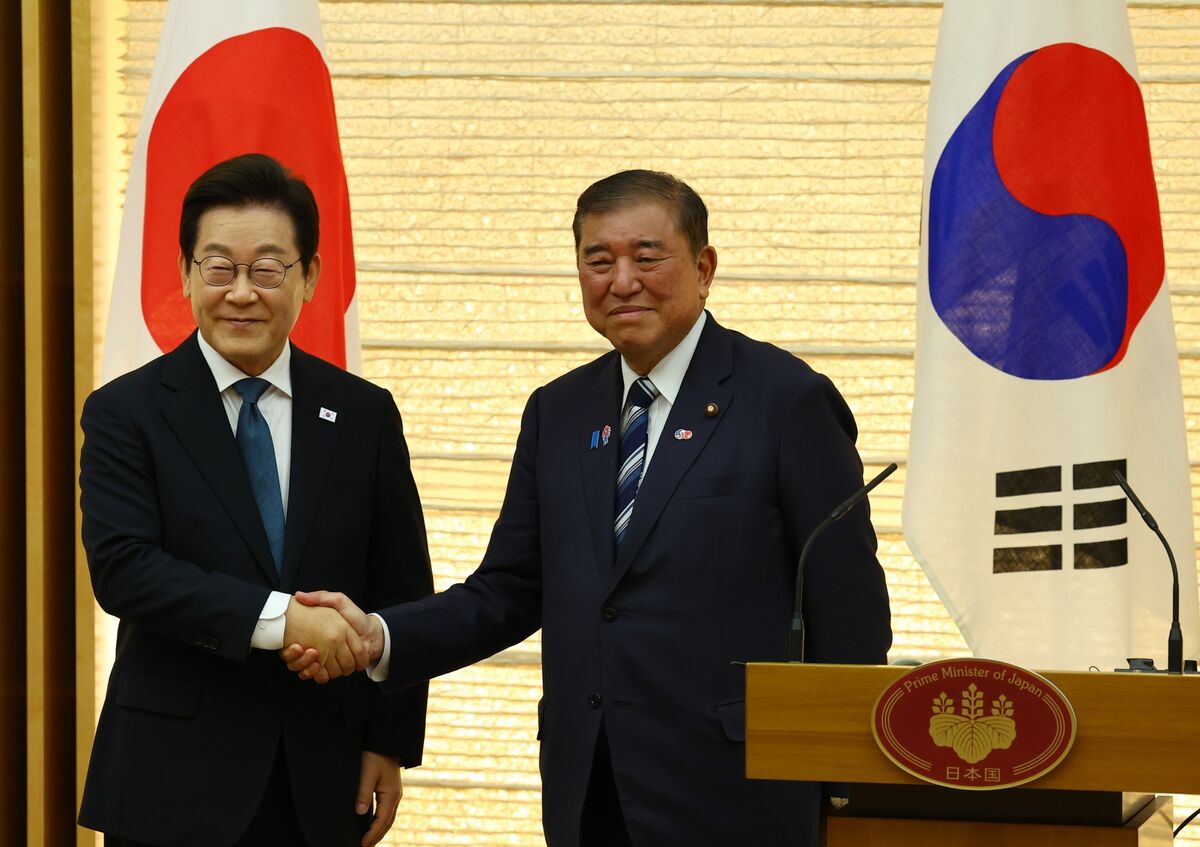
South Korean President Lee Jae Myung and outgoing Japanese Prime Minister Shigeru Ishiba agreed to enhance bilateral cooperation on shared challenges, including aging populations, low birth rates, and regional growth, following their summit in Busan. This initiative aims to solidify ties between the two major Asian economies, signaling a focus on long-term demographic and social issues despite Japan's impending leadership change, which could foster regional stability and policy alignment.
South Korea and Japan have formalized an agreement to deepen cooperation on shared, long-term structural challenges, specifically citing aging populations, low birth rates, and regional growth. The joint statement from the bilateral summit in Busan signifies a strategic alignment on socio-economic issues, which carries a moderately positive sentiment for regional stability. However, the market's reaction is muted, as indicated by a low impact score of 0.25, suggesting investors do not perceive this as a near-term catalyst for asset prices. A key point of uncertainty is that the agreement was reached with Japan's outgoing Prime Minister, Shigeru Ishiba. The commitment to continue 'working-level discussions' appears to be a mechanism to embed this cooperation at a bureaucratic level, potentially insulating it from political leadership changes and fostering policy continuity between the two major Asian economies.
AI-powered research, real-time alerts, and portfolio analytics for institutional investors.
Request DemoOverall Sentiment
moderately positive
Sentiment Score
0.45
