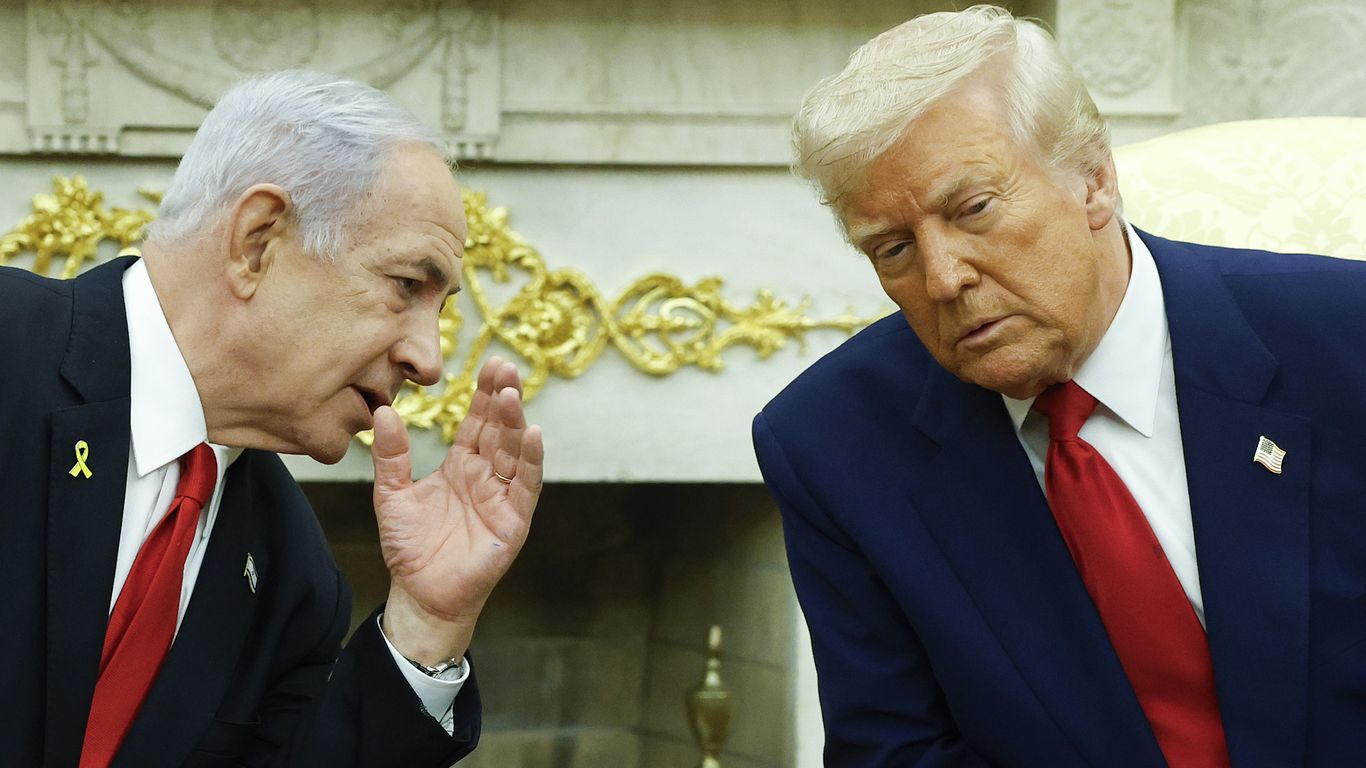
President Trump is meeting with Israeli Prime Minister Netanyahu to advance a Gaza ceasefire, aiming for a 60-day truce involving hostage releases. The critical juncture of the discussions centers on the contentious 'day after' scenario for Gaza, with the U.S. pressing for a framework on post-Hamas governance and security. While Israel has shown some flexibility on Hamas's removal, Netanyahu's proposed post-war administration, which excludes the Palestinian Authority and relies on Arab states, faces significant international opposition, underscoring the enduring geopolitical complexities impacting regional stability and investment outlook.
High-level diplomatic efforts are underway to secure a 60-day ceasefire in Gaza, centered on a U.S.-backed meeting between President Trump and Israeli Prime Minister Netanyahu. While there is momentum for a temporary truce involving the release of hostages, the primary obstacle to lasting stability is the profound disagreement over the post-war governance of Gaza. The U.S. is pushing for a clear framework for the "day after," but faces a complex diplomatic landscape. Prime Minister Netanyahu adamantly opposes any role for either Hamas or the Palestinian Authority, instead proposing control by a coalition of Arab states. This plan is directly opposed by key regional powers including Egypt, Jordan, the UAE, and Saudi Arabia, who insist on the Palestinian Authority's involvement and a clear political horizon toward a two-state solution. This fundamental impasse on a long-term political resolution, reflected in the uncertain tone and a significant market impact score of 0.6, indicates that any near-term ceasefire may prove fragile and is unlikely to resolve the underlying geopolitical risk.
AI-powered research, real-time alerts, and portfolio analytics for institutional investors.
Overall Sentiment
mixed
Sentiment Score
0.10
