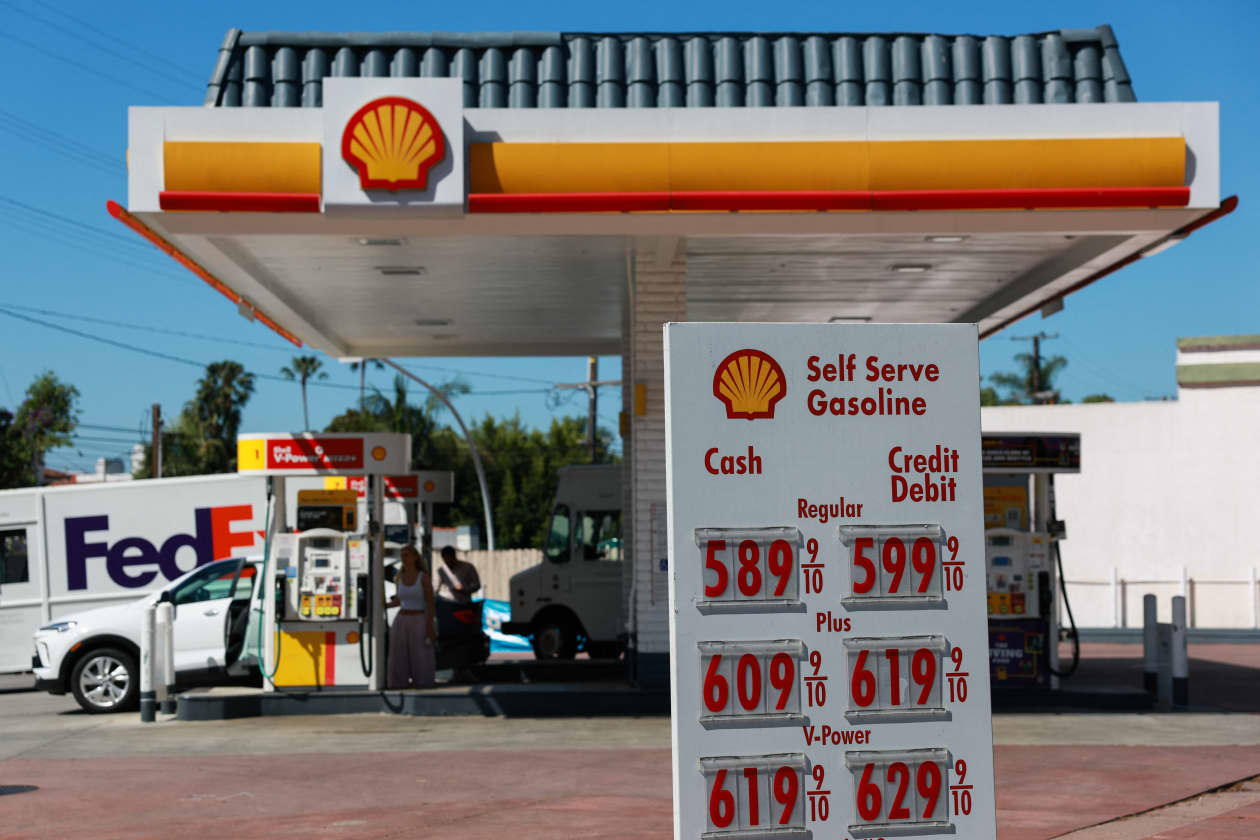
JPMorgan says oil prices need to rise materially to restore supply-demand equilibrium, warning that current supply is insufficient and inventories will need to be drawn down further. The call is framed as 'simple math' and tied to broader energy-market balance concerns, with geopolitical risk around Iran also in the background. The note is constructive for crude prices but negative for oil-consuming sectors and inflation-sensitive assets.
The key implication is not simply that oil needs to be higher, but that the adjustment may have to come through a sharp price move rather than a gradual one. If inventories are already tight, marginal barrels become increasingly price-insensitive: the market clears only after demand destruction, substitution, or a supply response, which tends to happen late and violently. That creates a convex setup where spot can overshoot fundamentals before rebalancing, especially if geopolitical risk keeps optional supply offline.
The second-order winners are the upstream and midstream names with low decline rates and export leverage, while the losers are the most energy-intensive cyclicals and transportation-linked businesses facing lagged margin compression. Refiners can also be ambiguous here: crude up faster than product pricing can squeeze cracks before end-demand passes through. The bigger structural beneficiary may be integrateds with strong trading books and balance sheets, because they can monetize volatility and avoid the forced capital markets dependency that smaller producers face in a squeeze.
The contrarian risk is that the market may already be pricing a war-risk premium, but not yet the demand response. If oil spikes too far, the reversal often comes from policy rather than production: SPR signaling, diplomatic backchannels, or pressure on sanctioned supply could cap the move within weeks to months. In other words, the near-term trade is not “higher oil forever,” but “higher realized volatility with asymmetric upside in the next 1-3 months,” followed by a rising probability of intervention once inflation optics worsen.
For JPM specifically, the issue is reputational rather than fundamental, but repeated high-profile calls around geopolitics can still matter to positioning if clients treat the desk as a regime signal. The more important message is that commodity equilibrium is being forced by price, not by comfort, and that usually favors owning convexity rather than direction outright.
AI-powered research, real-time alerts, and portfolio analytics for institutional investors.
Request TrialOverall Sentiment
mildly negative
Sentiment Score
-0.25
Ticker Sentiment
