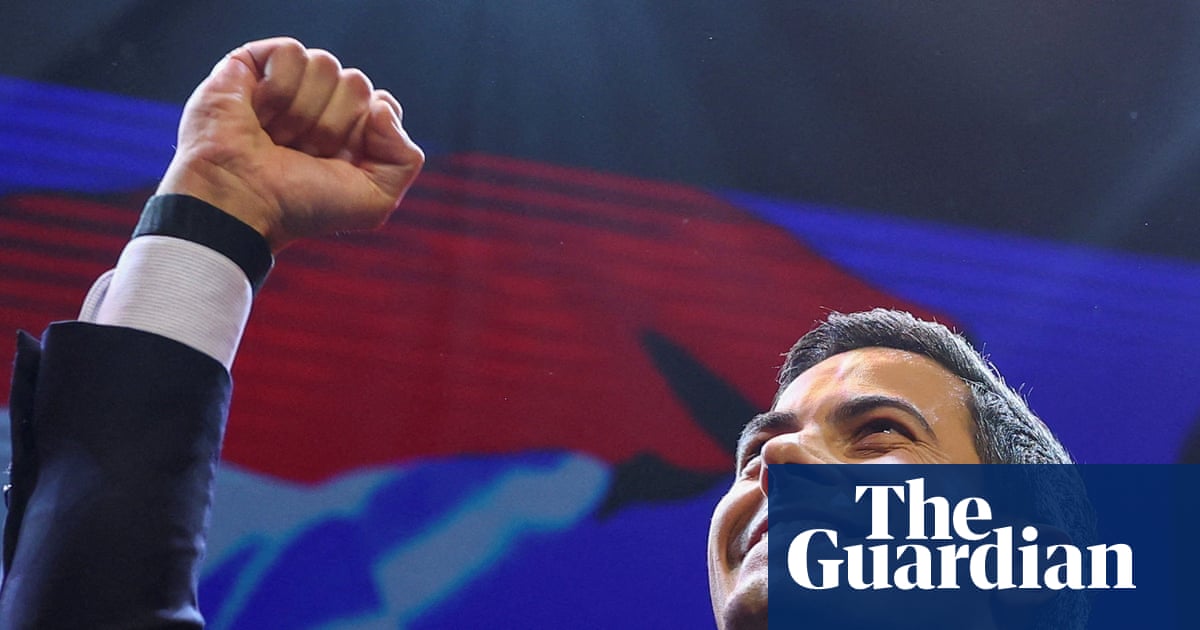
The Dutch general election results indicate a significant shift towards a stable, centrist, and pro-European government, with the liberal-progressive D66 party making substantial gains and its leader, Rob Jetten, positioned to become Prime Minister. Geert Wilders' far-right PVV saw its support slump and is expected to be excluded from coalition formation, reducing political uncertainty and anti-EU sentiment. A D66-led broad coalition, likely including CDA, VVD, and GL/PvdA, is anticipated, signaling continuity in economic policy and EU relations despite potentially lengthy negotiation processes.
The Dutch general election results indicate a significant political shift, with the liberal-progressive D66 party making substantial gains, reaching a projected 26 seats, and its leader, Rob Jetten, positioned to become Prime Minister. Conversely, Geert Wilders' far-right Freedom Party (PVV) saw its support slump, also projected at 26 seats, and faces near-certain exclusion from the next coalition government. This outcome signals a move towards a more stable, centrist, and pro-European political landscape, reducing the immediate threat of anti-EU sentiment previously associated with the PVV.
The most probable government formation is a broad D66-led coalition, including the Christian Democrat CDA (18 seats), the liberal-conservative VVD (22 seats), and the centre-left GL/PvdA (20 seats), which would command a stable majority of 86 seats in the 150-seat parliament. This composition suggests continuity in economic policy and a reinforced commitment to European integration. The potential for a D66-led government, characterized by liberal economic views and a pro-European stance, implies a predictable policy environment for investors.
Despite the clear direction, coalition negotiations are expected to be lengthy, potentially taking months, particularly given the VVD's historical reluctance to govern with the centre-left GL/PvdA, although Timmermans' departure might ease this. Furthermore, while Wilders' PVV was sidelined, the broader far-right bloc, including FvD and JA21, collectively gained one seat, indicating that far-right populism remains a persistent, albeit currently contained, force in Dutch politics. The new government will face significant challenges including housing, climate change, and migration, which could test its stability.
AI-powered research, real-time alerts, and portfolio analytics for institutional investors.
Request DemoOverall Sentiment
mildly positive
Sentiment Score
0.30
