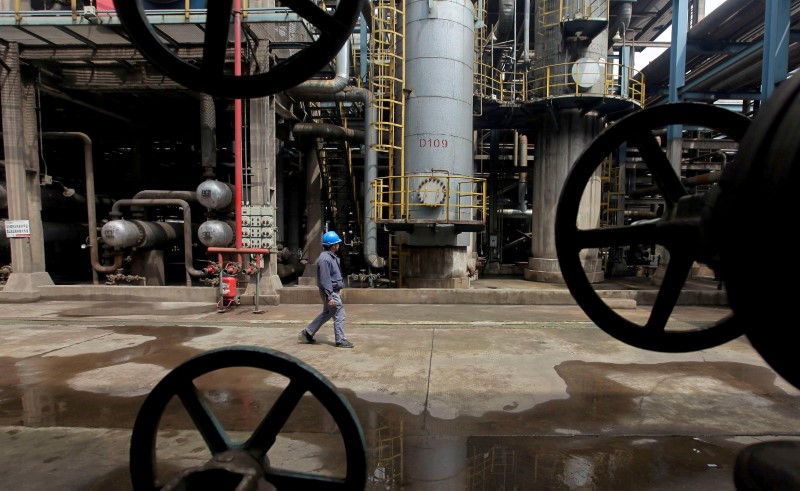
The closure of the Strait of Hormuz has materially constrained oil tanker flows, pushing WTI oil prices sharply higher and creating inflation and U.S. growth risks. U.S. stocks fell as investors positioned ahead of Q1 2026 earnings season; Goldman Sachs sees upside to bank net income and recommends buying Bank of America, Citigroup and Wells Fargo as markets price out Fed rate cuts and loan growth remains strong. Hedge funds are de-risking, which could dampen capital markets activity for some banks later in the year. Apple remains on track for a September foldable-phone release, a product-development note amid the broader risk-off market backdrop.
An energy-driven input-cost shock will transmit through margins and funding channels unevenly: banks with robust loan pipelines can convert higher short-term margins into near-term NII gains while investment-banking and trading franchises suffer from lower client risk-taking and narrower ECM/M&A windows. Expect 3–9 month divergence where core deposit-driven banks capture 2–6% incremental NII growth, but fee pools could shrink 10–30% if principal investors remain risk-off into earnings season.
Corporates with high fuel or logistics intensity face a compressed operating lever for the next 1–3 quarters; airlines and asset-light retailers are most exposed to a rapid working-cap reallocation, and supply chains that rely on single-route shipping will see lead times and freight-inflation pass-through accelerate gross margin pressure. That creates a tactical window for selective hedges rather than broad sector rotation: cost shocks force capital reallocation from discretionary upgrade cycles into working capital and energy hedges.
Technology hardware and software suppliers will bifurcate: vendors with flexible manufacturing and fast order-book visibility can reprice and shore up margins within 2–4 quarters, while those reliant on long-lead bespoke components will see order push-outs and higher warranty/return risks. Meanwhile, hedge-fund de-risking is a second-order liquidity event — lower capital markets flow reduces short-term cyclical upside for banks and boutique advisors, but also raises the probability of volatility-driven trading opportunities when liquidity returns.
Key tail-risks to monitor are (1) a prolonged geopolitical escalation that sustains the cost shock beyond 6 months (stagflation outcome), and (2) a rapid diplomatic resolution that creates a violent snap-back in risk assets within weeks — both scenarios argue for option-like asymmetric positioning rather than size-only directional bets.
AI-powered research, real-time alerts, and portfolio analytics for institutional investors.
Request DemoOverall Sentiment
mildly negative
Sentiment Score
-0.20
Ticker Sentiment
