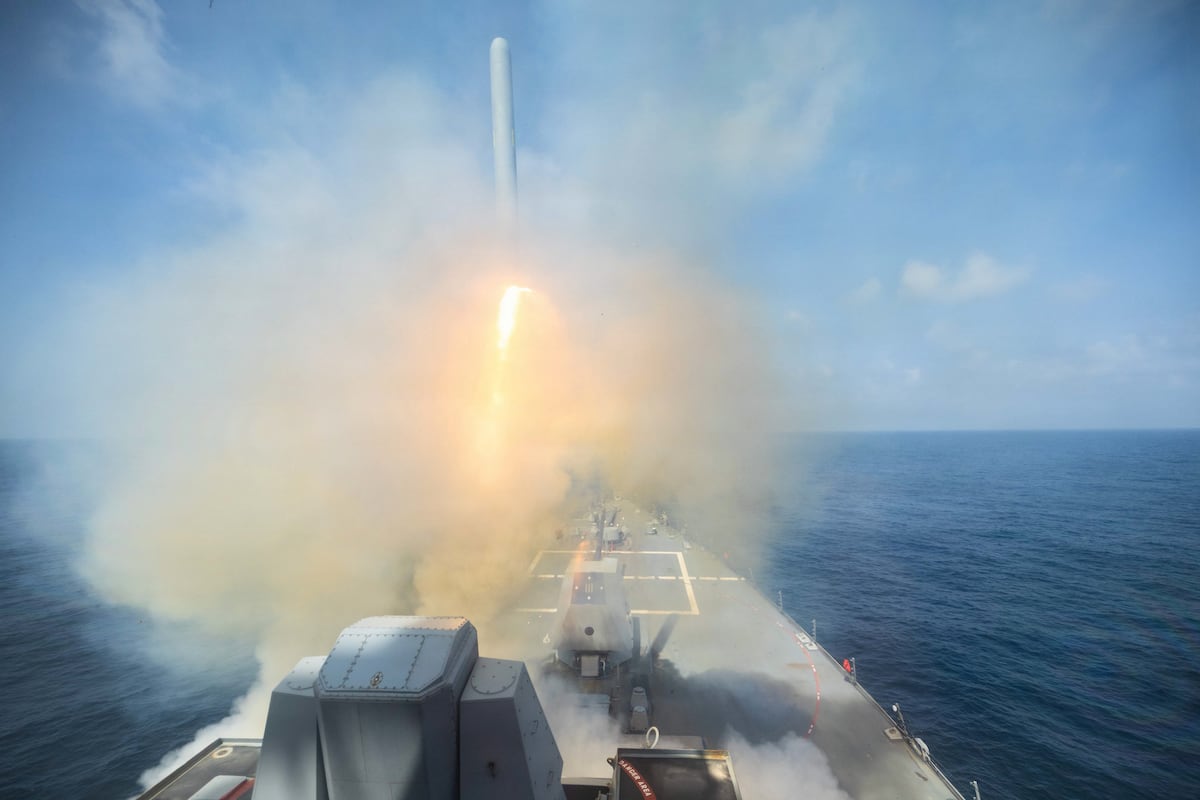
The U.S. military reportedly fired more than 850 Tomahawk cruise missiles in four weeks, prompting internal concern about rates of munition consumption and how to replenish stocks. Reuters could not independently verify the report; the White House and Pentagon issued statements saying stockpiles are sufficient while urging defense contractors to accelerate production. This is a developing story with potential sector impact for defense contractors and supply-chain implications if replenishment accelerates.
The operational effect most investors miss is not just higher bookings for primes but an acute, near-term rerouting of cash and backlog to specialized subcontractors that control long-lead precision subassemblies (guidance, seekers, propellant/grain formulations). Those suppliers can lift volume in 3–9 months, whereas integrated prime revenue recognition often lags 9–24 months while they manage subcontractor capacity and inventory replenishment. This creates a classic ‘‘front-end supplier’’ alpha opportunity distinct from the headline defense names.
Politically, the current administration’s posture raises the probability of a supplemental appropriation or reallocation inside the next 3–9 months ahead of the election — not a guarantee but a higher conditional chance. Primes will benefit from program extensions and R&D awards, yet margin expansion will be muted short-term as primes pay premiums to accelerate subcontractor outputs and possibly buy capacity (outsourcing makes them cash consumers initially).
Key catalysts to watch are: DoD/appropriations committee language and award notices over the next 60–180 days, supplier bookings and lead-time disclosures in quarterly calls, and Congressional hearings that can flip funding forward or stall it. Tail risks are a rapid de-escalation that leaves inventory overhang and write-offs, or escalation that drives commodity/transport inflation and squeezes margins for 2–4 quarters.
Contrarian view: the market’s reflexive bid in large-cap primes understates the asymmetric upside in mid/small-cap precision suppliers and aftermarket parts providers who can scale faster and capture recurring spares demand. Positioning should be time-boxed (6–18 months) to capture order flow and inventory rebuild before program-level earnings catch up.
AI-powered research, real-time alerts, and portfolio analytics for institutional investors.
Request DemoOverall Sentiment
neutral
Sentiment Score
0.00
