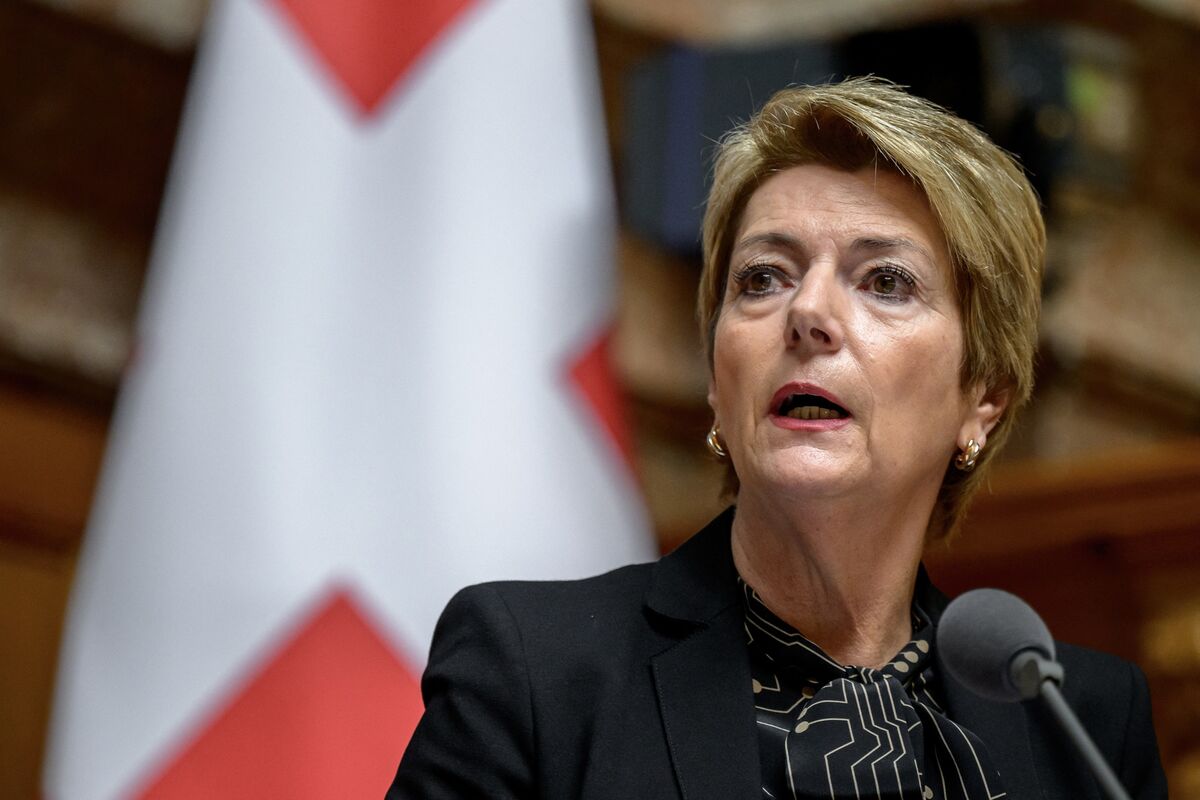
Swiss President Karin Keller-Sutter is making an urgent, uninvited trip to Washington D.C. to seek a reduction in the 39% tariff recently imposed by President Trump, ahead of Thursday's implementation deadline. This underscores the high domestic pressure on Switzerland to mitigate the economic impact of the levy.
A last-minute, uninvited diplomatic mission by Swiss President Karin Keller-Sutter to Washington underscores the significant economic pressure Switzerland faces from a newly imposed 39% U.S. tariff. This action, taken ahead of a looming Thursday implementation deadline, signals a high degree of urgency and highlights the potential for severe disruption to Swiss-U.S. trade relations. The situation introduces considerable geopolitical and trade policy uncertainty, reflected in the strongly negative sentiment score (-0.7). The outcome of these impromptu negotiations is highly uncertain and will be a critical determinant for Swiss exporters and the broader Swiss economy, which is evidently under significant domestic pressure to mitigate the impact of this substantial levy.
AI-powered research, real-time alerts, and portfolio analytics for institutional investors.
Request DemoOverall Sentiment
strongly negative
Sentiment Score
-0.70
