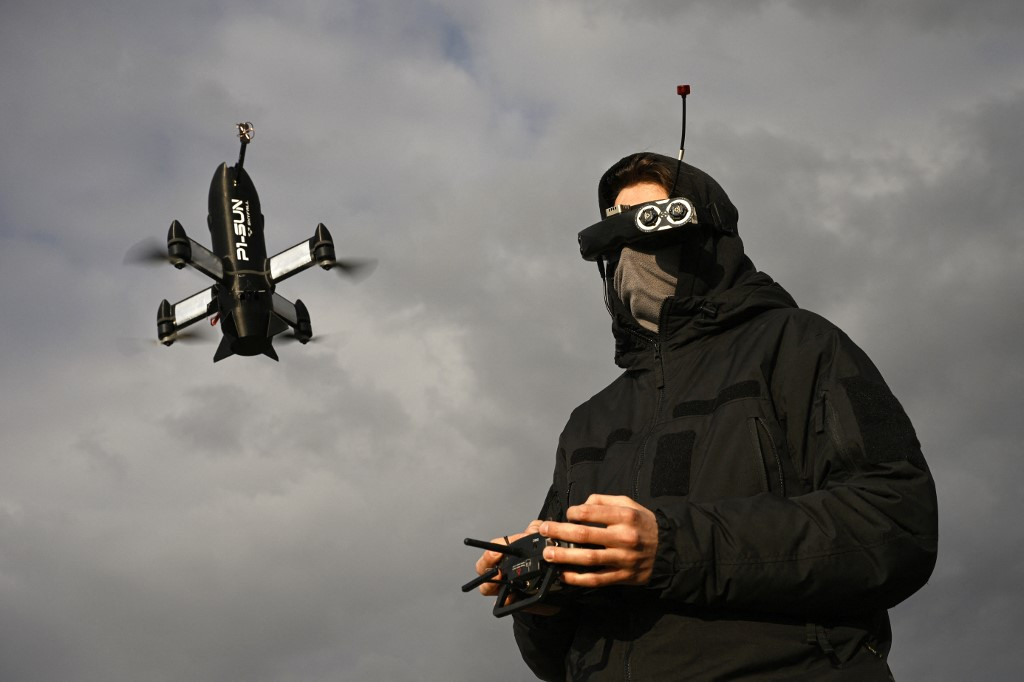
Ukrainian drone instructors reportedly 'destroyed' Swedish troops during a NATO-linked exercise on Gotland, highlighting how drone warfare and counter-drone tactics are reshaping military preparedness. Swedish and US officers said Western forces need to accelerate adaptation, with the exercise also testing response options around NATO Article 5 and Baltic Sea defense. The article underscores elevated geopolitical risk in Europe, but it is mainly a defense-readiness story rather than an immediate market-moving event.
This is a clean signal that the next defense spend cycle will be less about legacy platforms and more about survivability, EW, sensors, and cheap attritable systems. The real budgetary implication is not one-off drone procurement; it is the need to re-architect training, command software, counter-UAS, and distributed communications so forces can operate under degraded GPS, comms, and power. That shifts spend toward companies with exposure to electronic warfare, tactical networking, battlefield software, and autonomous systems integration rather than pure airframes or heavy armor. The second-order effect is acceleration: Western militaries will likely pull forward requirements by 12-24 months, because the gap is now visible to policymakers in a live-fire context rather than a classified exercise. That favors suppliers that can ship quickly and iterate in software cycles, while penalizing primes dependent on long qualification timelines. It also raises the odds of a multi-year replenishment wave for expendable drones, loitering munitions, secure radios, and base-hardening infrastructure, especially in Northern Europe and the Baltic states. The contrarian miss is that the market may over-focus on 'drone winner' headlines and underprice the losers from a higher-drone-threat environment: exposed logistics, static infrastructure, and platforms with weak EW self-protection. A prolonged adaptation gap would not just be a battlefield issue; it increases deterrence spending and should support defense budgets even if kinetic conflict does not escalate. The main reversal risk is political: if NATO members slow procurement or standardization after the exercise noise fades, the trade becomes a months-long narrative rather than a durable capex cycle.
AI-powered research, real-time alerts, and portfolio analytics for institutional investors.
Request DemoOverall Sentiment
mildly negative
Sentiment Score
-0.15
