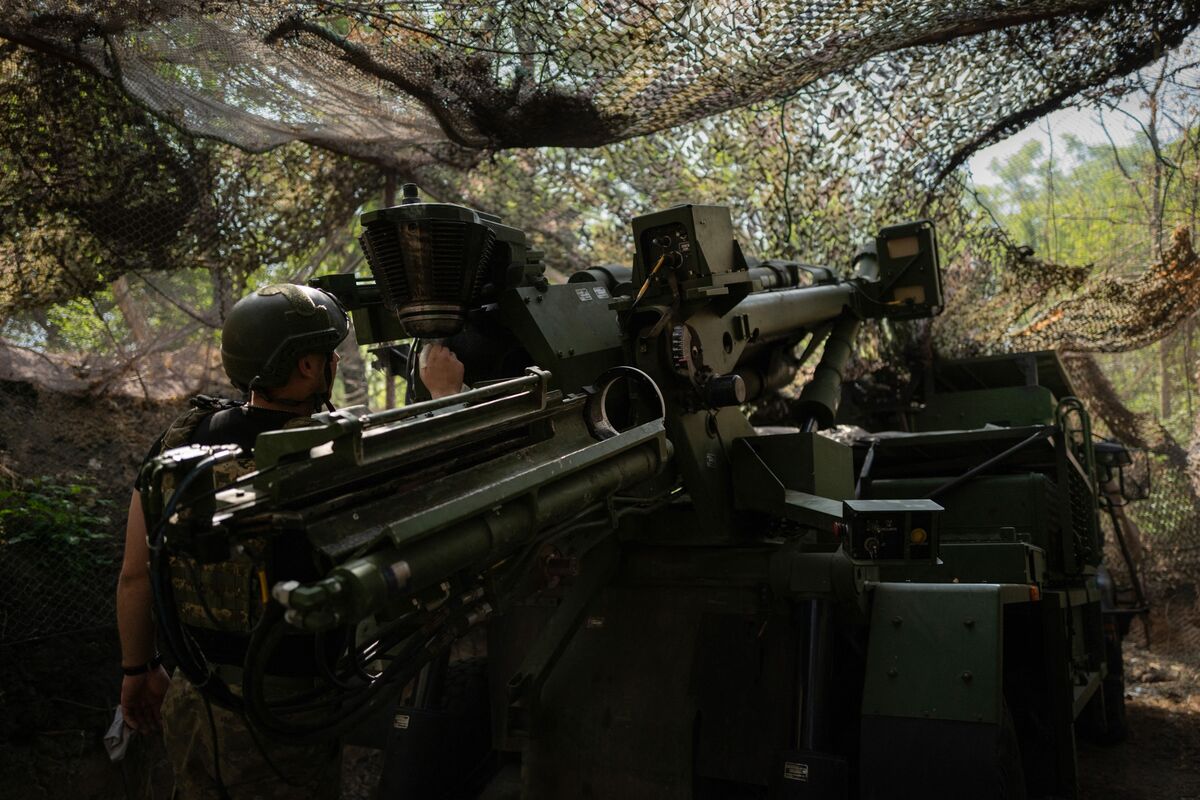
Italy's foreign minister and deputy prime minister Antonio Tajani said Rome will not yet join a NATO program to purchase U.S. weapons for Ukraine, calling participation 'premature' while peace negotiations continue. He argued that a ceasefire or agreement would obviate the need for further weapons and shift focus to security guarantees. The pause could temper near-term procurement expectations tied to the NATO initiative and is notable for defense contractors and NATO coordination, but is unlikely to be market-moving absent broader policy shifts.
Market structure: Italy’s pause is a localized demand shock — near-term losers are NATO-dependent US defense primes and ETFs (LMT, RTX, NOC, ITA, XAR) because a pause delays procurement timing and reduces near-term order visibility by an estimated single-digit percent of incremental NATO buys over 6–12 months. Winners are short-duration risk assets and euro-sensitive plays (EURUSD, Italian bonds) that price lower geopolitical risk; oil and gold could slip 1–3% if de‑escalation expectation grows. Competitive dynamics favor existing backlog holders and non‑NATO markets that can reallocate excess US production capacity, pressuring premium pricing for new contract awards.
Risk assessment: Tail risks include a breakdown of talks driving a snap 10–20% rally in defense names, a >$5/bbl oil spike, and BTP spreads widening >50bp; opposite tail is a rapid multi-country NATO buy-in restoring demand. Immediate (days) effects: volatility down for defense equities by ~10–20% realized vol; short-term (weeks/months): order cadence shifts and funding reallocations; long-term (quarters) procurement cycles (2–5 years) mute permanent revenue loss. Hidden dependencies: US Congressional budget timelines, contractor backlog fill-rates, and Italy’s domestic politics can flip signal quickly.
Trade implications: Tactical trades favor shorting defense exposure and buying euro/Italian rates on de‑risk signals. Use options to express asymmetric views: put spreads on ITA/XAR and protective collars on existing LMT/RTX longs to cap downside while keeping upside optionality. Size trades small (1–3% portfolio) because reversal risk is material and monitor NATO sign-ups and BTP-bund spread as triggers.
Contrarian angle: The market may underprice the resilience of long-term defense demand — existing replenishment programs and US defense budgets remain large, so a multi-quarter dip is likelier than structural decline. Historical precedent (post-2014 pauses) shows ordering resumes and stocks recover within 6–12 months; a well-timed mean-reversion long in high-quality primes after a 15–25% pullback could be attractive. Unintended consequence: slower NATO pooling could redirect national procurement budgets, benefiting domestic suppliers — identify midsized European defence names for relative longs.
AI-powered research, real-time alerts, and portfolio analytics for institutional investors.
Request DemoOverall Sentiment
neutral
Sentiment Score
-0.15
