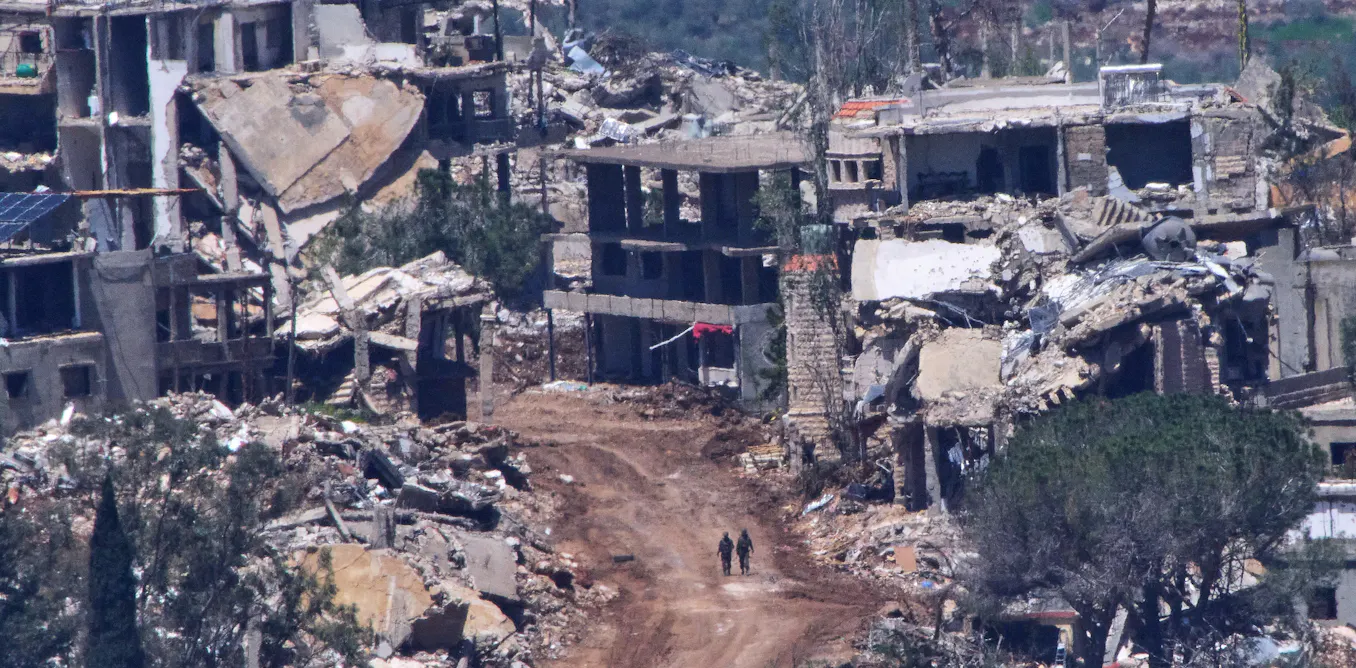
Israel’s post-ceasefire campaign in southern Lebanon has killed at least 40 people in recent days, bringing the death toll in the latest Hezbollah conflict to more than 2,600 and displacing 1.2 million. The article highlights Israel’s expanded buffer zone, destruction of infrastructure and evacuation orders, raising the risk of broader regional escalation and sustained damage to Lebanon’s economy and assets. Politically, the strategy is creating pressure on Netanyahu ahead of elections, while any U.S.-Iran ceasefire could force Israel to scale back operations against Hezbollah.
The market implication is not the headline violence; it is the increasing probability of a drawn-out quasi-occupation in southern Lebanon that forces a persistent CapEx and readiness premium into Israeli defense, surveillance, and border-security demand. The second-order effect is that “temporary” buffer zones tend to become semi-permanent fiscal sinks: they require ISR, drones, counter-UAS, engineering, and logistics capacity long after the air campaign loses novelty. That favors defense names with recurring software, sensor, and munitions revenue more than pure platform contractors. The bigger macro risk is political sequencing. If Washington pushes a broader Iran accommodation while Israel insists on continuing pressure on Hezbollah, the market may be forced to price a sharper U.S.-Israel policy split, which usually shows up first in FX, sovereign spread, and regional risk-premia rather than equities. A prolonged mismatch between battlefield objectives and diplomatic constraints also raises odds of an escalation accident over the next 1-3 months, especially around infrastructure chokepoints and border evacuations. Contrarianly, the consensus may be overestimating how much of this converts into a clean “victory” trade for Israel. The more likely medium-term outcome is not decisive defeat but degraded adversary capacity plus higher regional instability, which is bullish for defense spending and bearish for reconstruction optionality. It is also underappreciated that the destruction of bridges and local infrastructure can impair future troop mobility and humanitarian access, creating operational friction that extends the conflict and increases the probability of an eventual externally imposed ceasefire.
AI-powered research, real-time alerts, and portfolio analytics for institutional investors.
Overall Sentiment
strongly negative
Sentiment Score
-0.72
