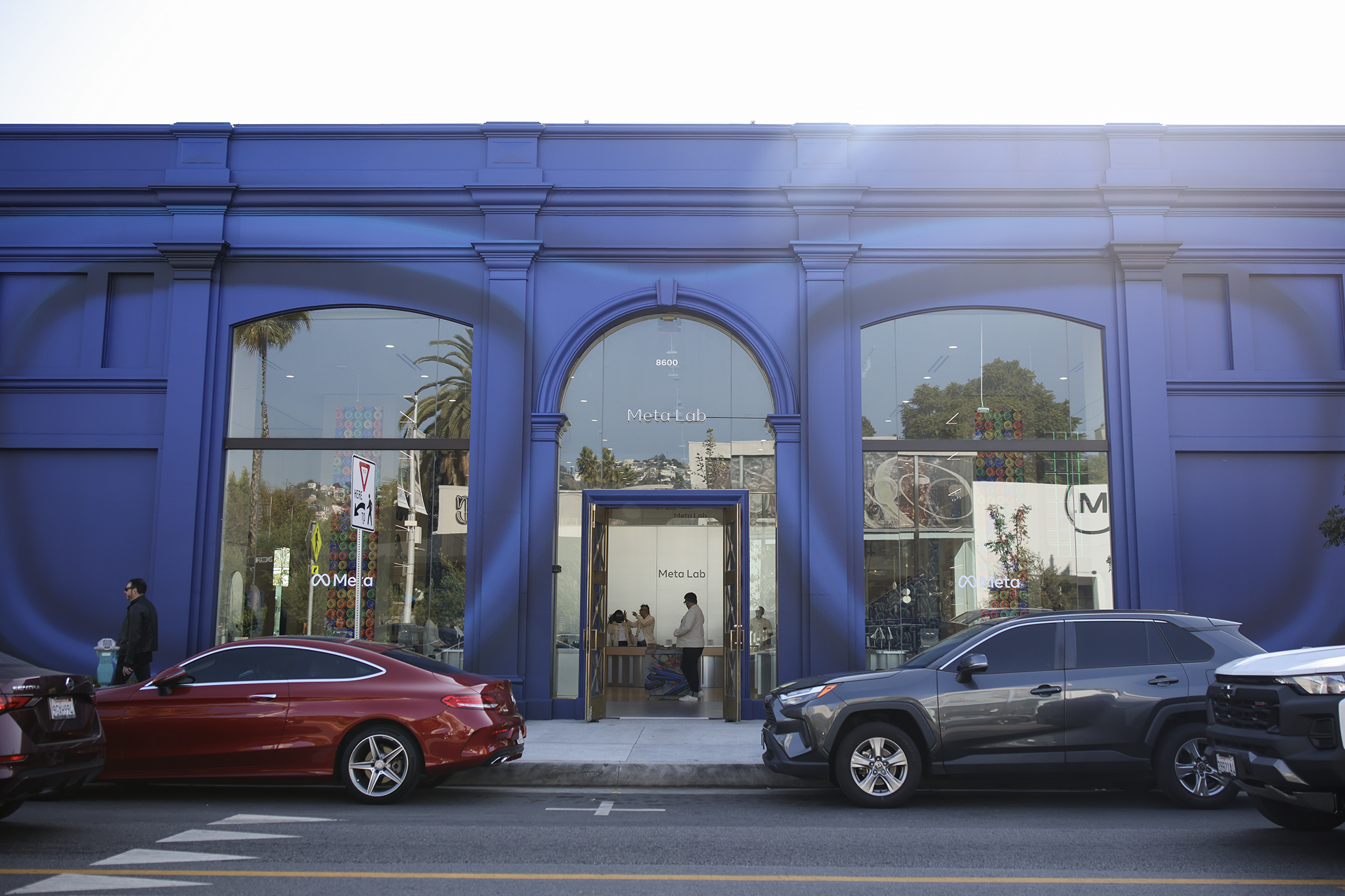
Meta has opened a permanent Meta Lab in West Hollywood to showcase and sell its AI-powered Ray‑Ban smart glasses as part of a broader push into experiential retail and wearable hardware; the basic glasses are marketed around $459 while versions with an integrated display start at about $799, and Meta says foot traffic and sales at the Melrose Avenue outpost have exceeded expectations. The glasses offer on‑device photo/video capture, music and conversational AI features designed to drive first‑person social content creation—an initiative Mark Zuckerberg has framed as a potential competitive necessity—against a backdrop of rising consumer receptivity to AI (Pew: 73% willing to let AI assist vs. 46% using voice assistants in 2017). Investors should weigh the upside of new hardware revenue and deeper user engagement against material privacy, surveillance and regulatory risks highlighted in reports of facial‑recognition hacks and law‑enforcement use, which could constrain adoption or invite scrutiny that affects monetization.
Meta has opened a permanent Meta Lab on Melrose Avenue in West Hollywood to showcase and sell its Ray‑Ban Meta AI smart glasses, with basic models marketed around $459 and display‑enabled variants starting at about $799; a Meta spokesperson said foot traffic and sales at the outpost have exceeded expectations without providing hard numbers. The product combines on‑device photo/video capture, integrated speakers, and conversational AI to promote first‑person social content creation, a use case Mark Zuckerberg framed on an earnings call as creating a potential "cognitive disadvantage" for non‑owners.
Consumer receptivity to AI appears to be rising—the Pew Research Center cited that 73% of Americans would let AI assist them versus 46% using voice assistants in 2017—supporting a larger TAM for wearable AI if adoption converts to purchases and engagement. However, the article highlights concrete privacy and security frictions: 404 Media reported that students enabled facial‑recognition doxxing on the glasses, and a CBP agent was reported to have used Ray‑Ban Meta during an immigration raid, flagging real‑world misuse and reputational risk.
These incidents elevate regulatory and litigation risk that could impair monetization or slow mainstream adoption despite initial retail traction; the available sentiment metrics are mixed with a slightly negative tilt for META (per‑ticker sentiment -0.2) and a modest market‑impact score (0.28). Investors should therefore weigh upside from new hardware revenue and deeper engagement against the potential for privacy‑driven regulation, enforcement actions, or product limitations that would materially affect uptake and ARPU.
AI-powered research, real-time alerts, and portfolio analytics for institutional investors.
Request DemoOverall Sentiment
mixed
Sentiment Score
0.00
Ticker Sentiment
