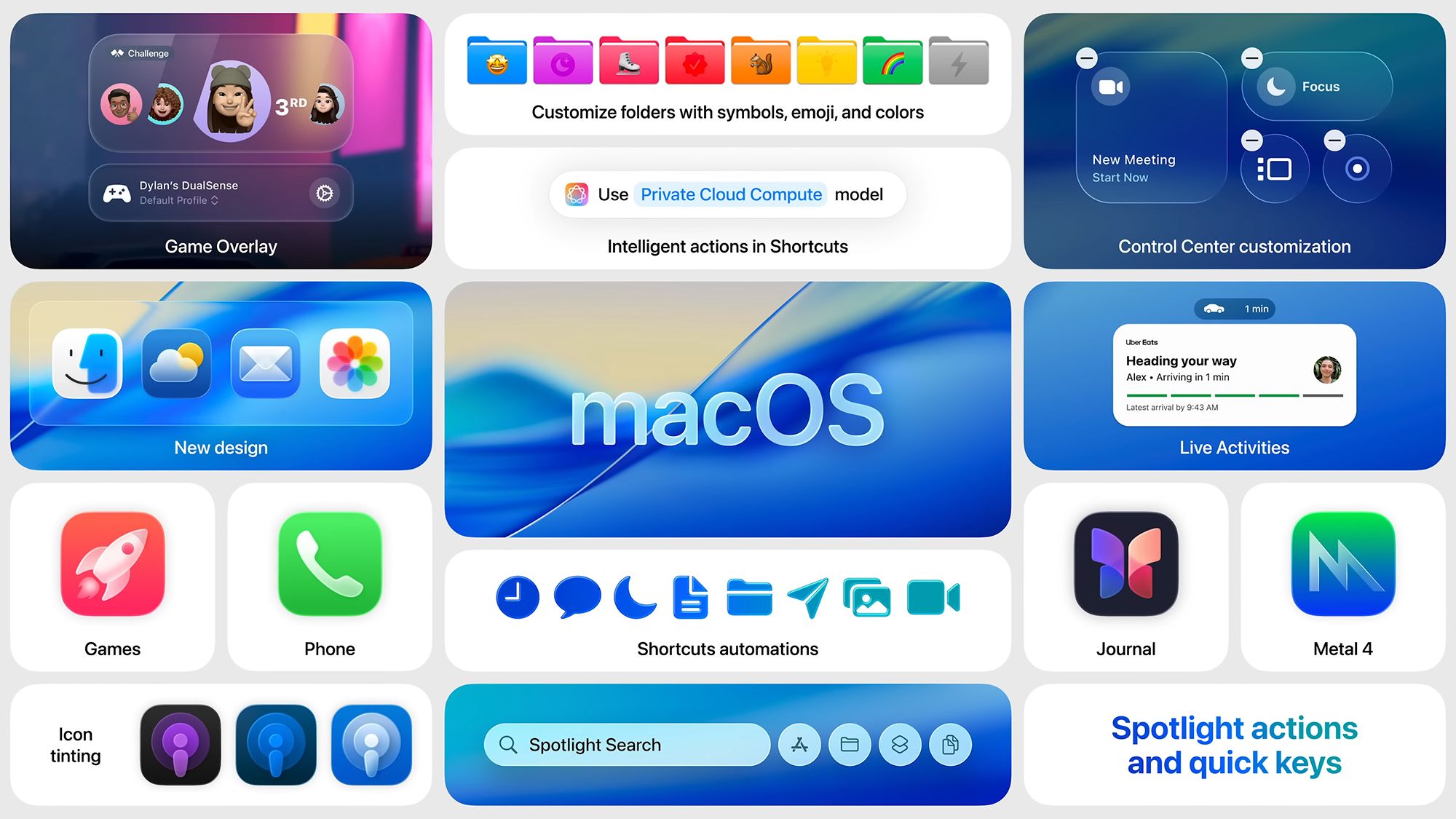
Apple has begun a global rollout of macOS Tahoe 26.2, introducing an Edge Light feature that uses the Mac display to illuminate users' faces on video calls (with automatic activation on 2024+ Apple Silicon Macs) and customizable width/temperature settings. The update also adds podcast auto-generated chapters and embedded links, Games library improvements and controller support, Freeform table flexibility, a Favorite Songs playlist in Apple Music, and AirDrop codes for added verification when transferring with unknown contacts. These enhancements strengthen user experience and device privacy within Apple’s ecosystem but are incremental and unlikely to have a material near-term impact on Apple’s financials.
Market Structure: Apple (AAPL) is the direct beneficiary — incremental macOS features like Edge Light and AirDrop verification increase hardware stickiness and marginally raise perceived Mac utility versus Windows/Chromebooks, supporting pricing power on new Mac lines over the next 6–12 months. Peripheral vendors (Logitech LOGI) and third‑party webcam/lighting makers are the closest losers as integrated software substitutes lower demand for $30–$200 accessory spend per user. Overall demand signal: incremental services engagement (Podcasts, Music playlists) nudges ARPU upward by a low single‑digit percentage over time rather than causing immediate hardware spikes.
Risk Assessment: Tail risks include a privacy or security flaw in Edge Light/AirDrop that triggers media/regulatory scrutiny (low prob, high impact) and could cause short‑term Mac selloff; hardware compatibility limits (Apple Silicon only) create segmentation and slower monetization, constraining impact to newer device cohorts for 12–24 months. Hidden dependency: accessory revenue compression is contingent on broad adoption of the feature — measure feature opt‑in rates and macOS 26.2 adoption (target 30–50% of active macOS users in 3–6 months to move needle). Catalysts: WWDC/next Mac refresh and quarterly Mac revenue prints within 60–90 days.
Trade Implications: Tactical long bias to AAPL (2–3% portfolio weight) for 3–6 month horizon; overweight if Mac revenue growth exceeds +5% YoY on the next report. Pair trade: short LOGI (0.5–1% weight) against AAPL to capture accessory substitution risk. Options: buy a 90‑day AAPL call spread sized to 0.5–1% notional (buy +8% ATM / sell +18% strike) to lever modest upside while capping premium.
Contrarian Angles: Consensus underestimates cumulative services monetization — small UI/UX improvements historically increase retention and accessory spend reallocation (analogous to iPhone camera improvements crushing compact cameras over ~3 years). Reaction may be underdone for AAPL (market prices feature as incremental), but overdone for LOGI where multiple headwinds (streaming, integrated displays) already compress margins. Unintended consequence: rapid feature adoption could increase Apple support costs and returns if illumination performance is poor on low‑end displays, creating short, visible churn events that would be buying opportunities.
AI-powered research, real-time alerts, and portfolio analytics for institutional investors.
Request DemoOverall Sentiment
mildly positive
Sentiment Score
0.25
Ticker Sentiment
