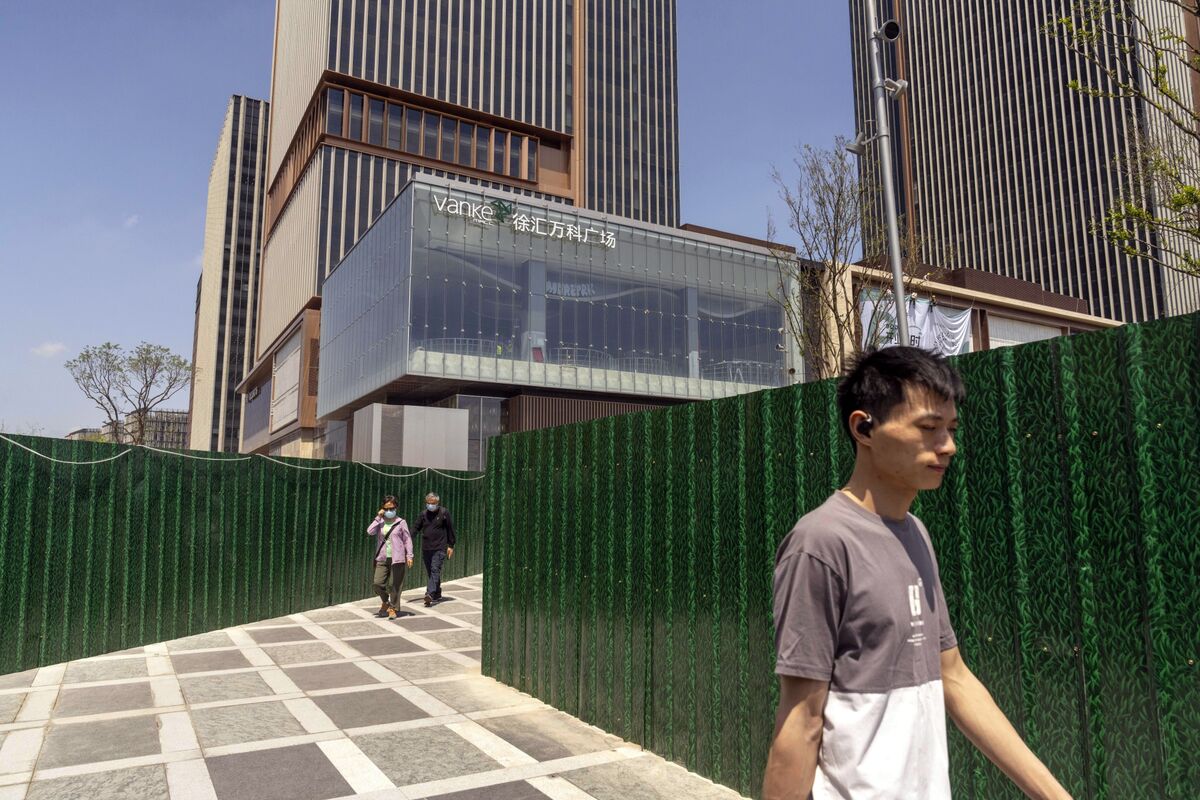
Shenzhen-based China Vanke has asked holders of a 2 billion yuan local bond due on Dec. 15 for a one-year extension, proposing to keep the 3% coupon unchanged during the delay as it grapples with mounting liquidity pressure and waning state support. The request underscores elevated stress in a major Chinese developer and raises credit concerns for bondholders and broader contagion risk across the domestic property and credit markets.
Market structure: Vanke asking for a 12-month extension on a CNY2bn note (3% coupon) shifts marginal liquidity risk from bond markets to bank/wealth-management channels; direct losers are junior bondholders, non-SOE private developers and shadow-bank-funded projects, while state-backed or cash-rich SOE developers and onshore banks (as potential stabilizers) are relative winners. Pricing power in new issuance will deteriorate: expect January–June secondary spreads on China property high-yield to widen by 300–800bp and offshore USD spreads to reprice first, pushing investors into shorter-dated, higher-quality paper.
Risk assessment: Immediate risk (days) is contagion-led spread widening and bank funding pulls; short-term (weeks–months) is rating downgrades and covenant breaches across single-A to high-yield IG names; long-term (quarters) is permanent equity dilution or formal restructuring for multiple private developers. Hidden dependencies include local government willingness to provide targeted liquidity and trust-structured products rolling; catalysts that could reverse sentiment are a coordinated provincial backstop within 30–60 days or visible onshore bond buybacks exceeding CNY10–20bn.
Trade implications: Tactical trades: buy protection via CDS or synthetics on high-yield China developers while shorting weaker H-share names (e.g., Evergrande 3333.HK, Sunac 1918.HK, Country Garden 2007.HK) relative to SOE-backed peers or China property ETFs; use 3–6 month put spreads to cap premium. Rotate 3–6% of equity exposure out of China real-estate/credit-sensitive banks into Chinese consumer staples and HK-listed SOE property names, and increase cash buffers for opportunistic distressed debt purchases at 30–50% debt haircuts.
Contrarian angles: Consensus treats any extension as a slow-motion default; that may be overdone for large quasi-SOE names where a 12-month extension could preserve enterprise value and provide cheap equity optionality. Historical parallels (2014–16 local-land and developer stress) show selective restructurings can produce >2x recoveries for senior bondholders; downside is a mispriced rally if provincial support appears — but upside is larger in selectively buying distressed bonds when secondary yields exceed 20% for issuers without explicit state backing.
AI-powered research, real-time alerts, and portfolio analytics for institutional investors.
Request DemoOverall Sentiment
moderately negative
Sentiment Score
-0.65
