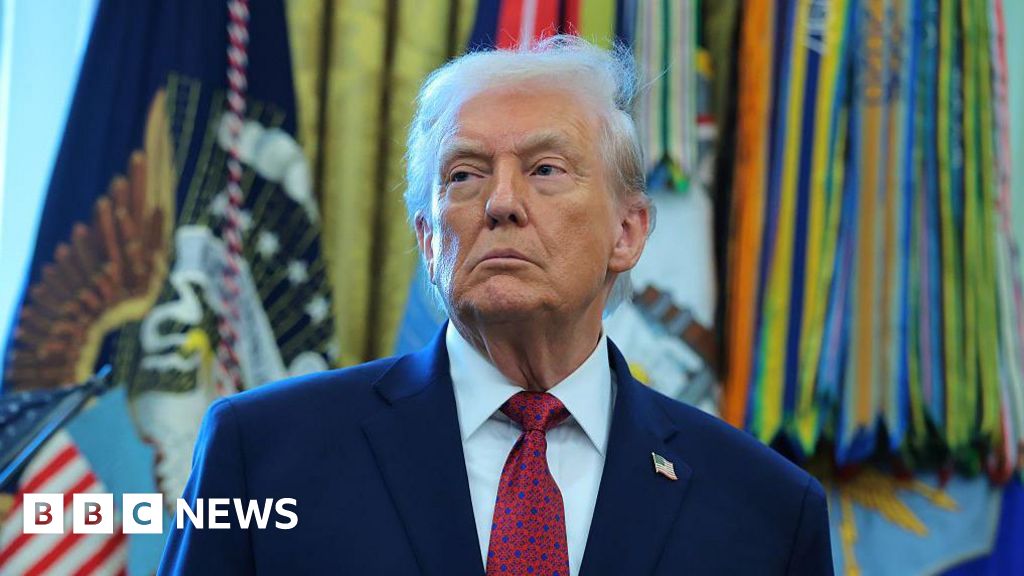
President Trump issued his first vetoes since returning to the White House, rejecting two bipartisan bills: one to reduce local payments toward a new Colorado water pipeline (sponsored by Rep. Lauren Boebert) which he called economically unviable and harmful to federal loan repayments, and the Miccosukee Reserved Area Act that would have directed Interior assistance for flooding mitigation for the Miccosukee tribe. Both bills passed Congress with bipartisan support, setting up the possibility of overrides and a political showdown that could influence budgetary and infrastructure policy debates ahead of the new year. The actions underscore heightened domestic political friction—particularly on immigration and state-level disputes—that may carry legislative and reputational implications but are unlikely to be material market-moving events.
Market structure: The veto injects idiosyncratic political risk into a narrow set of infrastructure and municipal credit exposures — primary losers are Colorado pipeline revenue bond holders and smaller regional contractors; potential winners are legal/consulting firms and safe-haven assets. Expect localized muni spread widening of 10–30 bps on affected Colorado paper and a modest re-pricing of contractors’ near-term backlog (0–6 months) rather than sector-wide shock.
Risk assessment: Tail risks include a swift congressional override (positive for contractors) or an extended stalemate leading to municipal rating actions (downgrade risk ~1 notch, 20–50 bps funding cost increase). Immediate volatility is likely around public vote/counts (days–weeks), credit fallout plays out over quarters; hidden dependency: outcome correlates with broader GOP cohesion ahead of 2026 primaries and litigation outcomes tied to tribal suits.
Trade implications: Event-driven, conditional trades dominate — short-duration muni defensives and option-based, limited-loss longs on large, diversified engineering names capture upside if override occurs; buy 30–90 day volatility protection around key vote windows. Rotate into water-tech suppliers only after legislative clarity; avoid levering small regional contractors because contract awards and federal cost-sharing remain binary.
Contrarian angle: Markets will likely under-price the override probability given bipartisan origins; if contractor equities drop >8–12% on headline risk, that is a tactical entry. Conversely, if political escalation persists beyond 60 days, larger firms with diversified federal book (Jacobs/AECOM) outperform small peers as procurement drags extend.
AI-powered research, real-time alerts, and portfolio analytics for institutional investors.
Request DemoOverall Sentiment
neutral
Sentiment Score
-0.15
