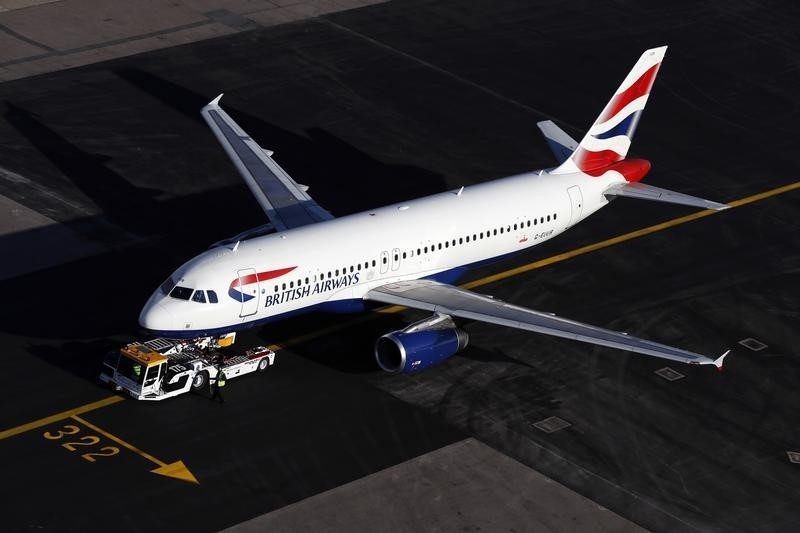
IAG warned full-year profit will be lower than previously expected as higher jet fuel costs and Middle East conflict-related disruptions pressure results; the company now expects a roughly €9 billion fuel bill and free cash flow below the €3 billion guided in February. Q1 revenue rose 1.9% to €7.18 billion and operating profit jumped 77.3% to €351 million, but capacity growth is being cut to about 1% in Q2 and 2% in Q3 from an earlier 3% plan. Management said it expects to recover about 60% of the higher fuel costs and remains on track for €1 billion of excess cash returns by February 2027.
The market is likely still underestimating how quickly higher jet fuel feeds through to airline earnings because hedging only delays the pain, it does not remove it. The more interesting second-order effect is that capacity discipline becomes the real margin defense: if competitors keep expanding seats into a fuel shock, unit revenue can hold better than expected, but if everyone trims growth the industry preserves pricing power and the absolute profit hit is smaller than headline fuel inflation suggests. That makes this a relative-value setup more than a simple sector short.
For IAG specifically, the key issue is not one quarter of margin compression but the asymmetry between fuel cost inflation and the lagged ability to reprice tickets. Leisure-heavy, Europe-exposed carriers with weaker ancillary revenue should be more vulnerable than network carriers with premium mix and stronger loyalty monetization. The fact that cash return plans remain intact signals management is not seeing a liquidity problem; that lowers the probability of forced de-risking but raises the chance of earnings disappointments being absorbed through slower growth and lower buyback intensity rather than a balance sheet event.
The geopolitical tail risk is a short-duration but high-impact spike in crude and refining spreads, which would hit airlines before broader macro demand has time to adjust. Over a multi-month horizon, however, the contrarian angle is that higher fares plus subdued capacity can offset a meaningful chunk of fuel inflation if demand remains resilient into summer; the selloff may be overdone if investors are extrapolating spot energy into a full-year earnings reset without accounting for yield elasticity. The best expression is to prefer relative shorts versus structurally weaker airlines rather than outright chasing the sector lower.
AI-powered research, real-time alerts, and portfolio analytics for institutional investors.
Request DemoOverall Sentiment
mildly negative
Sentiment Score
-0.28
Ticker Sentiment
