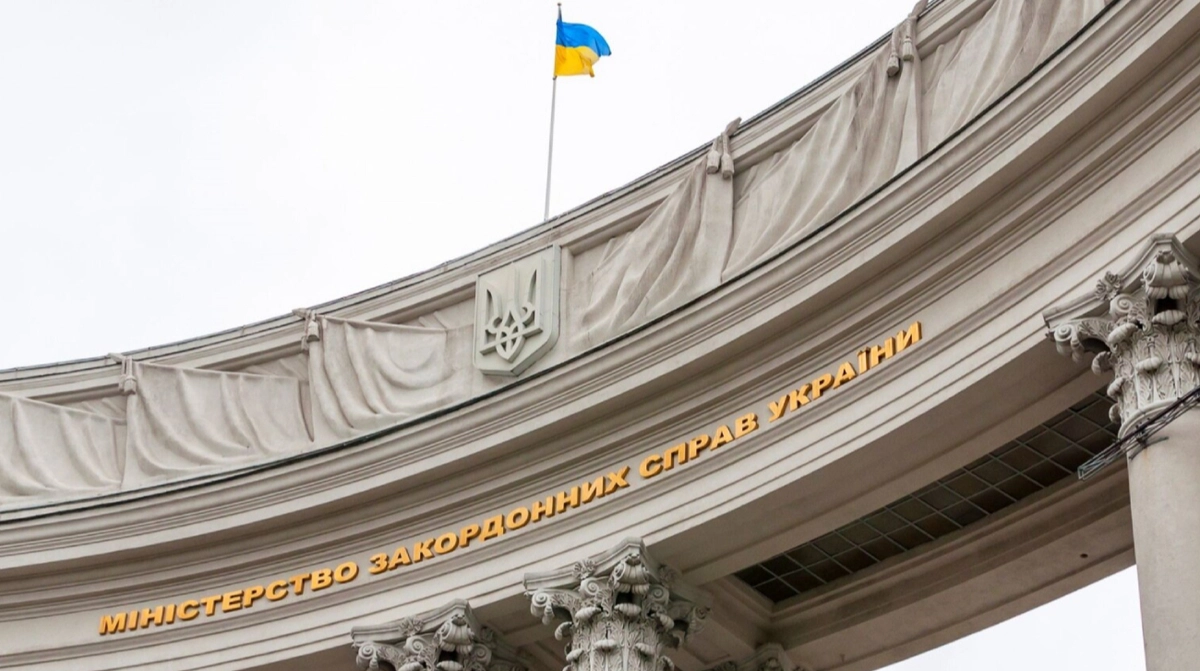
Ukraine's Foreign Ministry said Russia-Belarus joint nuclear exercises and the stationing of Russian tactical nuclear weapons in Belarus represent an unprecedented challenge to global security and a direct violation of the NPT. Kyiv called for stronger sanctions on Moscow and Minsk, more support for Ukraine, and reinforced NATO eastern-flank defenses. The rhetoric raises geopolitical risk near NATO borders and could bolster defense and sanctions-related market themes.
This is less about the nuclear headline itself than about the path dependence it creates for European security spending and sanctions durability. The second-order effect is a higher floor for NATO eastern-flank procurement, munitions replenishment, air-defense, ISR, and hardening capex over the next 12-36 months, even if the immediate market reaction is mostly noise. That favors primes and selected European defense electronics, while raising the probability of delayed but persistent pressure on industrial and transport assets exposed to Belarus-linked overflight, rail, and border logistics. The bigger market implication is that the Kremlin is widening the set of sanctions justifications, which can accelerate enforcement even without new headline packages. Expect more friction around dual-use exports, reinsurance, maritime services, and any cross-border payment rails tied to Russia/Belarus intermediaries; that creates a tailwind for compliance-heavy incumbents and a headwind for firms with residual Eurasian revenue exposure. The risk window is asymmetrical: days-to-weeks for headline-driven volatility, but months for budget reallocations and procurement awards. Contrarianly, the market may already be too positioned for a generic risk-off print while underpricing the persistence of European rearmament. If this escalates without a kinetic incident, the real upside is in the spend cycle, not the fear trade. Conversely, if backchannel de-escalation language emerges, defense beta can fade quickly, but sanctions/compliance names should remain structurally supported because the policy response path is now more entrenched. The key catalyst to watch is whether NATO responds with concrete force posture changes or just statements; the former would extend the defense trade, while the latter would likely mean a short-lived volatility spike. A separate risk is escalation miscalculation around exercises, which would be a negative for European cyclicals and small caps with Eastern Europe exposure more than for global index-level assets. In either case, this is a better buy-the-dip setup for defense and cybersecurity than a broad risk-parity de-risking signal.
AI-powered research, real-time alerts, and portfolio analytics for institutional investors.
Request DemoOverall Sentiment
strongly negative
Sentiment Score
-0.80
