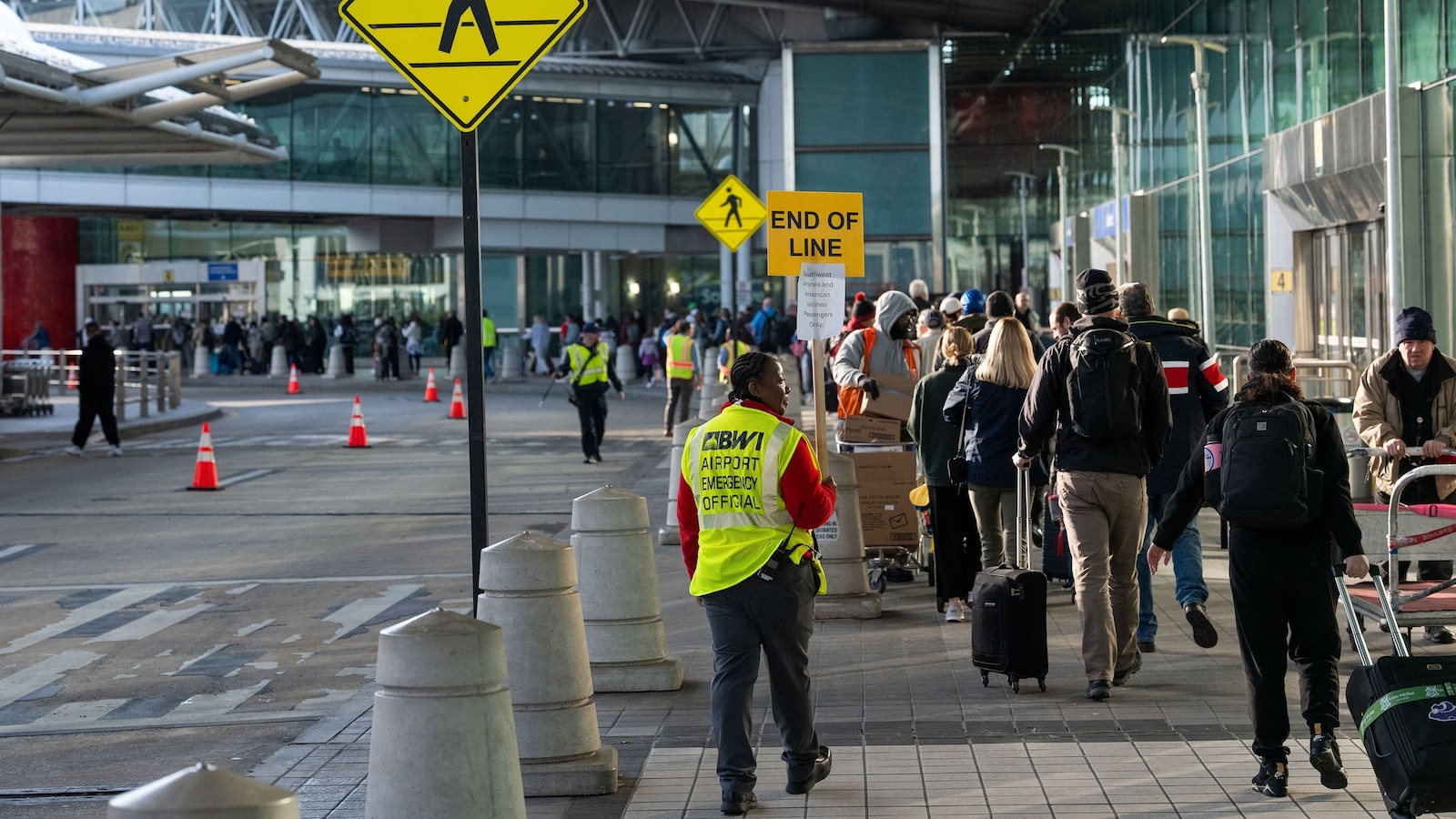
The Senate unanimously passed a bill to immediately fund TSA, FEMA and the Coast Guard while excluding ICE, but House Republicans refused to hold a vote and moved a bill to fully fund DHS instead. Democrats began blocking DHS funding more than a month ago demanding ICE reforms after two civilian deaths; House leadership says the Senate approach would 'defund over 25% of baseline DHS operations.' The impasse has led TSA officers to miss paychecks and created hours-long airport lines, and Democrats are pressing for an independent, "credible" review of ICE.
Operational friction at security and border-related agencies has an outsized, non-linear impact on airlines and airport ecosystems: a few weeks of degraded throughput typically forces 1–3% incremental unit costs for carriers via rebookings, crew overtime and passenger compensation, and can knock 2–6% off quarterly margins for smaller, leisure-exposed airlines if the issue persists into peak travel weeks. Retail and concession revenues at major hubs are similarly levered to throughput; a sustained 5–10% drop in passengers over 2–3 months can cut concession EBITDA by a comparable percentage while landlords and private operators see stretched receivables.
Mid-tier government contractors with concentrated DHS/immigration exposure face short-term working-capital and contract-timing risk that is asymmetric: invoice delays compress near-term free cash flow more than they reduce long-term contract value, making these names vulnerable to earnings misses even if funding is ultimately restored. Conversely, large diversified primes and defense suppliers have optionality to reallocate capacity to DoD work and typically benefit from funding uncertainty as customers consolidate spend and favor incumbents with balance-sheet strength.
Policy uncertainty raises the odds of headline-driven binary events over the next 2–8 weeks (stopgap votes, targeted carve-outs, or committee-mandated reviews), and a credible independent probe or statutory reform could crystallize multi-quarter reallocation of procurement dollars away from detention services into technology, oversight, and surveillance. That reallocation path is a thematic win for bodycam, cloud/analytics and cyber players, but it will be lumpy — expect a 3–12 month procurement lag between policy and material revenue recognition.
For portfolios, treat this as a short-duration, event-driven dislocation: size exposure for headline risk, prefer pairs to isolate policy beta, and use option structures to express convexity around likely 2–8 week catalysts while protecting against rapid reversals if Congress enacts a clean stopgap.
AI-powered research, real-time alerts, and portfolio analytics for institutional investors.
Request DemoOverall Sentiment
mildly negative
Sentiment Score
-0.25
