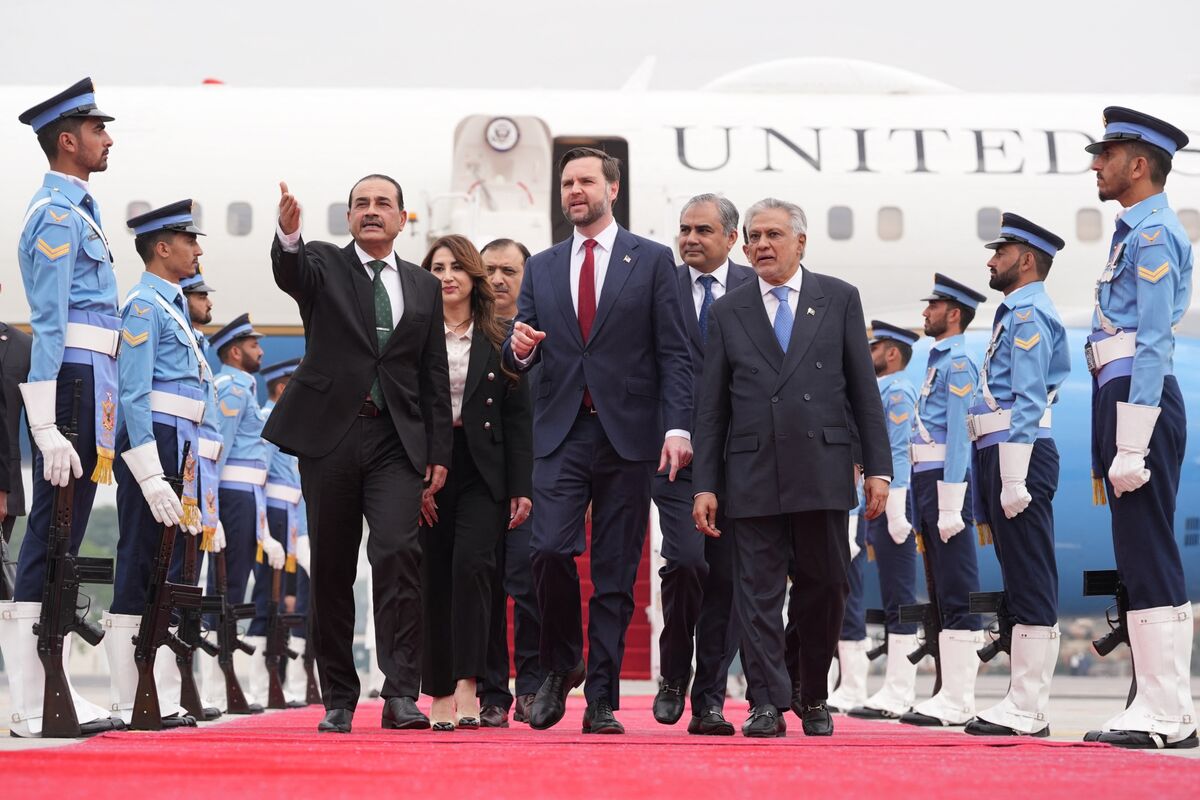
The US and Iran held direct three-way talks with Pakistan aimed at ending the six-week-old war in the Middle East, marking a meaningful diplomatic development in an active conflict. The meeting involved US Vice President JD Vance and senior negotiators Jared Kushner and Steve Witkoff, alongside Iranian officials Mohammad-Bagher Ghalibaf and Abbas Araghchi. While the report is factual and not explicitly positive or negative, it signals potentially high market sensitivity given the conflict backdrop and possible implications for regional risk assets and energy markets.
The market implication is less about the headline and more about regime shift: direct US-Iran engagement raises the probability of a negotiated de-escalation path, which should compress the tail-risk premium embedded in energy, defense, and select shipping names. Even a modest reduction in strike/retaliation risk can have an outsized effect on front-month crude vol, because positioning is typically short-duration and reflexive around Gulf disruption headlines. The first-order winner is risk assets broadly; the second-order loser is any equity basket trading on a persistent “higher-for-longer geopolitical friction” assumption.
The bigger nuance is timing. If talks are credible, the near-term move is likely in implied volatility before spot prices fully adjust, creating a cleaner trade in options than in outright directionals. Conversely, if negotiations stall, the market may rapidly reprice because the base case shifts from managed conflict to escalation, and that transition usually happens in days, not weeks. That asymmetry argues for structuring exposure around catalysts rather than carrying unhedged cash delta.
A less-consensus read is that even partial détente could be bearish for legacy defense contractors if investors start discounting a slower replenishment cycle and weaker emergency procurement urgency. However, infrastructure and logistics tied to Gulf stability may benefit from lower insurance and rerouting costs, especially for firms with high exposure to Red Sea / Strait of Hormuz risk premia. The market is likely underestimating how quickly freight, marine insurance, and energy-volatility linked hedges mean-revert once headline risk fades.
The cleanest setup is to fade geopolitical volatility, not necessarily the underlying conflict outcome. If talks continue, the right expression is short-dated vol in crude-related assets and a relative long in cyclicals over energy. If talks fail, the trade should flip fast, so sizing should reflect event risk over the next 1-3 sessions rather than a multi-quarter thesis.
AI-powered research, real-time alerts, and portfolio analytics for institutional investors.
Request DemoOverall Sentiment
neutral
Sentiment Score
-0.05
