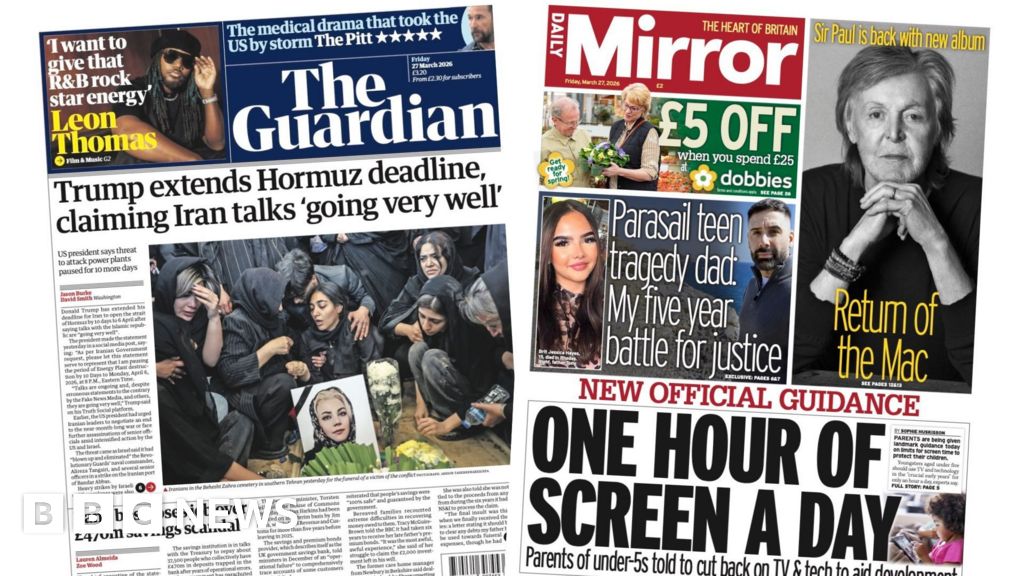
Key event: Trump extended the Strait of Hormuz deadline to 10 days amid Iran talks, and Tehran's blockade pushed oil prices higher, raising immediate geopolitical and energy-market risk. The OECD downgraded UK 2026 growth to 0.7% from 1.2% (-50bps) and raised the inflation forecast to ~4% (about 2x the Bank of England target), signaling stagflationary pressure on the UK economy. Domestic political and consumer impacts highlighted include claims of chancellor profiteering, ~33,005 hospitality business closures since the tax-raising budget, and an NS&I probe finding ~£476m belonging to 37,500 deceased savers withheld from families.
Near-term geopolitical friction at maritime chokepoints has created a persistent logistics and insurance premium that is not just transitory — rerouted voyages and elevated tanker rates compound into a multi-month cashflow uplift for owners and underwriters while simultaneously increasing landed fuel costs for import-dependent economies. The mechanical effect is two-fold: higher freight and insurance flows accrue disproportionately to asset-light owners and specialty reinsurers, while downstream refiners and distribution-heavy retailers see margin compression and inventory re-pricing risks over the next 3–12 months.
Domestically, a simultaneous shock to growth and consumer real incomes amplifies idiosyncratic stress in small-cap hospitality and SME-heavy loan books; expect higher provisions and tighter credit supply from regional banks, creating a relative performance divergence versus globally diversified banks and non-bank lenders. Fiscal and reputational shocks from public-sector mismanagement raise the probability of near-term regulatory or fiscal interventions, which increases political risk premia and could force a repricing of sterling and UK term premia if markets fear delayed policy responses.
Behavioral and regulatory shifts around digital consumption are a slow-moving reallocation force: advertisers and platforms will re-optimize spend and product features, benefiting subscription and broadcast models at the expense of ad-reliant social platforms over 12–24 months. The fastest reversal channel is diplomatic de-escalation — market risk premia can compress within 30–90 days if freight indices normalize or a credible ceasefire reduces the energy shock; monitor tanker freight indices, UK bank CDS, and short-term inflation prints as primary triggers.
AI-powered research, real-time alerts, and portfolio analytics for institutional investors.
Request DemoOverall Sentiment
mildly negative
Sentiment Score
-0.30
