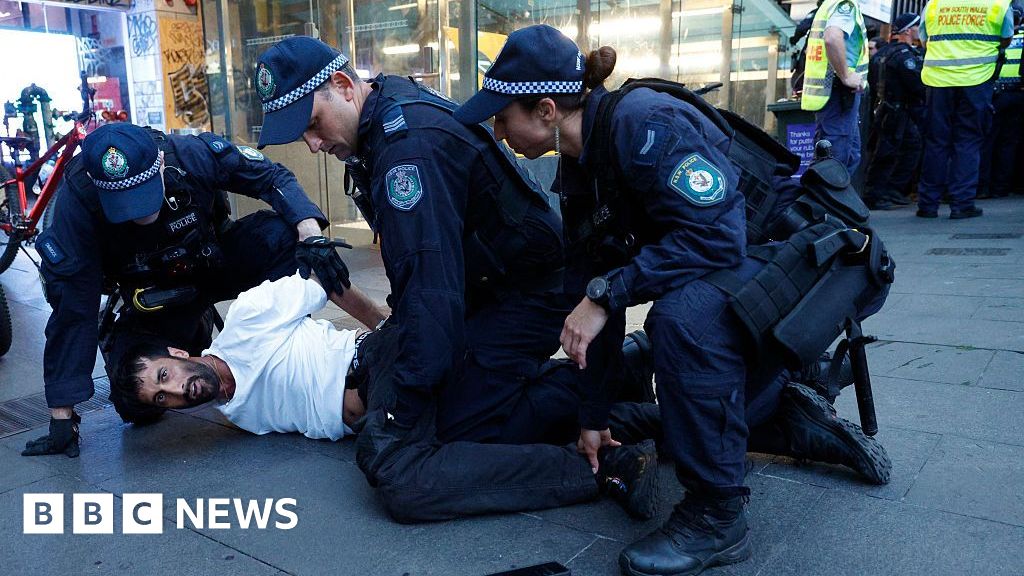
Tensions in Sydney escalated into violent clashes between police and an estimated 6,000 pro‑Palestinian protesters during a demonstration against Israeli President Isaac Herzog, resulting in 27 arrests after rally organisers failed in court to overturn new police powers. The confrontations occurred against the backdrop of government controversy over Prime Minister Anthony Albanese's decision to host Herzog following the Bondi shootings, and could prolong domestic political and community tensions as further protests and calls for police investigations are planned.
Market structure: Immediate winners are providers of policing, surveillance and event-security services, plus legal and compliance advisers; losers are Sydney CBD-exposed retail, hospitality and live-events operators where footfall can drop 5-15% during sustained unrest. Pricing power shifts toward security-capex suppliers (near-term order flow) rather than broad commodities; local REITs and ticketing revenues face concentrated revenue risk for weeks to months.
Risk assessment: Tail risks include sustained citywide unrest that trims NSW tourism receipts >5% y/y for a quarter or triggers meaningful insurance/claims; low-probability but high-impact regulatory outcomes include expanded police powers that raise compliance costs for event operators by an estimated 1–3% of revenue. Expect immediate volatility (days) in local equities/FX, short-term reassessment over 2–12 weeks, and structural budgetary shifts over 6–18 months if spending is reallocated to security.
Trade implications: Tactical trades should be short-duration and event-driven: hedge AUD exposure and underweight Sydney CBD REITs/venues for 2–6 weeks while selectively long suppliers of security/defense with 6–12 month horizons. Use options to cap downside (1-month AUD puts, 3-month put spreads on event operators) and prefer pair trades to isolate idiosyncratic crowd-risk vs macro.
Contrarian angles: The market may over-penalize hospitality & REITs for localized unrest; if a given ticker falls >10% in 2 weeks it may present a 3–6 month mean-reversion opportunity as crowds normalize. Conversely, capex for policing is politically visible but procurement cycles are slow—avoid paying up for long-term defense exposure unless concrete contracts (>AUD100m) are announced within 12 months.
AI-powered research, real-time alerts, and portfolio analytics for institutional investors.
Request DemoOverall Sentiment
mildly negative
Sentiment Score
-0.25
