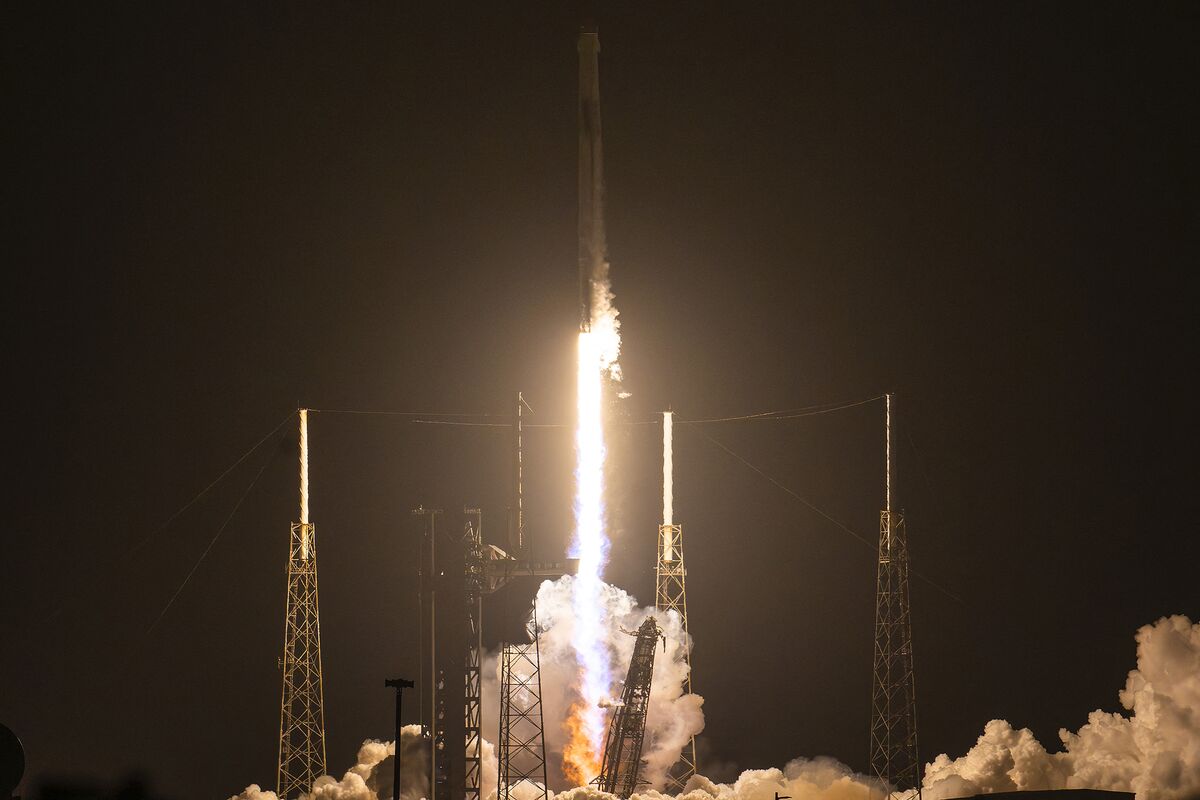
SpaceX has signaled plans for a mega-IPO that could value the company at about $1.75 trillion, putting it among the largest public companies if realized. AI rivals OpenAI and Anthropic are also potential IPO candidates this year, with private valuations already in the hundreds of billions, highlighting frothy private-market tech valuations. The moves could reset public-tech valuation benchmarks and attract substantial investor flows, but timing, pricing and regulatory details remain uncertain.
A Space-age mega-IPO will reprice not just a single equity but entire capital pools: large passive and quant funds will need to carve out capacity for a $100s-of-billions market cap name, mechanically draining flows from small- and mid-cap tech and private-equity-to-public windows for 3–12 months post-listing. That creates a two-speed market where defense primes and established aerospace suppliers with visible cashflows (multi-year government contracts, backlog) look cheaper relative to high-multiple, low-revenue pure-plays; expect 200–400bp multiple compression across late-stage private comps if the IPO is priced aggressively.
Second-order supply-chain winners are predictable but measurable: carbon-fiber fuselage and avionics firms should see order visibility 6–24 months earlier than silicon-level suppliers, because hardware lead times are the binding constraint for launch cadence. Conversely, incumbent consumer and regional telcos face asymmetric risk from a successful LEO broadband roll-out — rural ARPU and churn dynamics can deteriorate within 12–36 months, pressuring capital allocation away from network buildouts.
Key near-term catalysts and tail-risks cluster around three windows: IPO pricing & debut performance (days–weeks), lockup expiries and any founder monetization (3–12 months), and regulatory/contract reviews that can reclassify revenue streams (6–24 months). A single high-profile launch failure, an adverse national-security ruling, or a surprisingly aggressive founder sale could remove >$100B of implied equity value within days and reprice correlated private comps.
The consensus is missing granularity on cash-flow quality: public markets will increasingly separate recurring service revenue (broadband, gov comms) from hardware-enabled launch revenue, and will value them differently. That bifurcation favors legacy contractors and service-integrators with long-term cash contracts over capital-hungry growth plays; the best asymmetric opportunities are in the mid-cap supply chain and event-driven hedges around lockup expiries and debut aftermarket volatility.
AI-powered research, real-time alerts, and portfolio analytics for institutional investors.
Request DemoOverall Sentiment
neutral
Sentiment Score
0.00
Ticker Sentiment
