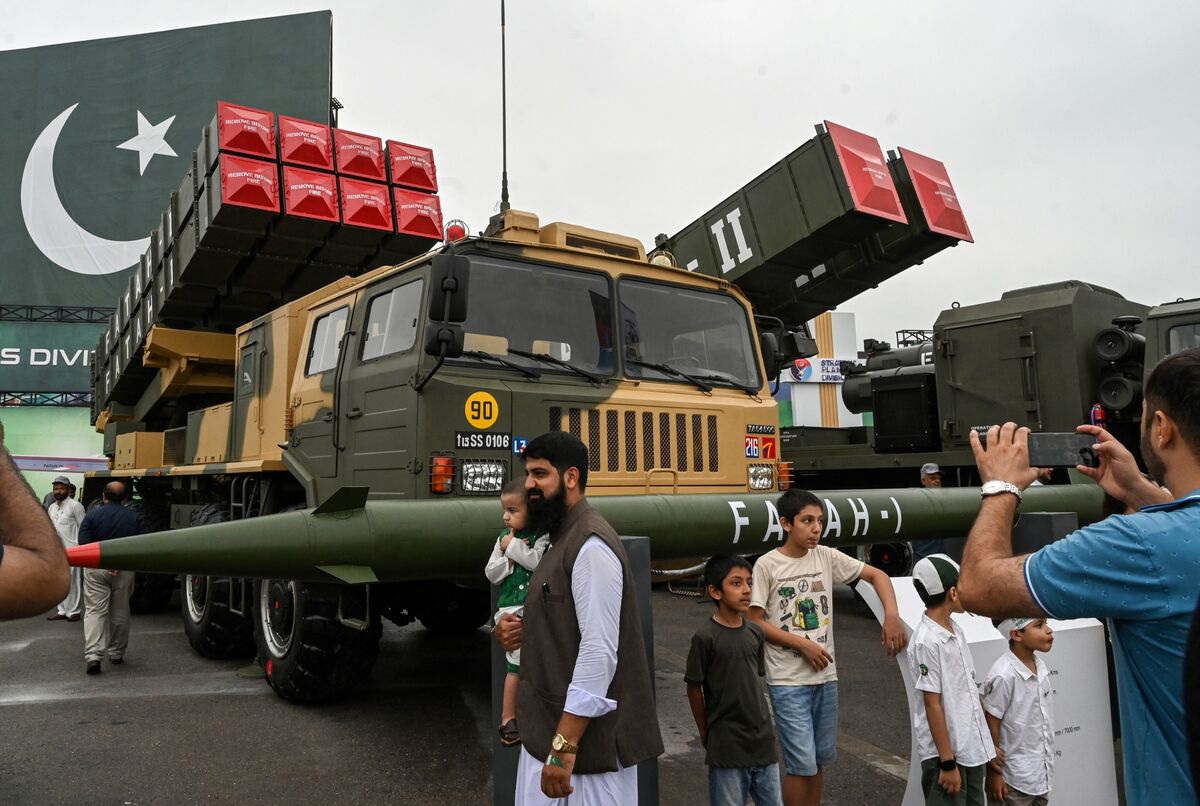
Saudi Arabia and Pakistan have formalized a mutual defense pact, stipulating that any aggression against one nation will be considered an aggression against both. Signed by Saudi Crown Prince Mohammed Bin Salman and Pakistani Prime Minister Shehbaz Sharif in Riyadh, this agreement significantly elevates their long-standing security partnership, carrying substantial geopolitical implications for regional stability.
Saudi Arabia and Pakistan have formalized their long-standing security partnership by signing a mutual defense pact, which explicitly states that aggression toward one will be considered aggression toward both. This agreement, signed in Riyadh between Crown Prince Mohammed Bin Salman and Prime Minister Shehbaz Sharif, significantly elevates the strategic relationship. The inclusion of nuclear-armed Pakistan in this formal alliance introduces a new, critical dimension to Middle Eastern security architecture, potentially altering the regional balance of power. While the deal is categorized under the themes of 'Geopolitics & War' and 'Infrastructure & Defense,' the market reaction is muted, with a low impact score of 0.3 and a sentiment score of only 0.15 (mildly positive). This suggests that investors may view the pact not as a precursor to immediate conflict, but as a formalization of an existing de-facto alliance that reinforces a deterrent framework, thereby contributing to a perceived, albeit fragile, regional stability.
AI-powered research, real-time alerts, and portfolio analytics for institutional investors.
Request DemoOverall Sentiment
mildly positive
Sentiment Score
0.15
