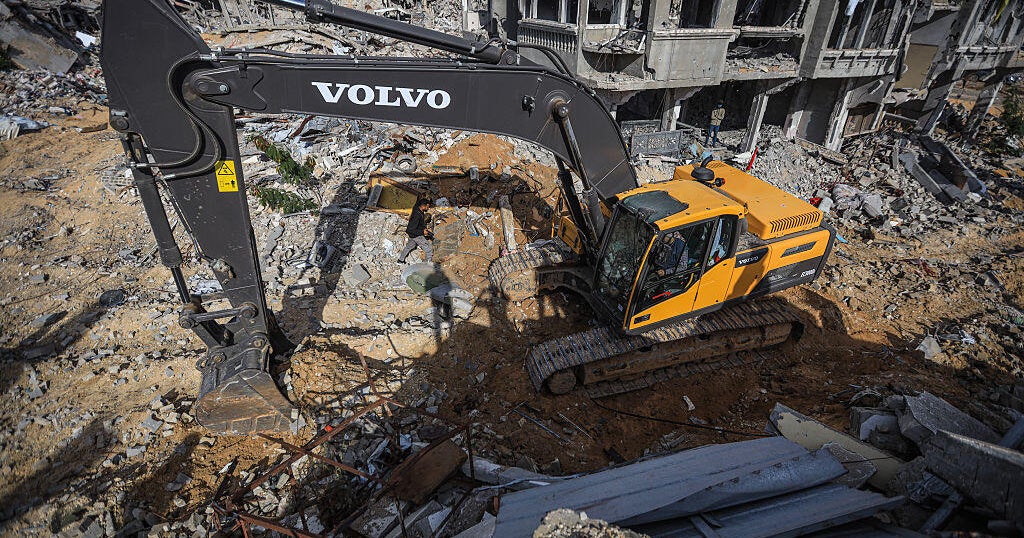
Israeli and Thai authorities confirmed the remains returned from Gaza have been identified as Sudhisak Rinthalak, the last Thai national taken in the Oct. 7, 2023, Hamas-led attack, bringing all Thai hostages accounted for. Since a U.S.-brokered ceasefire began in early October, Israel has received 20 living hostages and the remains of 27 others, while releasing hundreds of Palestinian bodies to Gaza as part of the exchanges; one Israeli deceased hostage, Master Sgt. Ran Gvili, is still believed to remain in Gaza. The developments signal progress toward completing the first phase of the ceasefire, though the truce remains described as shaky and many Palestinian remains are not yet formally identified.
Market structure: A durable but fragile ceasefire that yields steady returns of hostages/remains reduces immediate geopolitical risk premia — beneficiaries include Israeli equities (MSCI Israel ETF EIS), regional tourism and banking, and global cyclical sectors; losers are safe-haven assets (gold, long-duration Treasuries) and energy names that trade on geopolitical risk premia. Competitive dynamics favor large defense primes (LMT, RTX, GD) for longer-term budgets while near-term event-driven revenue for small contractors and tactical oil-service names may compress; expect a 5–12% re-rating window for Israeli equity beta if the ceasefire holds 1–3 months.
Risk assessment: Tail risks remain asymmetric — ceasefire collapse or Iran/Hezbollah escalation could push Brent +$8–$15/bbl and gold +5–12% within days, and spike regional FX volatility; probability medium-low but impact very high. Timeframes: immediate (days) = lower realized vol and risk-on flows, short-term (weeks–months) = political catalysts (Israeli domestic politics, prisoner exchanges) could reintroduce shocks, long-term (12–24 months) = structurally higher defense budgets and shifted EM allocations. Hidden dependencies include U.S. diplomatic pressure and staggered prisoner releases that can trigger domestic unrest; key catalysts are any Iran involvement or major ground offensive within 30–90 days.
Trade implications: Tactical risk-on favors overweighting EIS (3–6 month horizon) and cyclical EM (EEM), while selectively initiating longer-term convex exposure to defense primes via LEAPS; hedge with short-dated energy call spreads to protect against supply shocks. Options: buy 3–6 month protective call spreads on USO (10–20% OTM) sized 0.5–1% portfolio to cap oil shock risk; consider selling short 1–2 week straddles on Israeli volatility ETFs if realized vol collapses. Entry: act within 1–10 trading days for tactical reallocations; exits at predefined targets (EIS +8–12% or stop-loss -6%).
Contrarian angles: Consensus may underweight sustained defense spend despite de-escalation — market could underprice 12–24 month revenue for primes, making LEAPS attractive; conversely, early risk-on trades may be overdone given ceasefire fragility and front-loaded political catalysts. Historical parallel: post-Gulf War 1991 saw a 15–20% collapse in risk premia and oil; a similar but smaller move (10–15%) is plausible here — suggests scaling into positions and buying longer-dated protection rather than naked short volatility. Unintended consequence: prisoner/release cycles could create recurring volatility spikes, so favor liquid hedges and staggered entries.
AI-powered research, real-time alerts, and portfolio analytics for institutional investors.
Request DemoOverall Sentiment
neutral
Sentiment Score
0.00
