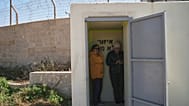
The United States and Israel launched coordinated air strikes on Iran (codenamed Operation Epic Fury), prompting Iranian missile launches that were intercepted across the region and widespread explosions reported in Tehran and other cities; US President Trump said 'major combat operations' have begun. Immediate operational consequences include near-total internet blackout in Iran (NetBlocks ~4% connectivity), Israeli and Iranian airspace closures, US embassies in Qatar and Bahrain ordering shelter-in-place, Lufthansa suspending multiple Middle East routes through early March, and reports of strikes or interceptions near key Gulf bases (Al Udeid, Juffair). Expect pronounced risk-off market reactions: upward pressure on oil and energy risk premia, safe-haven flows into USD/treasuries and gold, potential disruption to shipping and regional supply chains if Houthi attacks resume, and heightened volatility across EM and regional assets.
Market structure: Immediate beneficiaries are large defense primes (RTX, LMT, NOC) and integrated oil producers (XOM, CVX) as procurement and oil-price optionality gain pricing power; losers are airlines/travel (JETS ETF, LHA/LHAGY, AAL), regional EM equities/currencies and reinsurers facing higher claims and route insurance costs. Supply/demand mechanics point to upward pressure on Brent if Gulf exports are disrupted — a 0.5–3.0 mbpd outage would likely push Brent materially higher and spike oil and oil-volatility, while safe-haven bids push UST prices and gold higher.
Risk assessment: Tail risks include Strait of Hormuz closure or expanded front-lines that could lift Brent $30–60/bbl and disrupt global trade (probability low-mid, impact catastrophic). Immediate (days): extreme volatility, airspace closures, FX stress in ME-focused EM; short-term (weeks–months): defense/energy revenue re-rating and travel drawdown; long-term (quarters–years): accelerated energy capex, higher insurance premia, and structural supply-chain shifts. Hidden dependencies: cyberattacks, Houthi disruption of Red Sea, insurance market de-risking; catalysts include confirmed Strait closure, US casualties, or sustained Houthi attacks.
Trade implications: Favor tactical longs in large defense primes and integrated energy via limited-cost call spreads (3–6 month) while shorting travel exposure via JETS puts or short airline equity for fast gamma capture; add duration (TLT) and GLD as portfolio tail hedges. Pair trade: long RTX/LMT vs short JETS or AAL to exploit asymmetric upside in defense vs downside in travel. Use concrete exit/triggers (e.g., Brent >$100 for scaling, 10y UST yield moves for duration rebalancing).
Contrarian angles: The market may overprice prolonged supply loss — past Gulf shocks (1991, 2019 tanker incidents) show spikes often mean-revert within 2–3 months absent chokepoint closure, creating medium-term re-entry points in airlines/EM. Conversely, sustained asymmetric tactics (Houthi/resupply disruption) would prolong premium; watch for inflation/deficit consequences from higher defense spending that could lift long-term yields and hurt duration-sensitive trades.
AI-powered research, real-time alerts, and portfolio analytics for institutional investors.
Request TrialOverall Sentiment
strongly negative
Sentiment Score
-0.80
