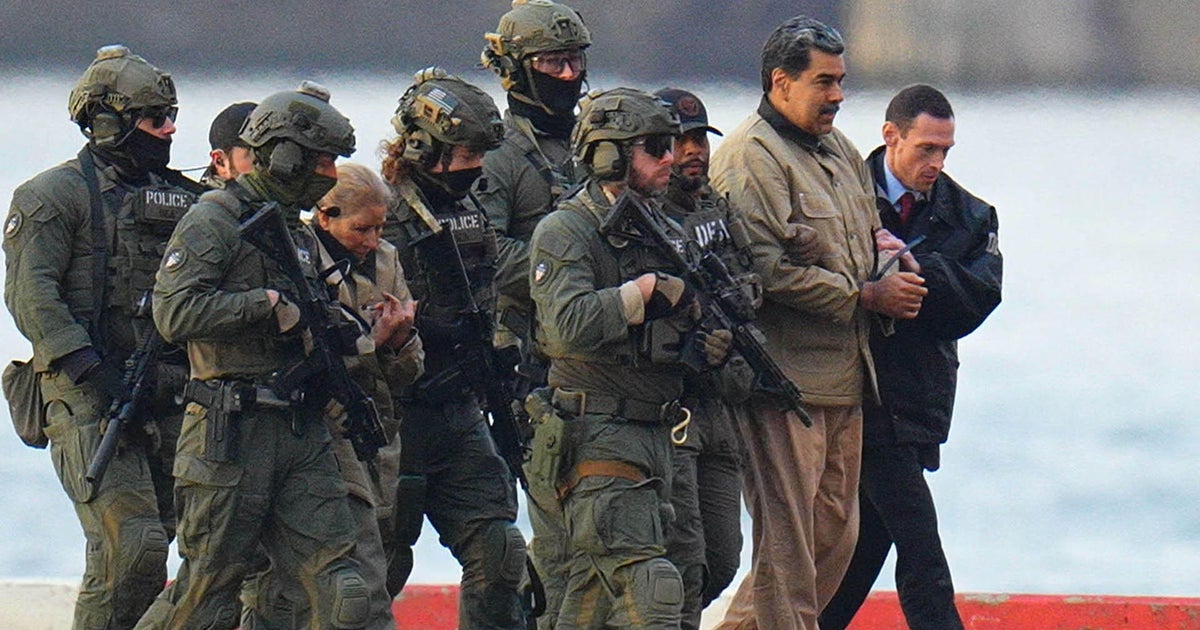
U.S. forces executed a covert overnight raid in Caracas involving roughly 200 Americans, air strikes on Venezuelan air defenses and Delta Force commandos who intercepted President Nicolás Maduro before he reached a safe room; several U.S. soldiers were injured and dozens of Venezuelans plus 32 Cuban security personnel were reported killed. The operation, rehearsed for months with CIA intelligence including an agent inside Maduro's circle, has left a large U.S. military presence off Venezuela's coast and U.S. plans to intercept another sanctioned oil tanker—raising escalation and energy-shipping risks that could pressure regional stability and oil markets.
Market structure: The raid materially raises short-term tail risk to Venezuelan crude flows and tanker logistics; expect a near-term shock to heavy/sour crude availability of roughly 0.1–0.5 mb/d (days–weeks) which favors Brent over WTI, tanker owners, and war-risk insurers. Winners: defense primes (LMT, NOC, RTX), tanker owners (FRO, STNG), gold (GLD); losers: EM sovereigns, oil-intensive consumer sectors (airlines DAL/AAL) and Latin American equity/FX exposures. Competitive dynamics shift pricing power to sellers of secure cargoes and insurers — freight and war-risk premiums will widen, compressing netbacks for refiners buying disrupted grades.
Risk assessment: Tail scenarios include broader regional escalation (Russia/Cuba countermeasures) or US tightening of secondary tanker sanctions that could remove >500 kb/d from market and spike oil >$10/bbl within days; opposite tail is rapid rerouting/Chinese purchases capping rise. Immediate (0–7 days): volatility spike across oil, FX, CDS; short-term (1–3 months): higher freight, defense re-rating; long-term (3–24 months): political risk premia persist if sanctions institutionalize. Hidden dependencies: insurance market capacity, OPEC+ spare capacity, and China/Russia diplomatic reactions could amplify or mute moves. Key catalysts: confirmation of tanker interception, OPEC+ emergency response, and US sanctions lists over next 7–30 days.
Trade implications: Tactical (0–3 months): favor concentrated, hedged oil longs and safe-haven buys — buy short-dated Brent/WTI call spreads to cap cost and avoid roll risk; size 1–3% notional. Buy 1–3% positions in LMT/NOC (6–12 month view) and small longs in FRO/STNG (2–6 months) to play freight/charter squeeze. Hedge EM exposure with 3-month put spreads on EEM (10% OTM) or short EEM 1–2%. Allocate 1–2% to GLD and 1–2% to long-duration Treasuries (TLT/IEF) for immediate risk-off.
Contrarian angles: The market may overprice permanent supply loss; historical parallels (short-lived spikes after surgical strikes) suggest mean reversion in 4–8 weeks if no escalation — trim oil longs on >10% move. Defense stocks can underperform if political pushback limits sustained budget increases; shipping names are cyclical and already priced for higher rates, so prefer small, time-boxed exposure with clear exit triggers (charter rates +20% or sanctions escalation). Unintended consequence: sustained oil rise >$8 could force Fed hawkishness, reversing equity rallies and widening credit spreads.
AI-powered research, real-time alerts, and portfolio analytics for institutional investors.
Request DemoOverall Sentiment
moderately negative
Sentiment Score
-0.45
