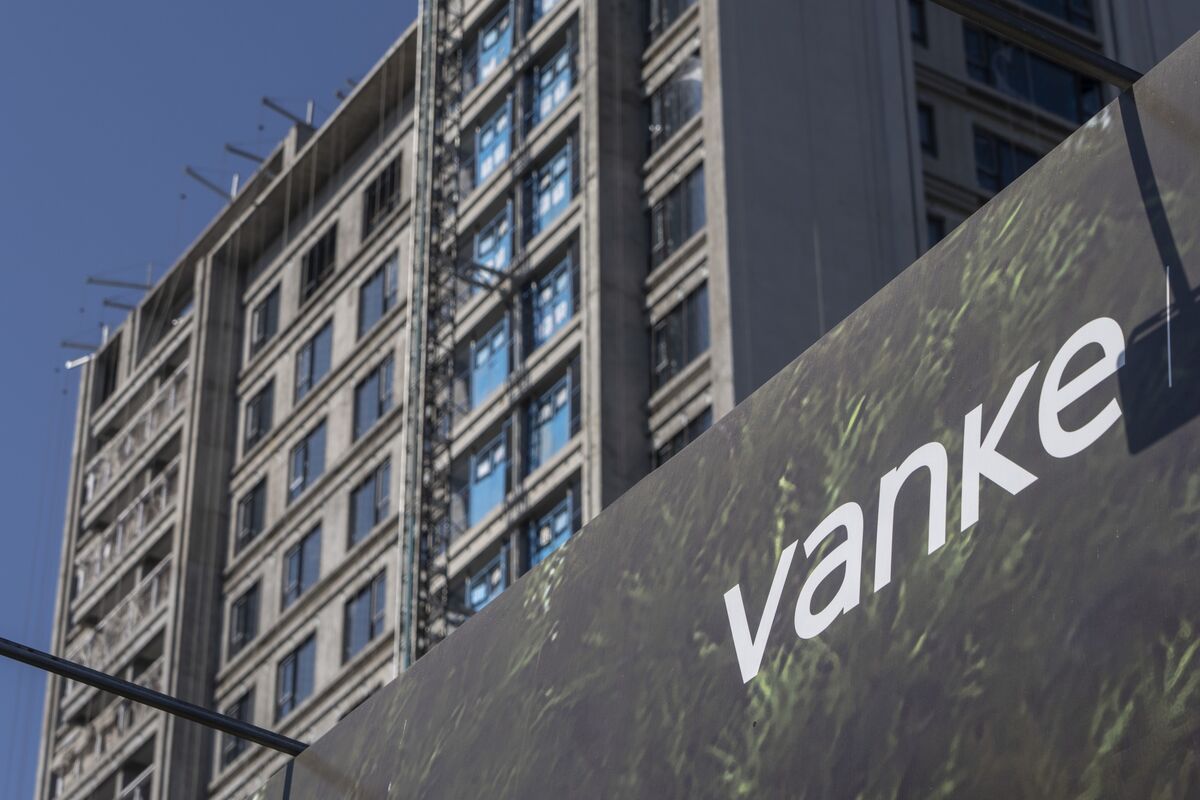
China Vanke sought a short-term liquidity loan from major domestic banks to help repay two bonds totalling 5.7 billion yuan (~$805 million) due next month, but at least two big local lenders rejected the request. The funding setback, coming as Vanke prepares to seek bondholder approval to push back the maturity of one of the bonds, has intensified default fears and driven a plunge in its bonds, highlighting liquidity stress in a key mainland property issuer and potential spillovers for China credit markets.
Market structure: Banks refusing a short-term liquidity loan to Vanke immediately tightens credit for private developers and redistributes pricing power to creditors and stronger state-owned developers. Expect onshore offshore bond spreads to widen 200–600bp for mid‑tier names within days and HK equity volatility to spike; construction input demand (steel, cement) will soften on a 1–3 month horizon as new starts slow. Winners include state-backed developers, large domestic banks protected by central policy, and global macro funds shorting China property credit; losers are Vanke bondholders/equity (near-term) and smaller regional banks with property exposure.
Risk assessment: Tail risks include contagion to other A-/H‑share developers, forced restructurings, and a bank liquidity freeze that could prompt a formal state rescue; opposite tail is rapid targeted PBOC/CBIRC intervention to backstop rollover risk. Immediate (days) risk is further bond selloffs and margin calls; short-term (weeks) sees covenant breaches and rating downgrades; long-term (quarters) depends on policy stance—structural deleveraging may persist. Hidden dependencies: reliance on presales, onshore bank pipelines, and trust in informal guarantees; monitor 30–60 day rolling maturities and bank exposure data.
Trade implications: Direct plays favor buying 1–3 month protection on China property credit (CDS/credit funds) and short HK-listed private developers; consider 1–2% portfolio short in Vanke (2202.HK) via borrow or 3‑month puts, and buy puts on dollar/renminbi‑MTN exposure if available. Pair trade: long state-backed China Resources Land (1109.HK) 2% vs short Country Garden (2007.HK) 2% for 1–3 months. Use option plays (3‑month puts/put spreads) to exploit rising IV; target unwind on 200–300bp spread compression or clear policy intervention.
Contrarian angles: Consensus assumes systemic collapse; but Chinese authorities have repeatedly used targeted liquidity to stabilise markets—if PBOC/CBIRC provides bridge financing within 30 days, beaten-down names can rebound 30–50%. The market may be overselling high-quality franchise developers and mainland state-owned landbanks; risk of being short is a policy-driven short squeeze. Historical parallels: selective bailouts in prior property cycles (2014–16) produced sharp recoveries for structurally sound names, so size positions small and use defined‑risk option structures.
AI-powered research, real-time alerts, and portfolio analytics for institutional investors.
Request DemoOverall Sentiment
strongly negative
Sentiment Score
-0.65
