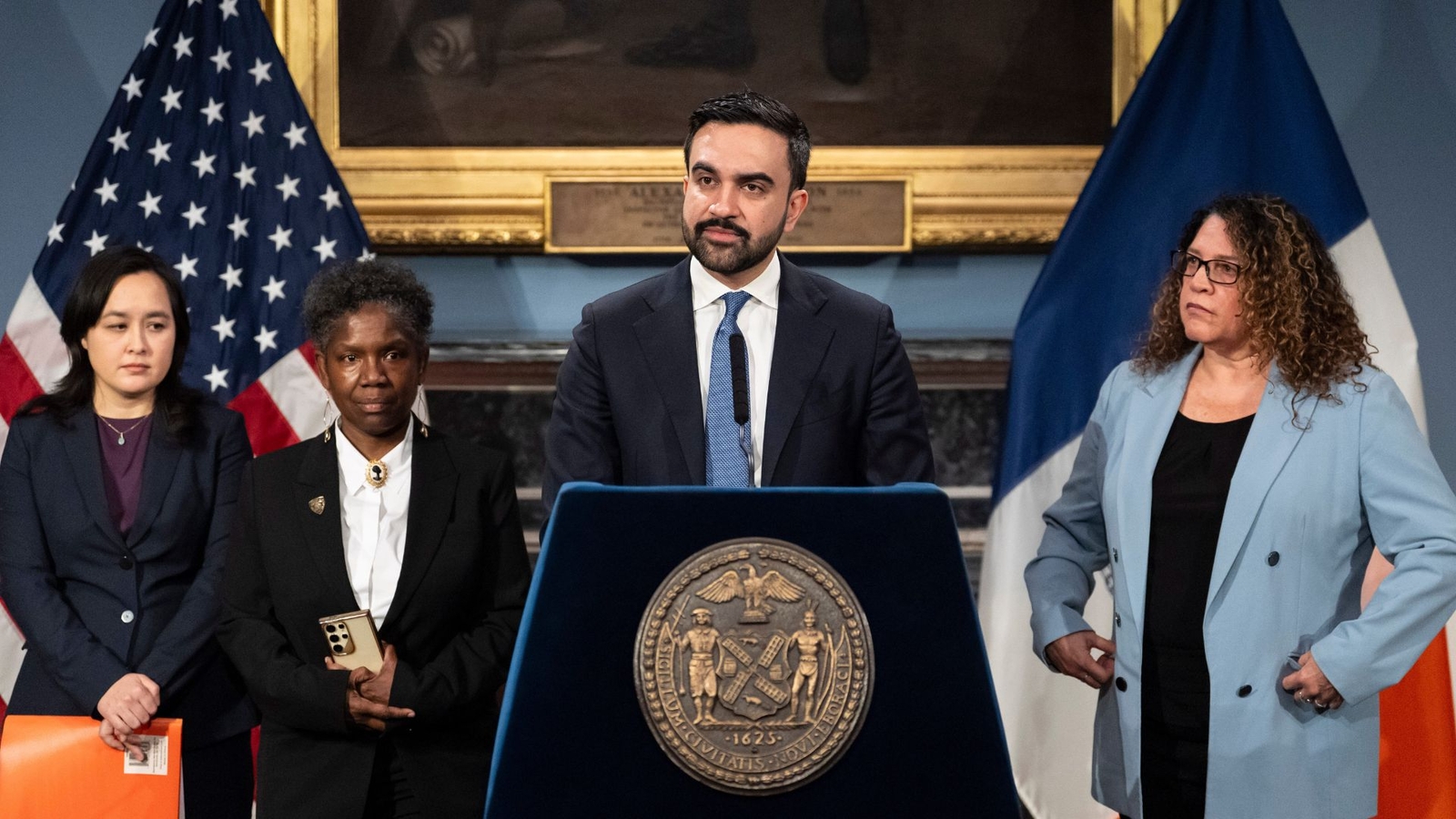
Mayor Zohran Mamdani will release his first preliminary New York City budget after Gov. Kathy Hochul pledged $1.5 billion to the city over two years, including $510 million to cover costs shifted to the city (approximately $300M for youth programs, $60M for public health and $150M in restored sales tax receipts). Mamdani said the city faces a $7 billion budget gap (recently revised down from $12 billion), is proposing revenue measures including a 2% personal income surtax on those earning over $1 million and higher corporate taxes, and will enter negotiations with the City Council as he seeks to fund affordability and other campaign priorities.
Market Structure: A 2% surtax on >$1M earners and higher corporate taxes would directly pressure high-income consumer spending, luxury residential demand and NYC-centric office/retail landlords (e.g., SLG, VNO). State aid of $1.5B (modest vs a $7B gap) marginally reduces immediate financing stress but leaves a structural deficit that increases odds of service cuts, delayed capital projects and more municipal borrowing over 12–36 months. Expect downward pricing pressure on NYC luxury real estate and upward pressure on yields for NYC-specific munis versus national peers by 10–50bps if political friction escalates.
Risk Assessment: Tail risks include a credit-watch or downgrade for NYC/related authorities (low probability today, high impact) and accelerated out-migration of taxable income if surtax is enacted quickly — a 2–5% decline in top-end property transactions could follow within 6–12 months. Short-term (days-weeks) risk is political headlines and council negotiations; medium-term (1–6 months) risk is legislative enactment and budget negotiations; long-term (1–3 years) is structural tax-base erosion. Hidden dependencies: remote work trends amplify sensitivity of office landlords; pension/timing mismatches could force larger fiscal adjustments if revenue shortfalls persist.
Trade Implications: Tactical plays favor hedging NYC real-estate and muni exposure and favor short-duration muni positioning while taking selective option protection on NYC REITs. Implement 3–6 month put protection on SLG/VNO and shift muni allocation into short-duration ETF (SUB) to reduce duration risk; consider opportunistic long exposure to vendors/contractors concentrated in youth/public health if award pipelines become visible in next 90 days. Volatility catalysts: budget release details, state legislature action within 30–60 days, and any rating agency commentary.
Contrarian Angles: Consensus may overstate capital flight; historical surtaxes in large metros produced modest behavioral shifts (single-digit migration) and property markets often price-in then recover over 12–36 months. If negotiations produce a mixed package (partial state aid + phased tax changes), downside for office/residential equities could be limited — look to buy SLG/VNO on >20% drawdown with a 12–24 month horizon. Unintended consequence: aggressive cuts to city contracts could benefit mid-cap contractors and staffing firms that can rapidly scale services — an underfollowed long opportunity if contract awards appear in 60–120 days.
AI-powered research, real-time alerts, and portfolio analytics for institutional investors.
Request DemoOverall Sentiment
moderately negative
Sentiment Score
-0.30
