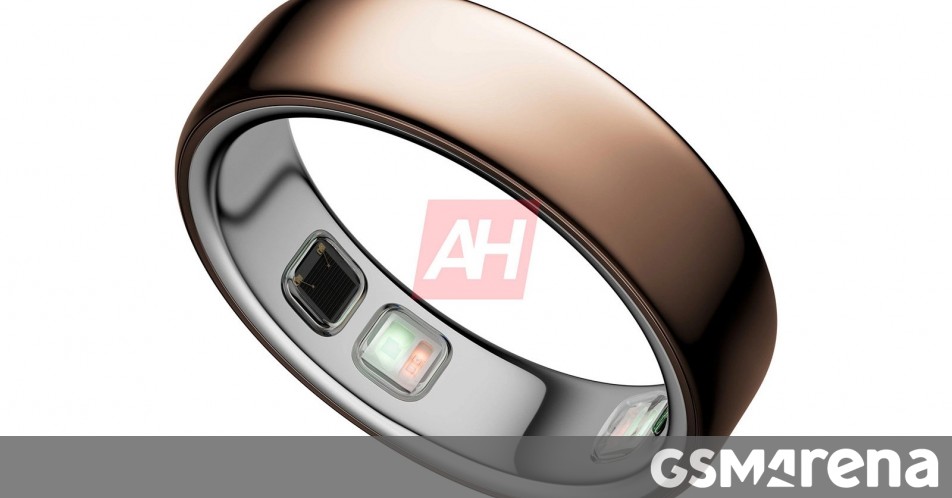
Oura Ring 5 images and details have leaked, with an expected launch in late 2027 and new color/finish options (Deep Rose, matte black 'Stealth', gold, and silver in glossy and brushed). Design tweaks include a more curved outer shell, unchanged charger and battery life, and unspecified sensor upgrades aimed at improved health tracking; near-term commercial or financial impact is minimal given the distant launch and limited technical detail.
The leaked long lead-time for the next-generation ring implies the company is prioritizing sensor and algorithm upgrades over iterative hardware refreshes — a strategic pivot that favors suppliers of photonics/analog front-ends and cloud/ML services more than bezel/finishing subcontractors. Expect revenue mix effects: hardware ASP growth will be modest but ARPU can expand if improved biometrics enable subscription tiers or B2B clinical contracts; that shift compresses near-term top-line visibility while expanding long-term recurring revenue optionality.
A multi-year development horizon raises supply-chain timing risk and inventory seasonality. Component orders will be lumpy and pushed out, benefiting flexible EMS partners that can smooth backlog (positive for business-model-efficient contractors) while pressuring commodity-dependent jewellers who need predictable volume. Concurrently, unchanged battery/charger footprints suggest sensor efficiency and software signal processing — not battery breakthroughs — are the likely performance lever, amplifying the value of proprietary training datasets and on-device/edge ML stacks.
Regulatory and competitive tail risks are asymmetric over 12–36 months: superior clinical-grade sensing could open insurer and provider contracts (high upside), but any claim of medical-grade metrics invites FDA scrutiny and slower commercial rollouts (material delay). The market will misprice two second-order effects — underestimating the long-term margin lift from subscription and clinical partnerships, and overestimating short-term component demand — creating a 6–18 month trade window around suppliers and EMS names as the roadmap is validated or revised.
AI-powered research, real-time alerts, and portfolio analytics for institutional investors.
Request DemoOverall Sentiment
neutral
Sentiment Score
0.00
