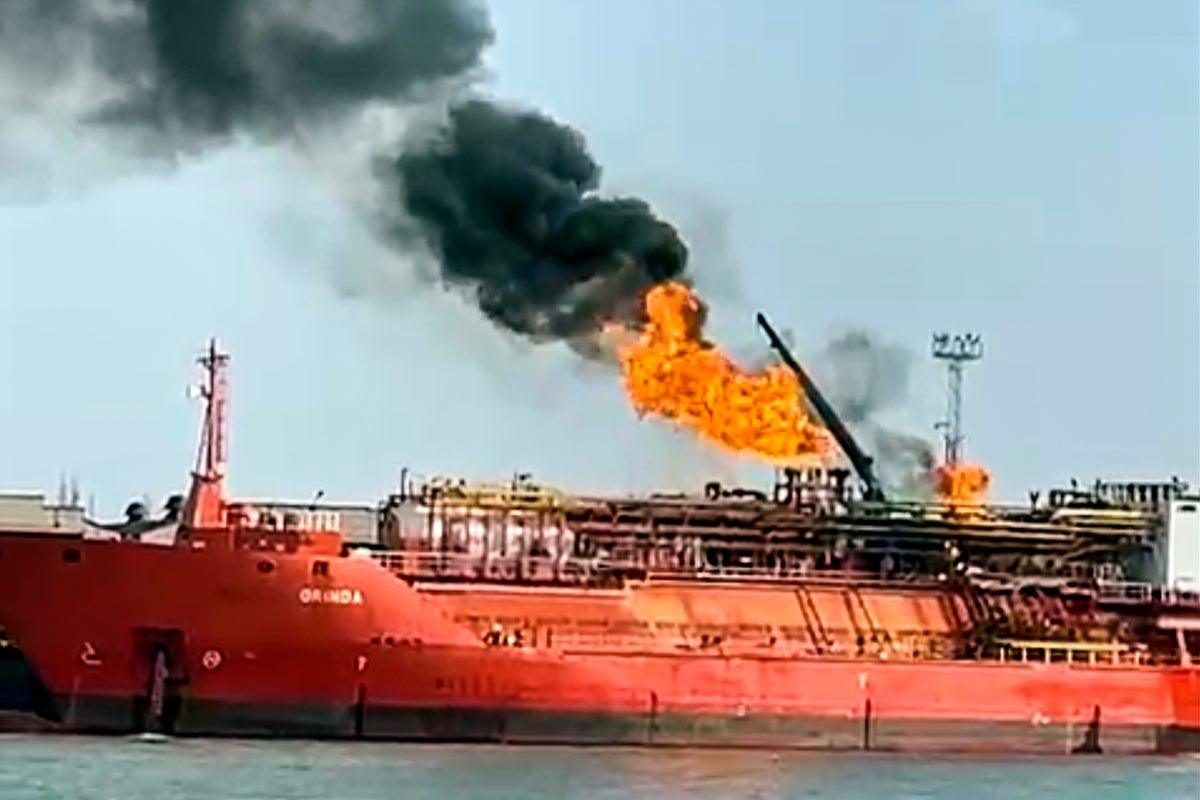
A drone strike hit the Turkish‑flagged tanker MT Orinda while it was offloading flammable liquefied gas at Izmail port on the Danube, sparking fires and damaging multiple civilian vessels and port energy infrastructure; all 16 crew were evacuated unharmed and one person was reported injured. Romanian authorities ordered evacuation of two border villages over explosion risk, and Ukraine said the attack was part of an overnight assault that included two Iskander ballistic missiles and 128 strike and decoy drones. The incident, coming a day after President Zelensky secured new energy import routes and amid ongoing strikes on Odesa’s ports, underscores heightened risk to Ukraine’s winter gas supply corridors and creates a potential cross‑border security and logistics concern for NATO neighboring Romania, with implications for regional energy flows and investor risk assessments.
A Turkish-flagged tanker, MT Orinda, was struck while offloading liquefied petroleum gas at Izmail port on the Danube, sparking fires and damaging multiple civilian vessels and port energy infrastructure; all 16 crew were evacuated unharmed and one person was reported injured. Ukraine's air force reported the broader overnight assault included two Iskander-M ballistic missiles and 128 strike and decoy drones, indicating a coordinated campaign against Odesa-region logistics and energy targets.
Romanian authorities ordered evacuation of two border villages, principally Plauru in Tulcea district, over fears the tanker's flammable cargo could explode, underscoring immediate cross-border safety and disruption risks for NATO-adjacent Romania and Danube shipping. The strike occurred a day after President Zelensky secured new energy import arrangements and following an agreement to route US LNG via Alexandroupolis from January, highlighting the attack's timing against nascent winter supply routes.
Market-relevant implications include elevated winter energy security risk for Ukraine, potential disruption to Danube and Black Sea transit corridors, and near-term upward pressure on insurance and freight costs for LPG/LNG shipments; sentiment signals are moderately negative and risk-off with a market impact score indicating a material but not systemic market reaction. Continued strikes would increase operational and geopolitical tail risks for energy, logistics and regional insurers, making short-term volatility likely in LNG/LPG-related instruments and shipping exposures.
AI-powered research, real-time alerts, and portfolio analytics for institutional investors.
Request DemoOverall Sentiment
moderately negative
Sentiment Score
-0.50
Ticker Sentiment
