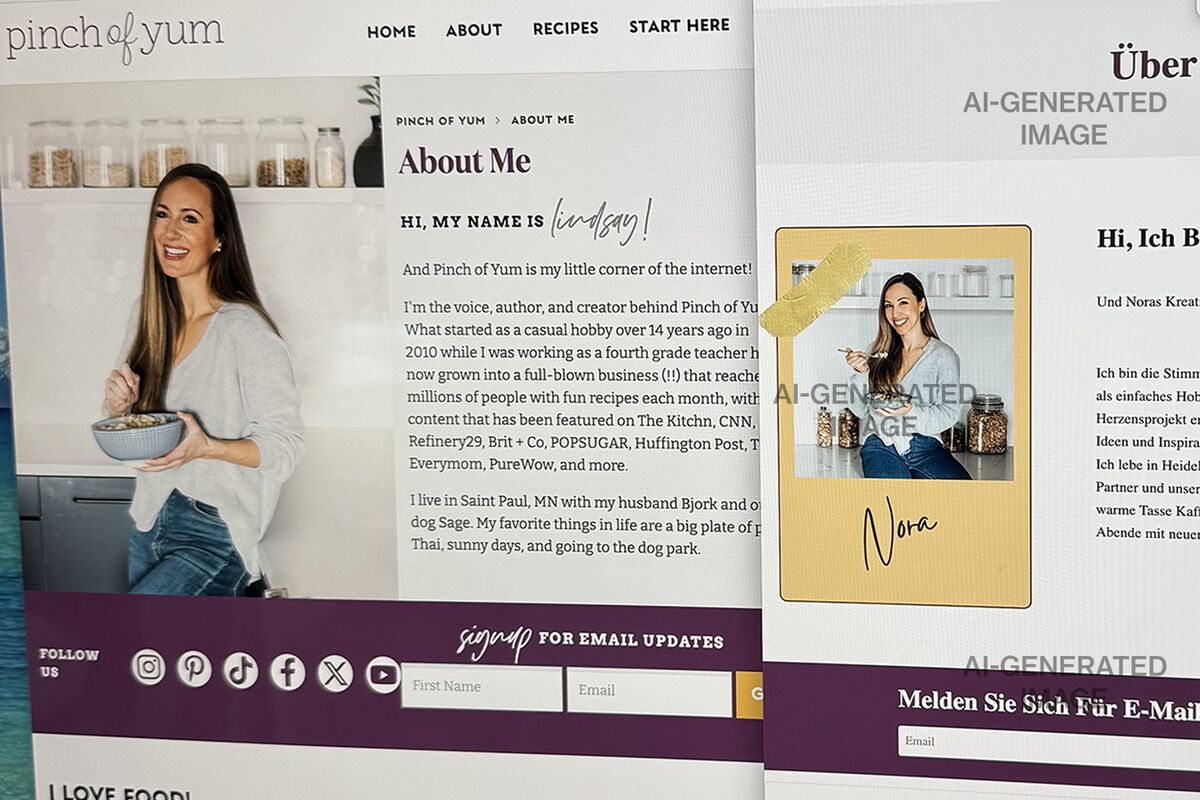
Google's AI-generated recipe snippets are siphoning traffic from established food bloggers by repackaging and sometimes misreporting recipes, exemplified by an AI-assembled Christmas cake instruction that would inappropriately bake a 6-inch cake for 3–4 hours at 320°F. The trend threatens publishers' ad and affiliate revenue streams, raises intellectual-property and content-quality concerns, and highlights execution and competitive risks as search platforms increasingly synthesize third-party content.
Market structure: AI-generated search snippets reallocate long-tail traffic away from independent content owners toward platform-controlled results, concentrating ad inventory and pricing power with major search engines (GOOGL/GOOG). Expect a 1–3% structural shift of discretionary search clicks to AI summaries within 3–6 months, compressing CPMs for low-quality inventory and raising yields for platform-owned slots. Niche publishers and ad-tech middlemen are the direct losers; branded subscription publishers and AI-infrastructure suppliers are the indirect beneficiaries.
Risk assessment: Key tail risks are regulatory/copyright litigation and advertiser boycotts that could force Google to rollback snippet features — a single adverse ruling could knock 10–25% off platform ad revenue growth in a quarter. In the immediate term (days–weeks) volatility will center on product announcements and holiday-season traffic; in 3–12 months legal and advertiser responses become the dominant risk. Hidden dependency: advertiser willingness to pay depends on measurable attribution — a sustained drop in conversion rates from AI snippets would trigger rapid repricing.
Trade implications: Tactical play is to own platform upside but hedge regulatory tail risk (GOOGL), and to overweight AI-infrastructure (NVDA/MSFT) for secular compute demand over 6–18 months. Rotate out of pure ad-supported, long-tail media exposure into subscription/commerce-integrated publishers (e.g., NYT) with 6–12 month horizons. Use options to size asymmetric risk: protect core longs with short-dated puts and express upside with call spreads.
Contrarian angle: The consensus that platforms are unambiguously net winners understates a trust-and-quality flywheel — users may pay for verified content if AI snippets degrade reliability, creating a durable premium for subscription publishers. Historical parallel: Google algorithm updates (2011–2012) reduced low-quality sites and boosted branded publishers; a similar revaluation could occur here, creating mispricings in media and ad-tech over the next 6–18 months.
AI-powered research, real-time alerts, and portfolio analytics for institutional investors.
Request DemoOverall Sentiment
mildly negative
Sentiment Score
-0.30
Ticker Sentiment
