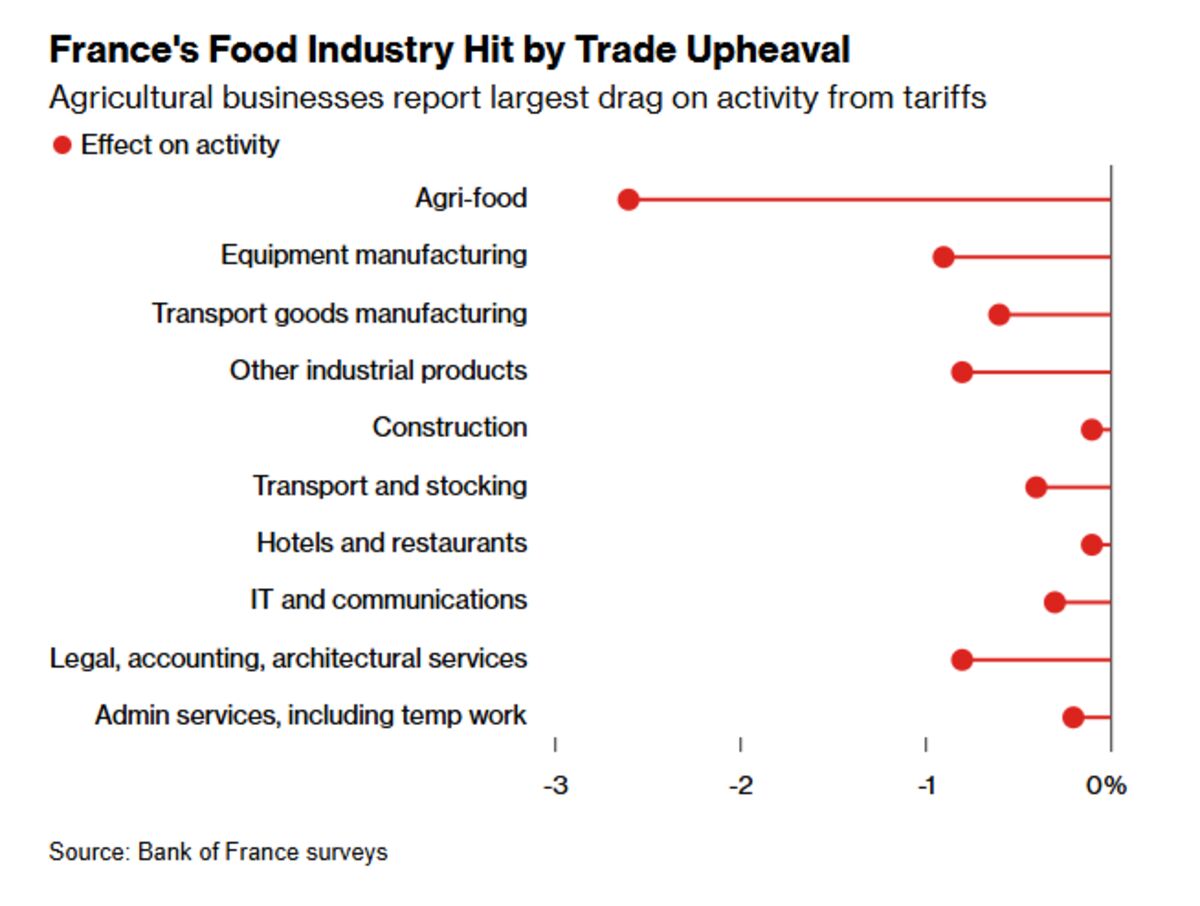
France's central bank survey reveals the nation's agri-food sector has been the most significantly impacted by Donald Trump's trade tariffs, experiencing an average 2.6% negative effect on activity. This impact is attributed to direct levies, as well as indirect factors including market uncertainty, potential retaliation, and increased competition from cheaper Chinese imports, underscoring the broad economic ramifications of trade policy on specific industries.
A survey by France's central bank quantifies the direct and indirect consequences of U.S. trade policy, identifying the nation's agri-food sector as the most significantly impacted. Business leaders in the industry report an average 2.6% negative effect on activity, a material figure that highlights the sector's vulnerability to geopolitical friction. The impact is multifaceted, stemming not only from direct levies but also from secondary effects including pervasive uncertainty, the threat of retaliatory measures, and increased competitive pressure from cheaper Chinese imports. This combination of factors suggests a challenging operating environment for French agricultural and food processing companies, with potential for margin compression and reduced sales volumes.
AI-powered research, real-time alerts, and portfolio analytics for institutional investors.
Request DemoOverall Sentiment
strongly negative
Sentiment Score
-0.65
