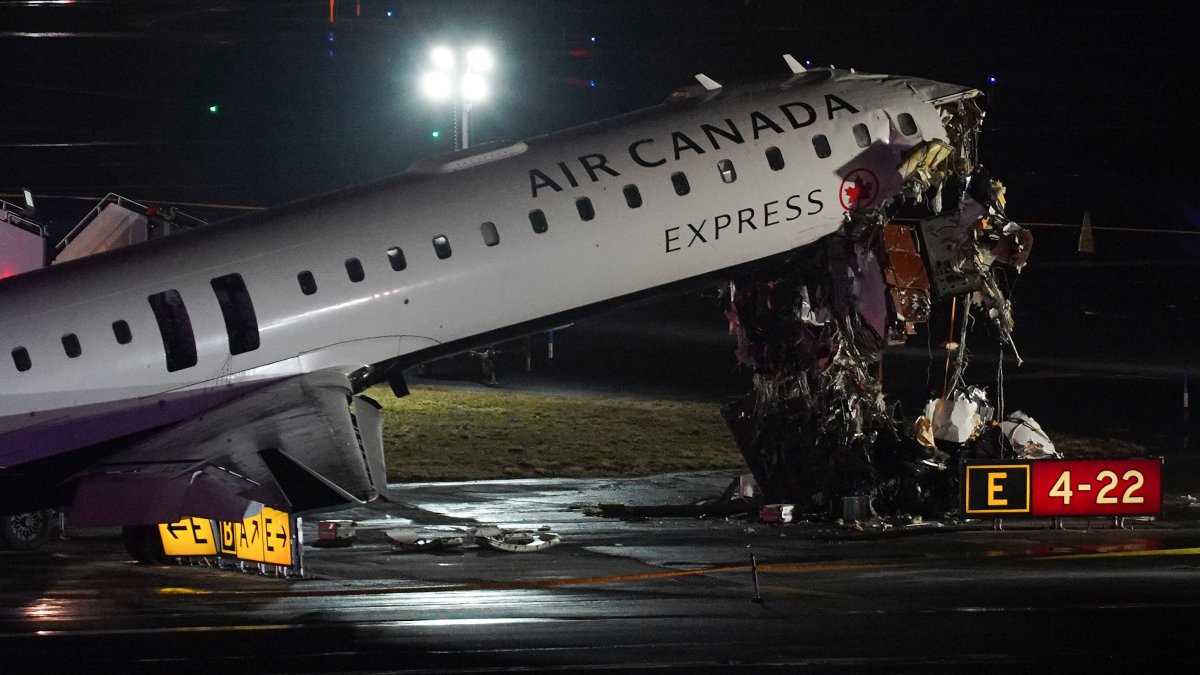
A landing Air Canada Express (Jazz Aviation) flight (AC8646) collided with a Port Authority rescue/fire vehicle at LaGuardia after 11:30 p.m., killing the pilot and co-pilot and injuring a sergeant and an officer (both with broken bones) plus more than a dozen passengers; 72 passengers and 4 crew were on board. LaGuardia was placed on a full ground stop with streets and exits closed and could remain closed until 2:00 p.m. Monday per the FAA; NTSB and FAA have launched investigations. Heavy rain and reduced visibility (~3 miles) were present at the time, though causation is undetermined.
This incident will transmit through airline economics along two channels: short-term capacity shock and medium-term higher operating friction. Expect measurable yield upside for competitors on overlapping routes for 1–6 weeks as displaced passengers are rebooked, but offsetting cost pressure for the industry from increased ARFF/ground-safety requirements that raise CASM by a modest but persistent amount (think +1–3% headwind over 6–18 months for carriers with high LGA exposure).
Regulatory and legal uncertainty is the dominant multi-quarter risk. FAA/NTSB directives or expanded runway-incursion mandates could trigger capex cycles at airports and carriers (vehicle-tracking, upgraded surface movement radar, additional ARFF staffing), accelerating procurement opportunities for avionics and safety-system vendors over the next 6–24 months while exposing operators to litigation and insurance claims that can materialize as working-capital drawdowns in the same window.
Operationally, regional/feeder partners and airport-centric LCCs will see the largest immediate P&L volatility. Jazz/other regional operators’ thin margins mean a few weeks of disrupted ops, re-accommodation costs, and higher insurance premiums can erase quarter-level profitability, whereas larger network carriers with spare aircraft pools can capture market share but will face the new CASM floor from tightened safety buffers.
The market will likely overshoot on near-term reputational damage to the parent carrier; however, persistent regulatory changes create a structural winners/losers landscape. Security-tech and airport infrastructure suppliers should see durable demand; airline equity stress will depend on balance-sheet strength and ability to pass through incremental costs within 2–4 quarters.
AI-powered research, real-time alerts, and portfolio analytics for institutional investors.
Request DemoOverall Sentiment
strongly negative
Sentiment Score
-0.80
Ticker Sentiment
