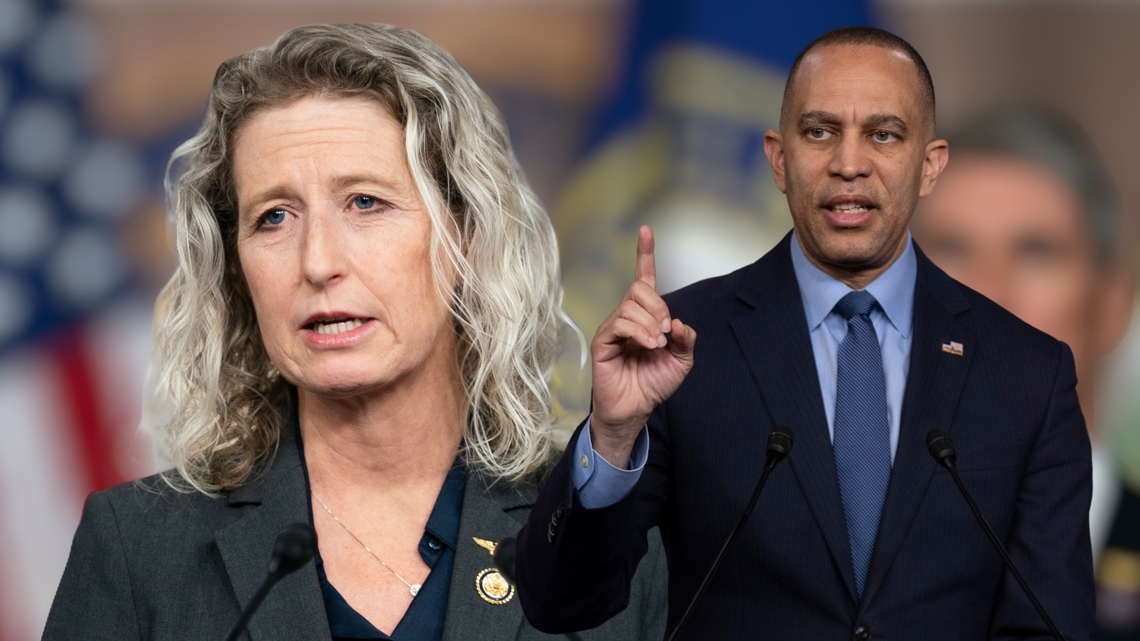
Congresswoman Jen Kiggans faced backlash after agreeing with a radio host’s racially charged “cotton-picking hands off Virginia” remark about Hakeem Jeffries, prompting calls from Democrats and former Rep. Elaine Luria for an apology. Kiggans later said she did not condone the host’s language and that her comments were about Jeffries’ involvement in Virginia politics. The controversy adds political risk in Virginia’s 2nd Congressional District ahead of the 2026 midterms.
This is not a policy shock; it is a character-and-competence event with a narrow but real probability of becoming an earnings-adjacent campaign liability. In a tight district, the market-relevant mechanism is turnout elasticity: controversies that activate base voters can matter more than persuasion, and the downside is asymmetric if this lingers into the 30-60 day media cycle before early voting. The immediate beneficiary is the Democratic challenger ecosystem, but the second-order effect is broader—local GOP candidates and donors may spend incremental bandwidth defending a message discipline problem rather than building turnout infrastructure. The key question is whether this becomes a one-news-cycle issue or a repeated clip. If it stays isolated, the damage is mostly reputational and fades quickly; if opponents successfully package it into a larger narrative about tolerance for coded language, it can compound with every repeat mention and every fundraising email, extending the half-life from days to weeks. That matters because district-level races often move on “soft negatives” that are hard to dislodge once they become shorthand, especially when reinforced by local validators and Black community leaders. The contrarian view is that overreaction risk is meaningful: the base may interpret the controversy as elite media overreach, which can actually harden support among partisan voters. But that cut both ways—when an incumbent leans into grievance rather than clean apology, it hands the opposition a simple moral frame that outperforms nuanced explanations in low-information environments. The broader governance takeaway is that this raises the expected volatility of the seat, not necessarily the baseline probability of a flip, but enough to warrant a higher implied discount on complacency in adjacent Virginia competitive races.
AI-powered research, real-time alerts, and portfolio analytics for institutional investors.
Request DemoOverall Sentiment
moderately negative
Sentiment Score
-0.45
